 Jewelry Identifier
Costume Jewelry Worth Money: Brands Collectors Pay Top Dollar For
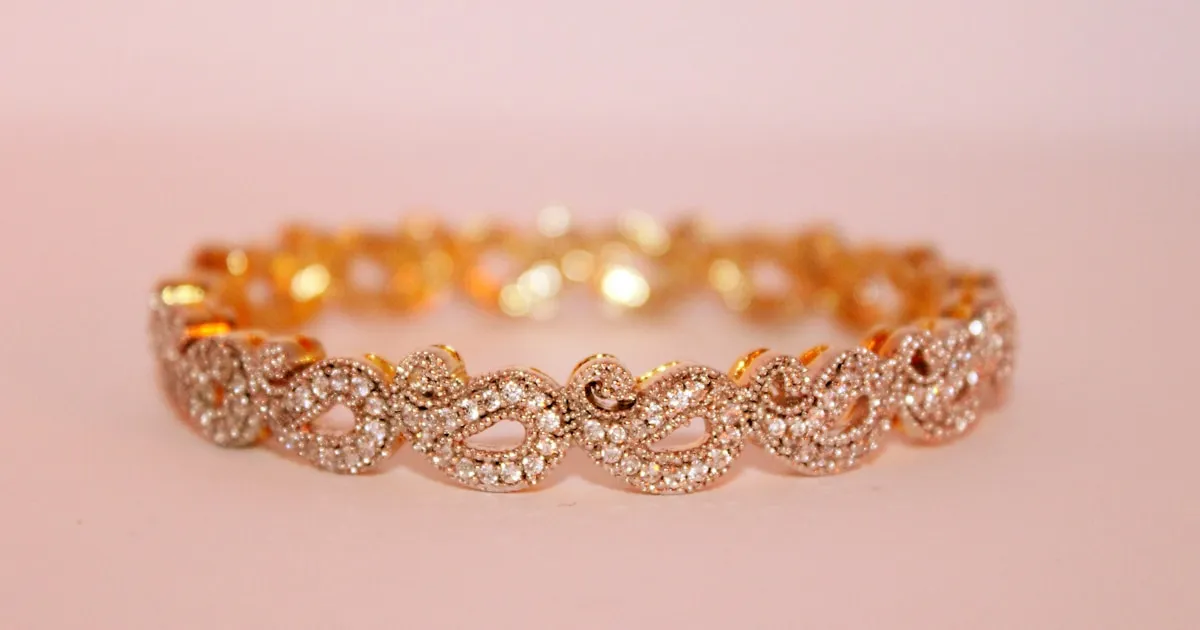
Your grandmother's rhinestone brooch might be worth $5 or $500. The difference usually comes down to who made it. Certain costume jewelry brands have developed collector followings that push prices into fine jewelry territory—sometimes higher.
Here are the brands that consistently command serious money, how to identify them, and what makes certain pieces valuable.
Trifari
Trifari operated from 1918 to 1988, producing some of the most collectible costume jewelry ever made. The company employed talented designers, including Alfred Philippe, who previously worked for Cartier and Van Cleef.
Marks to look for: "Trifari" in script, "Crown Trifari" with a crown symbol (1940s-1970s), "TKF" (Trifari Krussman Fishel, early mark).
What's valuable: Jelly belly pins (figural pieces with lucite bodies) sell for $200-$1,500. Alfred Philippe designs command premiums. Pieces matching Mamie Eisenhower's inaugural jewelry—which Trifari created—attract serious collectors.
Price range: Common pieces $30-$75. Better designs $100-$400. Rare jelly bellies and documented Philippe pieces $500-$2,000+.
Eisenberg
Eisenberg began as a dress company in the 1930s. The attached jewelry proved so popular that customers stole it—leading Eisenberg to sell jewelry separately. "Eisenberg Ice" became synonymous with high-quality rhinestone jewelry.
Marks to look for: "Eisenberg Original" (highest value, 1935-1945), "Eisenberg Ice" (most common, 1945-1970s), script "Eisenberg" (various periods).
What's valuable: Early "Eisenberg Original" pieces used Austrian crystals that create exceptional sparkle. Large statement brooches are particularly sought after. Sterling silver pieces (marked "Sterling") exceed value of base metal versions.
Price range: Standard Ice pieces $50-$150. Quality brooches $150-$500. Eisenberg Original in sterling $300-$1,000+.
Miriam Haskell
Miriam Haskell jewelry represents the pinnacle of American costume jewelry craftsmanship. Each piece was handmade using techniques too labor-intensive for modern production. The intricate pearl and glass bead work remains unmatched.
Marks to look for: "Miriam Haskell" on an oval cartouche. Early pieces (pre-1950) sometimes lack marks but have distinctive horseshoe-shaped findings.
What's valuable: Multi-strand pearl necklaces, parures (matching sets), and elaborate floral brooches attract top prices. Pieces in original condition with no repairs command premiums.
Price range: Simple earrings $75-$200. Major necklaces $400-$1,500. Complete parures $1,000-$3,000+.
Coro and Coro Craft
Coro was the world's largest costume jewelry manufacturer for decades. Most production was mass-market, but the "Coro Craft" and "Corocraft" lines competed with higher-end brands in quality and design.
Marks to look for: "Coro" (mass market), "Coro Craft" or "Corocraft" (better quality), "Vendome" (Coro's luxury line), "Coro Duette" (convertible clips).
What's valuable: Duette pins (two clips that combine into a brooch) were Coro's innovation and remain collectible. Coro Craft sterling vermeil pieces from the 1940s attract premium prices. Figural pins—especially animals—have dedicated collectors.
Price range: Basic Coro $15-$50. Coro Craft pieces $50-$200. Sterling Duettes and rare figurals $200-$600+.
Hattie Carnegie
Hattie Carnegie dressed Hollywood stars and socialites. Her costume jewelry matched the sophistication of her fashion—high style at non-fine-jewelry prices. Pieces often mimicked expensive designs in clever, affordable ways.
Marks to look for: "Hattie Carnegie" or "Carnegie" in script. HC monogram appears on some pieces.
What's valuable: Figural pieces, especially Asian-influenced designs from the 1960s. Sets in original boxes. Large statement necklaces.
Price range: Earrings and small pins $50-$150. Statement pieces $200-$500. Rare figurals $500-$1,200+.
Weiss
Albert Weiss founded his company in 1942, focusing on rhinestone jewelry with exceptional stone quality. Weiss used Austrian and Czechoslovakian crystals with superior brilliance, set with attention to detail that mass-market competitors couldn't match.
Marks to look for: "Weiss" in block letters. Some pieces marked "Albert Weiss."
What's valuable: Black diamond (smoky gray) rhinestones are a Weiss specialty. Unusual colors and japanned (black metal) settings attract collectors. Holiday-themed pieces have dedicated followings.
Price range: Common pieces $40-$100. Black diamond sets $100-$300. Large brooches with rare stones $200-$500+.
How to Spot Fakes
Popular brands attract reproduction. Protect yourself:
- Compare marks carefully — Study authentic examples before buying. Fonts, spacing, and placement should match period-correct pieces.
- Check construction quality — Genuine vintage pieces have substantial findings and careful stonework. Modern fakes often feel lighter with sloppier setting.
- Question perfect condition — Seventy-year-old jewelry should show some wear. Pristine pieces warrant extra scrutiny.
- Verify seller reputation — Established vintage jewelry dealers stake their reputations on authenticity. Random online sellers may not.
Where to Sell
If you've found valuable costume jewelry, selling options include:
- Ruby Lane — Online mall focusing on antiques and collectibles. Knowledgeable buyers.
- Etsy — Large vintage jewelry market. Requires good photography and descriptions.
- eBay — Broad audience but requires careful authentication descriptions.
- Specialty auction houses — For significant pieces, firms like Heritage Auctions reach serious collectors.
- Local vintage dealers — Quick sales but expect wholesale pricing (50-60% of retail).
Think you might have a valuable piece in your collection? Get a free jewelry appraisal — upload a photo and we'll identify the maker, read the marks, and estimate what it's worth.
The Bottom Line
Costume jewelry value depends almost entirely on maker. The rhinestone brooch from an unknown manufacturer might bring $10. The same quality brooch marked "Eisenberg Original" might bring $400. Before donating or discarding, check those marks.