 Jewelry Identifier
How Much Is My Ring Worth? A Complete Valuation Guide
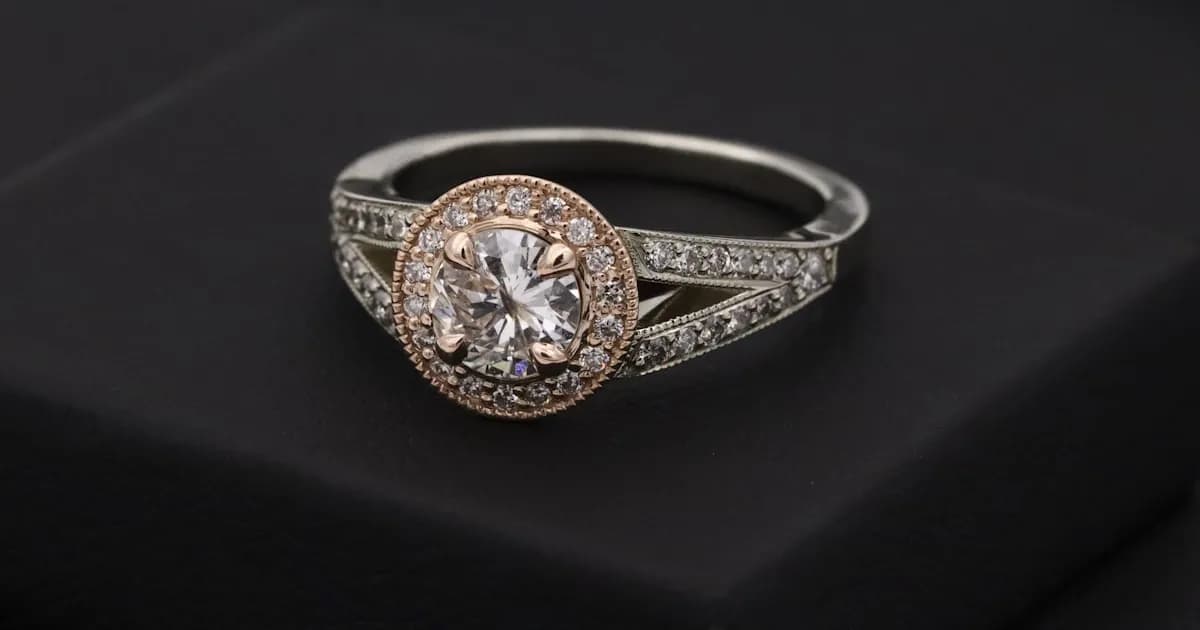
You found a ring in a drawer. Maybe you inherited it. Maybe you're thinking about selling your engagement ring after a divorce. Whatever brought you here, you want a number—what's this thing actually worth?
The answer depends on four factors: metal, stones, brand, and condition. Get those right, and you can estimate value within a reasonable range before ever talking to an appraiser.
Factor 1: Metal Content
Metal provides the baseline value. Even if everything else about your ring is unremarkable, the metal itself has worth.
First, find the stamp inside the band. If you need help deciphering what those tiny engravings mean, our guide on how to read jewelry stamps and hallmarks covers every common marking. Common gold stamps include:
- 750 or 18K — 75% pure gold
- 585 or 14K — 58.5% pure gold (most common in US jewelry)
- 417 or 10K — 41.7% pure gold
- 925 — Sterling silver
- PT950 — 95% platinum
To calculate rough metal value, weigh your ring in grams and multiply by the current spot price for that metal, adjusted for purity. A 5-gram 14K gold ring when gold trades at $60/gram would have about $175 in metal value (5 × 60 × 0.585).
But that's scrap value—what a refiner would pay to melt it. Intact rings typically sell for more, sometimes much more.
Factor 2: Gemstones
Stones can be worth nothing or worth more than a car. The difference comes down to the four Cs: cut, color, clarity, and carat weight.
A 1-carat diamond might be worth $2,000 or $20,000 depending on quality. Without certification from GIA or another reputable lab, you're guessing. Look for an inscription on the diamond's girdle (the thin edge around the middle) that matches a certificate number.
For colored stones—rubies, sapphires, emeralds—origin matters enormously. A Burma ruby can be worth ten times more than an identical-looking Thai ruby. Unless you have documentation, assume the conservative estimate.
Watch out for simulants. That "diamond" might be cubic zirconia or moissanite. That "ruby" might be glass. A thermal tester or jeweler's loupe reveals the truth quickly.
Factor 3: Brand and Provenance
A plain gold band from Walmart and a plain gold band from Cartier can have identical metal content. The Cartier piece sells for five times more because of the name.
Look for maker's marks, usually near the metal stamp. Designer signatures that command premiums include:
- Tiffany & Co. — Consistently strong resale
- Cartier — Especially the Love and Trinity collections
- Van Cleef & Arpels — High collector demand
- David Yurman — Popular contemporary brand
- Harry Winston — Top-tier pricing
Provenance adds value too. A ring worn by someone famous, or one with documented history, becomes more than jewelry—it becomes a collectible.
Factor 4: Condition
Condition affects value more than people expect. Deep scratches, worn prongs, missing stones, and bent shanks all reduce what buyers will pay.
Examine your ring carefully:
- Are the prongs holding stones securely?
- Is the band round or has it been bent?
- Are there deep scratches or just surface wear?
- Is the rhodium plating on white gold worn through?
Minor wear is expected on vintage pieces. Major damage requires repair costs that come out of your sale price.
Getting a Real Number
For a quick estimate, you have several options:
AI apps can identify metal type, stone type, and give ballpark values instantly from a photo. Good for initial sorting and basic identification.
Online price guides like Worthy, I Do Now I Don't, and Diamond Bistro show what similar rings have sold for recently. Real transaction data beats guessing.
Local appraisers provide official documentation. Expect to pay $50-150 per piece. Worth it for insurance or high-value sales, unnecessary for basic curiosity.
Pawn shops will give you a number on the spot, but their offers run 30-50% below market value. They need room for profit.
The Realistic Picture
Most rings aren't worth what their owners hope. That engagement ring purchased for $5,000 might sell for $1,500-2,500. Diamonds depreciate the moment they leave the store—sometimes by 50% or more. Our diamond ring value guide breaks down exactly how cut, clarity, and carat weight affect resale prices.
Exceptions exist. Antique rings in good condition often appreciate. Brand-name pieces hold value better than generic ones. Rare colored gemstones can increase substantially over decades.
But the average ring sitting in someone's drawer? Worth exactly what someone will pay for it, which is usually less than what was paid originally.
Want to know exactly what yours is worth? Run it through the free jewelry value estimator — upload a photo and get a value range in seconds — then get your free full appraisal for a detailed, documented estimate.
What to Do Next
Start with the easy stuff. Find the stamp, identify the metal, look for maker's marks. Take clear photos in good lighting—include the stamp and any stones.
If the ring seems valuable enough to warrant professional attention, get an appraisal. If you're just curious about grandmother's jewelry collection, an AI identification app gives you answers in seconds without leaving your couch.
Either way, you'll know what you're working with—and whether that ring deserves a safety deposit box or a garage sale.