 Jewelry Identifier
How to Read Jewelry Stamps and Hallmarks
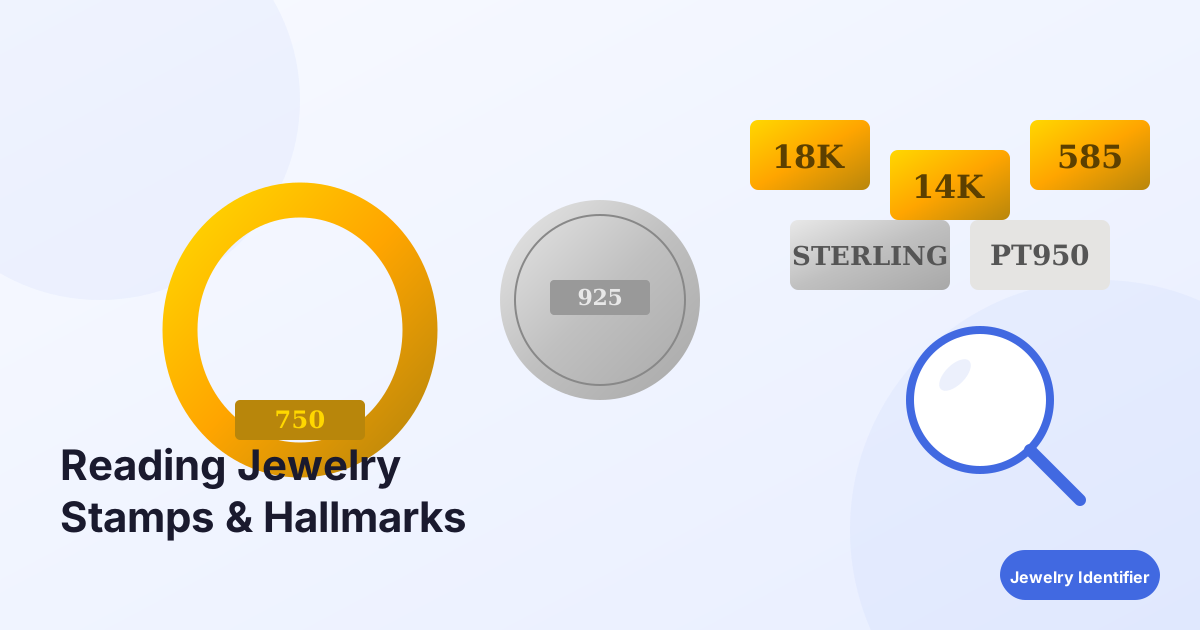
That tiny stamp inside your ring means something. It tells you what metal you're wearing and often where and when the piece was made. Once you understand the system, you can read jewelry like a language.
Gold Purity Stamps
Gold stamps indicate purity as parts per thousand or karats. Here's what the common numbers mean:
- 999 or 24K — Pure gold (99.9%). Too soft for most jewelry, mainly used in bullion and some Asian jewelry.
- 916 or 22K — 91.6% gold. Common in Middle Eastern and Indian jewelry.
- 750 or 18K — 75% gold. The European standard for fine jewelry.
- 585 or 14K — 58.5% gold. The most common standard in the United States.
- 417 or 10K — 41.7% gold. The minimum to be called "gold" in the US.
- 375 or 9K — 37.5% gold. Common in the UK and Australia.
The three-digit stamps (999, 750, 585) indicate parts per thousand. Multiply by 100 to get the percentage. So 585 means 58.5% pure gold.
Silver Stamps
Silver uses a similar system:
- 999 — Fine silver (99.9% pure)
- 950 — Britannia silver (95% pure)
- 925 — Sterling silver (92.5% pure). The standard for most silver jewelry.
- 900 — Coin silver (90% pure)
- 800 — European silver standard (80% pure)
If you see "925" stamped inside a piece, you're looking at sterling silver.
Platinum Stamps
- 950 PLAT or PT950 — 95% platinum
- 900 PLAT or PT900 — 90% platinum
- 850 PLAT or PT850 — 85% platinum
British Hallmarks
British hallmarks are more complex. A full British hallmark includes:
- Sponsor's mark — The maker's initials
- Standard mark — Shows metal purity (lion passant for sterling silver, crown and number for gold)
- Assay office mark — Where it was tested (anchor for Birmingham, leopard's head for London)
- Date letter — A letter indicating the year, changing annually
British hallmarking has been required since 1300, making it one of the oldest consumer protection systems in the world.
Other Stamps You Might See
- GF or 1/20 10K GF — Gold filled. A thick layer of gold bonded to base metal. The fraction indicates how much gold by weight.
- GP or GEP — Gold plated or gold electroplated. A thin gold coating.
- HGE — Heavy gold electroplate
- RGP — Rolled gold plate
- Vermeil — Sterling silver with gold plating (at least 2.5 microns thick)
What If There's No Stamp?
Missing stamps don't necessarily mean fake jewelry. Older pieces may have worn stamps. Very small items sometimes weren't stamped due to space constraints. Jewelry from certain regions or time periods had different marking requirements.
If you need to verify unmarked jewelry, professional testing or an AI identification app can help determine the metal content.
Tips for Reading Stamps
- Use a jeweler's loupe (10x magnification) for clear viewing
- Check inside bands, on clasps, near hinges, and on bails
- Clean the area gently to reveal worn stamps
- Take photos at an angle to catch the light
Ready to put this knowledge to use? Try a free jewelry appraisal — upload a photo of your jewelry and we'll read the stamps, identify the metal, and estimate its value.
Stamps tell a story. Once you learn to read them, you'll know more about your jewelry than most people ever will.