 Jewelry Identifier
Diamond Ring Appraisal: What Your Diamond Is Actually Worth
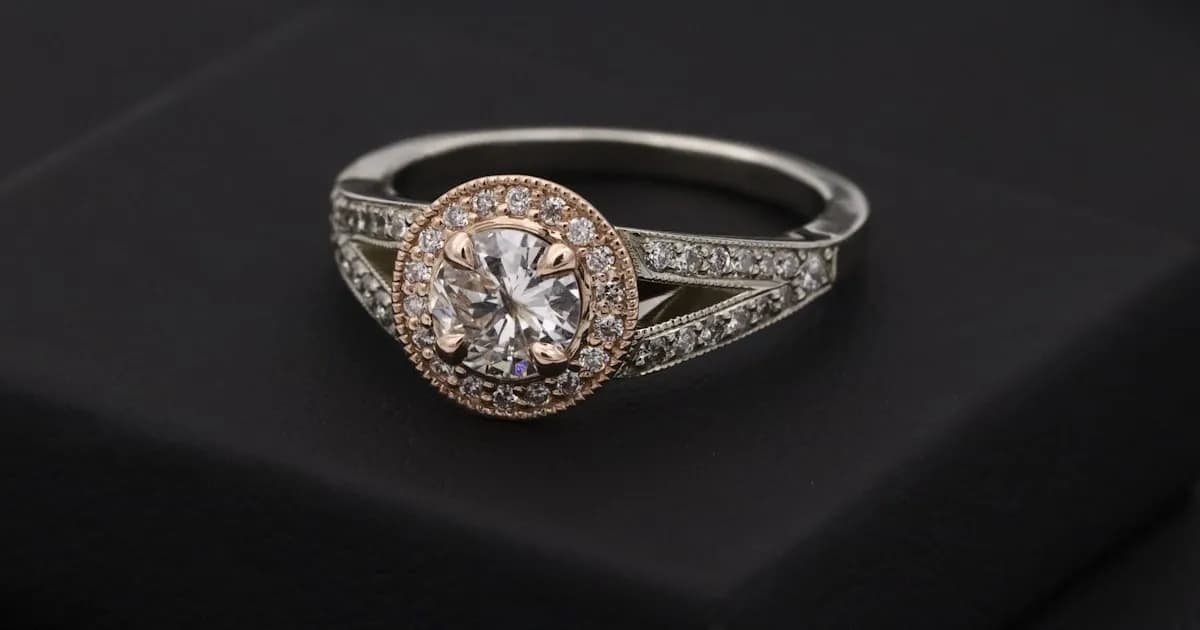
You want to know what your diamond ring is worth. Maybe you're selling, insuring, or dividing assets. Whatever the reason, you need a number grounded in reality, not in what you paid or what you hope it's worth.
Diamond pricing follows specific rules. Once you understand them, you can estimate value before spending money on a professional diamond appraisal.
Why Retail Price Means Nothing for Resale
A diamond ring bought for $8,000 at a jewelry store might resell for $2,500-$4,000. That's not a scam. That's how the diamond market works.
Retail prices include the jeweler's overhead, marketing, profit margin, and the premium of buying something new. None of that transfers to the second owner. What transfers is the stone itself and the metal it sits in.
This is the single most important thing to understand about diamond ring appraisals: insurance appraisals and resale value are two completely different numbers. Insurance appraisals run high because they represent replacement cost at retail. Resale value reflects what a buyer will actually hand you in cash.
The 4Cs: What Actually Determines Diamond Value
Every diamond is graded on four characteristics. Together, they account for most of the price.
Carat Weight
One carat equals 0.2 grams. Price per carat jumps at certain thresholds: a 0.99-carat diamond costs meaningfully less than a 1.01-carat stone even though the visual difference is undetectable. The same jump happens at 0.5, 1.5, and 2 carats.
For context: the average engagement ring diamond in the US is about 1.0-1.2 carats. Anything above 2 carats enters a thinner market where finding the right buyer takes longer.
Cut
Cut grade affects appearance more than any other factor. A well-cut diamond returns light to your eye as brilliance and fire. A poorly cut one looks dull even if the color and clarity are excellent.
GIA grades cut from Excellent to Poor. The difference between Excellent and Very Good is modest in price. The difference between Very Good and Fair is substantial in both appearance and value.
Color
Diamond color is graded D (colorless) through Z (light yellow or brown). Most engagement rings fall between G and J. The price gap between D and G is significant, but most people can't tell the difference once the stone is set in a ring.
Below J, the yellow tint becomes noticeable. Below M, you're in "fancy light" territory where different pricing rules apply.
Clarity
Clarity measures internal inclusions and external blemishes. The scale runs from Flawless (FL) to Included (I3). For resale purposes, anything VS2 or above is considered "eye-clean," meaning you can't see flaws without magnification.
SI1 diamonds often look clean too, depending on where the inclusions sit. I1 and below show visible flaws that meaningfully reduce value.
Certification Matters More Than You Think
A certified diamond sells for 10-30% more than an identical uncertified stone. The certificate proves the grades. Without one, buyers must trust the seller's claims, and most won't.
GIA (Gemological Institute of America) certificates carry the most weight. AGS is respected too. EGL certificates are viewed skeptically by the trade because their grading standards run looser. A diamond graded G color by EGL might grade I or J at GIA.
Check the diamond's girdle under magnification. GIA inscribes a report number that matches their database. If your stone has a GIA inscription, you can look up its full report at GIA's website for free.
How to Get a Diamond Ring Appraised
You have several options, ranging from free to several hundred dollars.
AI appraisal apps analyze photos of your ring and provide instant estimates. These work well for initial ballpark numbers, especially when combined with any certification data you have. You get results in seconds from your phone.
Online diamond buyers like Worthy, White Pine, and Abe Mor will evaluate your diamond remotely. Some provide free quotes. They're motivated to give competitive offers because they profit from the transaction.
Independent appraisers charge $50-150 per piece for a written appraisal. Find someone who charges a flat fee, not a percentage of the appraised value. A percentage-based appraiser has an incentive to overvalue your piece.
Jewelers will often give informal estimates for free, hoping to either buy the piece or earn your future business. Get at least two opinions. If their numbers differ by more than 20%, get a third.
What Affects Value Beyond the 4Cs
Several factors push value up or down beyond the basic grading:
- Fluorescence — Strong blue fluorescence reduces value 5-15% for colorless diamonds but can increase value for lower-color stones by masking yellow tint
- Shape — Round brilliant diamonds command the highest prices per carat. Fancy shapes (oval, pear, marquise) typically sell for 20-40% less
- Setting — A designer setting (Tiffany, Cartier, Harry Winston) adds significant brand premium. A generic setting adds minimal value
- Lab-grown vs. natural — Lab diamonds resell for a fraction of natural diamond prices. Check for "LG" or "lab grown" inscriptions on the girdle
The Resale Reality Check
Here are rough resale ranges for natural diamond solitaires in good condition with GIA certification:
- 0.5 carat, G-H color, VS-SI clarity — $400-800 resale
- 1.0 carat, G-H color, VS-SI clarity — $2,000-4,000 resale
- 1.5 carat, G-H color, VS-SI clarity — $4,500-8,000 resale
- 2.0 carat, G-H color, VS-SI clarity — $8,000-16,000 resale
These numbers shift with market conditions. Diamond prices dropped about 18% between 2022 and 2024, partly due to lab-grown diamonds eating into natural demand. Check current prices on platforms like Rapaport, StoneAlgo, or recently sold listings on eBay's completed sales.
What to Do With Your Number
Once you have an estimated value, your next step depends on your goal. Selling? List on multiple platforms and compare offers. Insuring? Get a formal written appraisal at replacement cost. Dividing in a divorce? Both parties should agree on the same independent appraiser.
Want to know what your diamond ring is actually worth? Get your free jewelry appraisal — upload a photo and get a detailed value estimate in seconds.
Start with a quick AI scan to identify the basics, then decide if a professional appraisal is worth the cost. For stones under 0.5 carats or costume-quality settings, the appraisal fee might exceed what the piece is worth. For anything over a carat with decent grades, a professional opinion pays for itself.