 Jewelry Identifier
How Much Do Pawn Shops Pay for Gold in 2026?
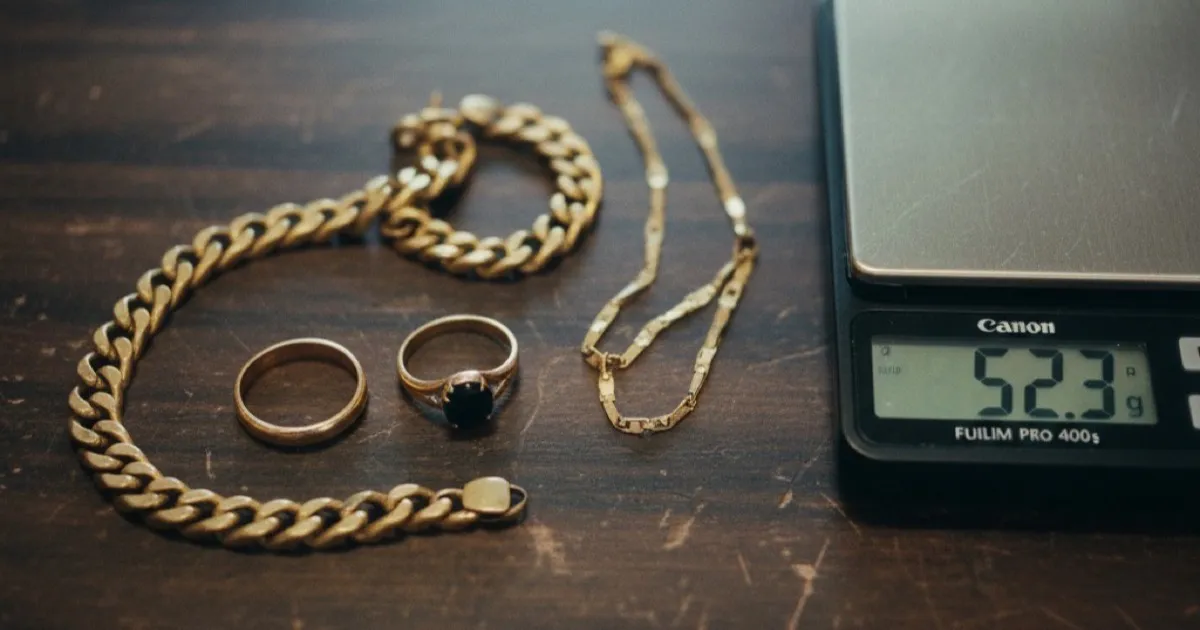
You have a gold chain, a broken bracelet, or a ring you'll never wear again. A pawn shop is five minutes away. The question is whether walking in there is the smartest move or whether you'd be leaving money on the table.
Pawn shops typically pay 40% to 60% of the current melt value for gold jewelry, though some go as low as 25%. Melt value is what the raw gold is worth based on weight and karat. With gold prices above $4,000 per ounce in 2026, even a small 10-gram 14K chain has a melt value over $900 — but a pawn shop would likely offer $360 to $540 for it.
How Pawn Shops Calculate Gold Prices
Pawn shops don't care about the brand on your jewelry or how much you paid for it at the mall. They care about three things: weight, karat, and the current spot price of gold.
Here's the math they run. First, they weigh your piece on a precision scale in grams or pennyweights. Then they check the karat stamp (10K, 14K, 18K, 24K) to determine the percentage of pure gold. A 14K piece is 58.3% pure gold, while 18K is 75% pure. They multiply the weight by the purity to get the pure gold content, then multiply that by the current spot price to get the melt value. The offer you receive is a percentage of that melt value — typically 40% to 60%, depending on the shop, your negotiating skills, and whether you're pawning (using it as collateral for a loan) or selling outright. At today's gold price around $4,100 per ounce ($131.80 per gram), a 20-gram 18K gold bracelet contains 15 grams of pure gold, giving it a melt value of roughly $1,977. A pawn shop paying 50% of melt would offer about $988. Selling outright usually gets a slightly better percentage than pawning because the shop avoids the risk of storing your item and managing the loan.
What Percentage of Gold Value Do Pawn Shops Pay?
The percentage varies, and the range is wider than most people expect.
| Pawn Shop Type | Typical Offer | Notes |
|---|---|---|
| National chains | 25% - 40% of melt | High overhead, lower offers |
| Independent local shops | 40% - 60% of melt | More room to negotiate |
| Gold-focused buyers | 50% - 70% of melt | Specialize in precious metals |
| Online gold buyers | 60% - 80% of melt | Lower overhead, competitive offers |
Several factors push the offer up or down:
- Weight matters most. Heavier pieces get better percentage offers because the transaction is worth the shop's time
- Higher karat = higher percentage. Shops prefer 18K and 22K because refining is simpler
- Broken jewelry still has value. Gold is gold regardless of whether the clasp works. Broken pieces are worth the same melt value as intact ones
- Stones don't always add value. Pawn shops often ignore small diamonds and gemstones because removing them costs money. Only larger, high-quality stones add to the offer
- Market timing. When gold prices are rising, shops are more willing to pay higher percentages because their resale margins are strong
How to Know What Your Gold Is Worth Before You Go
Walking into a pawn shop without knowing your gold's approximate value is the fastest way to get underpaid. Do this math before you leave the house.
Step 1: Find the karat stamp. Look inside ring bands, on clasp tags, and at chain ends. Common stamps: 10K (41.7% pure), 14K (58.3%), 18K (75%), 22K (91.7%), 24K (99.9%). If you can't find a stamp, your piece might not be real gold — check with a gold authenticity test before assuming it has value.
Step 2: Weigh it. Use a kitchen scale that reads in grams. Bathroom scales aren't precise enough.
Step 3: Calculate melt value. Multiply the weight in grams by the karat purity percentage, then multiply by the current gold price per gram. You can find the current spot price on any financial news site — search "gold price per gram."
Step 4: Set your minimum. Expect 40% to 60% of melt value from most pawn shops. If the offer comes in below 40%, walk away — you can do better.
Pawn vs. Sell: Which Gets You More?
When you pawn gold, the shop gives you a loan using your jewelry as collateral. You get the piece back when you repay the loan plus interest (typically 2% to 25% monthly, depending on state laws). When you sell outright, the transaction is final.
Selling outright almost always pays more than pawning. Pawn loans carry risk for the shop — you might not come back, and they're stuck holding inventory. That risk gets priced into a lower offer.
If you need cash temporarily and want your jewelry back, pawning makes sense. If you're done with the piece, sell it. And if the pawn shop offers to buy outright, that number should be higher than the pawn loan offer. If it isn't, something is off.
Better Alternatives to Pawn Shops
Pawn shops are convenient, but they're rarely the best deal. Here's how other options compare.
Local jewelers and gold buyers often pay 60% to 75% of melt value. They have lower overhead than pawn shops and sometimes buy gold to resell, not just to scrap.
Online gold buyers (like APMEX or Kitco) pay 70% to 85% of melt value. You mail your gold in a prepaid insured envelope, they assess it, and you get paid. The downside is shipping time — it takes 5 to 10 days versus getting cash today.
Private sale through platforms or to other individuals can get you closest to melt value, but requires more effort and carries risk. Our guide to selling jewelry covers the full range of options.
Estate jewelers pay more if your piece has design value beyond the gold weight. A vintage Cartier bracelet is worth far more than its melt value, and the right buyer will pay for the brand and craftsmanship.
Red Flags at Pawn Shops
Not every pawn shop operates honestly. Watch for these warning signs:
- They won't test in front of you. A reputable shop tests karat and weight where you can see the results
- They claim your gold is a lower karat than stamped. This is the oldest trick. If your ring says 14K and they insist it's 10K, ask them to show you the acid test results
- They pressure you to decide immediately. You should always be able to walk out and compare offers
- They won't give you a receipt. Every transaction should be documented, especially pawn loans
How Jewelry Identifier Helps Before You Sell
Before heading to a pawn shop, it helps to know exactly what you have. Jewelry Identifier lets you snap a photo of your gold piece and get an instant identification — the app reads stamps and hallmarks, identifies the metal type, and gives you an estimated appraisal value. That estimate isn't a formal appraisal, but it gives you a baseline so you know whether a pawn shop's offer is in the right range.
The app works offline too, so you can check pieces at estate sales or flea markets before buying gold that you plan to resell. Knowing the approximate value before you negotiate puts you in a stronger position.
Want to know what your gold is actually worth before walking into a pawn shop? Get your free jewelry appraisal — upload a photo and get an instant value estimate so you negotiate from a position of strength.
Frequently Asked Questions
Do pawn shops pay more for gold jewelry or gold coins?
It depends on the item. Gold coins with numismatic value (rare dates, limited mintage) can sell for more than melt value because collectors want them. Common gold bullion coins like American Eagles sell close to spot price. Standard gold jewelry without brand or design value sells for melt value minus the shop's margin.
Can I negotiate with a pawn shop?
Yes, and you should. Most pawn shops expect negotiation. Start by knowing your gold's melt value, then counter their first offer. If they offer 40%, ask for 55%. You'll likely settle somewhere in the middle. Having written offers from other shops gives you leverage.
Do pawn shops buy gold-plated jewelry?
Generally no. Gold-plated jewelry has a microscopic layer of gold over base metal. The gold content is too small to recover economically. If your piece is stamped "GF" (gold-filled) or "GP" (gold-plated), a pawn shop will likely decline it. Check our gold plated vs solid gold guide to understand the differences.
How do I find the best pawn shop for gold?
Visit at least three shops and get written offers from each before accepting any. Check Google reviews specifically for gold buying experiences. Look for shops that display their testing equipment and explain their pricing openly. Independent shops typically pay more than national chains.
Is it better to sell gold when prices are high?
Selling when gold is at a peak gets you more dollars per gram, but pawn shop percentages stay roughly the same. The bigger factor is comparison shopping — getting 60% of melt from a good buyer at $4,000/oz gold beats getting 40% from a bad buyer at $4,500/oz gold.
Try Jewelry Identifier to find out what your gold is worth before you walk into a pawn shop — snap a photo and get an instant estimated value.