 Jewelry Identifier
How to Know If Jewelry Is Real: Tests That Work
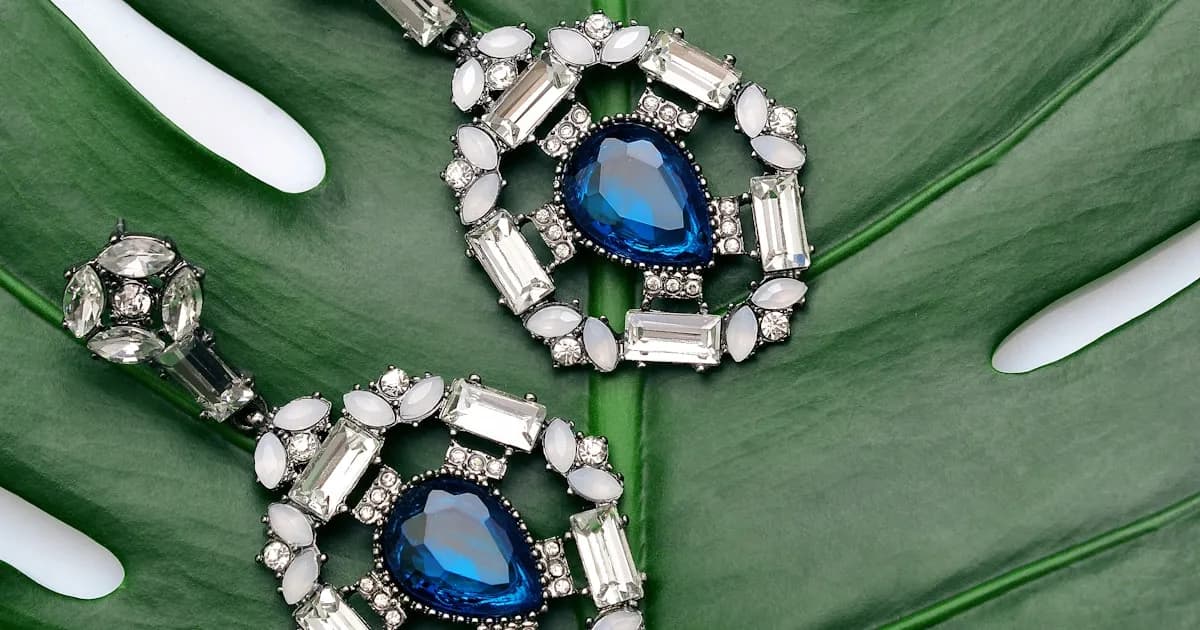
How to know if jewelry is real is one of the most practical skills a jewelry owner can have. That gold necklace might be gold-plated brass. That diamond might be cubic zirconia. That ruby might be red glass. Knowing the difference saves you from overpaying, underselling, or just not knowing what you own.
Here are the actual tests that work, organized from what you can do at home to what requires professional tools.
To know if jewelry is real, start with the stamp test: look for karat marks (10K, 14K, 18K) on gold or "925" on silver. Run a magnet test; genuine precious metals aren't magnetic. For diamonds, breathe on the stone. Real ones clear fog in about 2 seconds. A photo-based AI scanner gives fast results, too.
Testing Gold: How to Know If Your Gold Is Real
The Stamp Test (30 seconds)
Real gold jewelry sold in the US must be stamped with its karat value: 10K, 14K, 18K, or 24K. You might also see European numeric marks like 585 (14K) or 750 (18K). Look inside bands, on clasp tags, near pin backs, and on pendant bails.
Stamps reading "GF" mean gold-filled. "GP," "GEP," or "HGE" mean gold-plated. These have a thin layer of gold over a base metal. They look like gold but contain very little.
No stamp doesn't automatically mean fake. Very old pieces, handmade jewelry, and some international pieces lack stamps. But it's a yellow flag that warrants further testing.
Gold jewelry sold in the United States must be stamped within 0.5 karat of its stated purity under the National Gold and Silver Stamping Act of 1906. A piece stamped 14K contains 58.3% pure gold; 18K contains 75%; 24K is 99.9% pure; 10K (the legal US minimum for jewelry sold as gold) contains 41.7%. European pieces use decimal fineness stamps instead: 585 for the 14-karat equivalent, 750 for 18-karat, 375 for 9-karat. Gold-filled pieces (GF) must contain at least 1/20 of their total weight in gold at a minimum quality of 10K. Gold-plated pieces (GP, GEP, or HGE) carry only a micron-thin electroplated layer, typically 0.5 to 2.5 microns thick, over a base metal core of copper or brass. Real gold is chemically inert and won't react to nitric acid at room temperature, while plated pieces fizz as the acid reaches the base metal beneath the surface coating.
The Magnet Test (10 seconds)
Gold, silver, and platinum are not magnetic. Hold a strong magnet (fridge magnets are too weak; use a neodymium magnet) against the piece. If it sticks or is strongly attracted, the base metal is steel or iron with gold plating.
Caution: some base metals used in counterfeits (brass, copper, tungsten) are also non-magnetic. Passing the magnet test doesn't confirm gold. It just eliminates the most obvious fakes.
The Skin Test (over time)
Fake gold often leaves green or black marks on skin. This happens when base metals react with sweat and oils. Real gold doesn't cause this reaction.
Some people's body chemistry causes reactions even with real gold alloys, so this test isn't definitive. But consistent green marks from a "14K" piece suggest it's not what it claims. We cover additional gold-specific tests in our guide on how to tell if gold is real.
The Acid Test (professional)
Jewelers use nitric acid testing kits. A tiny scratch is made on the piece, and acid is applied. Real gold doesn't react. Gold-plated items fizz or change color as the acid reaches the base metal beneath.
You can buy acid test kits online for about $15. They work, but they do leave a small mark, so test in an inconspicuous spot.
Testing Diamonds: Real vs. Simulant
The Fog Test (5 seconds)
Breathe on the stone like you're fogging a mirror. Diamonds dissipate heat almost instantly, so the fog clears within 1-2 seconds. Glass and cubic zirconia stay fogged for 3-5 seconds.
This test is quick and doesn't require any equipment, but it's not foolproof. Moissanite also dissipates heat quickly, and this test won't distinguish it from diamond.
The Read-Through Test (1 minute)
Place a loose stone flat-side down on a piece of newspaper. If you can read the text through the stone or see distorted black smudges, it's probably not a diamond. Diamonds refract light so completely that you can't see through them when placed face-down on text.
This only works with loose stones or stones in open-back settings. It won't work for mounted stones in closed-back settings.
The UV Light Test (1 minute)
About 30% of natural diamonds fluoresce blue under UV light (a blacklight). If your stone glows blue, it's likely a real diamond. If it glows green, yellow, or not at all, it could still be real, but you need other tests to confirm.
Cubic zirconia sometimes shows a mustard-yellow fluorescence. If you see that color, the stone probably isn't a diamond.
The Thermal Test (professional)
Diamond testers (about $15-30 for a basic model) measure thermal conductivity. Diamonds conduct heat far better than cubic zirconia or glass. Touch the probe to the stone and get an instant reading.
One major limitation: moissanite has thermal conductivity close to diamond, so basic testers can't tell them apart. Newer dual testers measure both thermal and electrical conductivity, which does separate the two. Moissanite conducts electricity; diamond doesn't. For a complete walkthrough of every diamond test, see our guide on how to spot fake diamonds.
Testing Silver: Real vs. Plated
Real sterling silver is stamped 925, .925, or "Sterling." Look in the same places you'd check for gold stamps.
Ice test: Place an ice cube on the piece. Silver conducts heat extremely well, so the ice starts melting immediately; it goes faster than it would on most metals. Non-silver metals take longer.
Tarnish check: Real silver tarnishes. If a piece looks shiny after years of sitting in a drawer without being cleaned, it might be silver-plated stainless steel or just silver-colored metal.
Sound test: Real silver produces a high-pitched ringing sound when tapped gently. Base metals make a duller sound. This takes practice but becomes reliable over time.
Testing Gemstones: Natural vs. Synthetic vs. Imitation
Important distinction: synthetic gemstones are chemically identical to natural ones (lab-created rubies are still rubies). Imitations are different materials made to look similar (red glass pretending to be ruby).
Visual Checks
- Too perfect? Natural gemstones have inclusions. If a stone looks flawless under magnification, it's either extremely expensive or synthetic/imitation.
- Bubbles. Round bubbles inside a stone indicate glass, not a natural gemstone.
- Color zoning. Natural sapphires and other gems show uneven color distribution. Synthetic stones tend to have perfectly even color.
- Scratches. Glass scratches easily (hardness 5-6). Rubies and sapphires (hardness 9) don't scratch from normal wear.
Weight Test
Cubic zirconia weighs about 1.7 times more than a diamond of the same size. If a stone looks like a 1-carat diamond but weighs noticeably heavy on a precision scale, it's probably CZ.
Glass also weighs differently than the gems it imitates. An experienced jeweler can often tell by picking up a piece whether the stones are real based on how it feels in hand.
How to Know If a Ring Is Real
A ring has two things to verify: the metal and the stone. Combine the tests above. To know if a ring is real:
- Check the band for a hallmark. A stamp like 10K, 14K, 18K, 925, PLAT, or 950 indicates solid precious metal. "GP," "GF," or "HGE" means plated or gold-filled, not solid. No stamp at all is a warning sign on a piece claiming to be fine jewelry.
- Run the magnet test on the band. Real gold, silver, and platinum are not magnetic. If the ring pulls to a strong magnet, the core is base metal.
- Test the center stone. Use the fog test and read-through test above for a diamond, and the weight test to rule out cubic zirconia.
- Look at the setting quality. Genuine fine rings have clean, even prongs and no green skin discoloration after wear.
If the band passes the metal tests and the stone passes the diamond tests, you likely have a genuine ring. Anything you plan to sell or insure over $500 is worth a professional check.
When to Stop Testing and See a Professional
Home tests narrow down possibilities. They can confirm obvious fakes and give you reasonable confidence in genuine pieces. But they have limits.
See a professional when:
- The piece might be worth over $500 and you're planning to sell or insure it
- Home tests give contradictory results
- You suspect a lab-created stone and need definitive proof
- The piece has historical or sentimental significance and you want certainty
A gemologist with proper equipment (refractometer, spectroscope, microscope) can identify virtually any material definitively. Most charge $25-75 for a basic identification.
If you've inherited a piece and want to understand both its authenticity and provenance, our estate jewelry appraisal guide walks through the full professional process step by step.
How to Know If Jewelry Is Real Using AI
AI jewelry identification apps can analyze photos and identify materials, stones, and construction quality. They work as a fast first step before deciding whether professional testing is worth the cost.
Take clear photos in natural light, include close-ups of any stamps or marks, and photograph the stones from multiple angles. The better your photos, the more accurate the AI identification.
Jewelry Identifier also has a free Is It Real? web tool that lets you run a quick check without downloading anything. Upload a photo, and it analyzes the metal and stone to flag obvious signs of fake or plated jewelry.
Frequently Asked Questions
How can I tell if jewelry is real at home?
Check for metal stamps first (10K, 14K, 18K for gold; 925 or Sterling for silver). Run a magnet test: real gold, silver, and platinum aren't magnetic. For diamonds, breathe on the stone; real diamonds clear fog in 1-2 seconds. For gemstones, look for natural inclusions under magnification. Glass fakes show round air bubbles inside.
What does it mean if jewelry leaves a green mark on my skin?
Green marks usually mean the metal is copper or brass with a thin coating. Solid gold (10K and above) and sterling silver don't cause this reaction. Some people with sensitive skin react to gold alloys, but consistent green marks from a piece claiming to be fine jewelry strongly suggest it's plated.
Can I test if jewelry is real without a professional?
Yes. Stamp tests, magnet tests, fog tests, and UV light tests are all free and require no special equipment. They can confirm obvious fakes and give reasonable confidence in genuine pieces. For anything worth over $500 or pieces you plan to insure, a gemologist charges $25-75 for a basic identification.
Whether you're buying at a flea market, evaluating an inheritance, or just curious about what's in your jewelry box, these tests put you ahead of most buyers. Start with the quick, free checks. If those suggest real value, get your free jewelry appraisal and get an instant assessment of the metal, stones, and estimated worth before investing in a professional opinion.