 Jewelry Identifier
Free eBay Price Checker for Jewelry: See Real Sold Prices
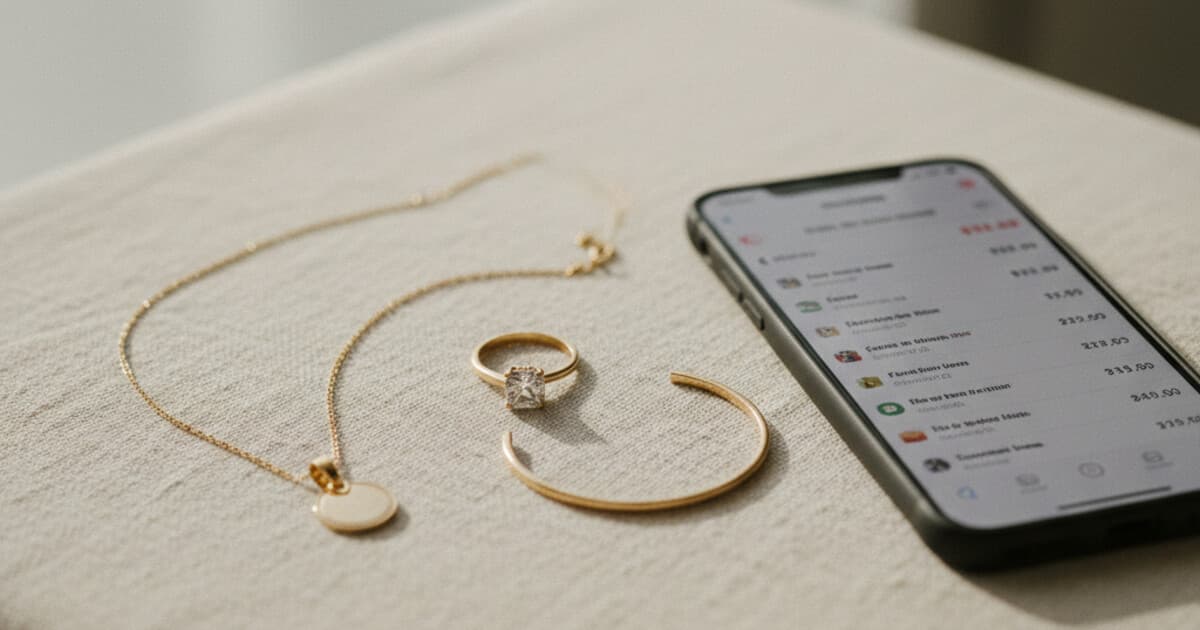
If you've listed jewelry on eBay and watched it sit unsold for weeks, you probably priced it based on the wrong data. Most sellers search for similar pieces, look at what others are asking, and price accordingly. That feels logical. But it's the wrong signal.
Active listings are asking prices. Sold listings are what buyers actually paid. For jewelry, the gap between those two numbers is often 25-40%. Price based on active listings and your piece stalls. Price based on sold data and it moves.
A handful of free eBay price checkers pull that sold transaction data without requiring a subscription or account. Here's what actually works in 2026.
The best free eBay price checker for jewelry is the Jewelry Identifier eBay Price Checker at jewelryappraisals.app. It requires no sign-in and pulls recent completed eBay sales for any jewelry description you enter. eBay's own sold/completed listings filter is also free but requires a login in most regions and more manual searching to get useful results.
Why Asking Prices on eBay Can't Tell You What Jewelry Is Worth
Anyone can list a gold ring on eBay for $800. That doesn't mean anyone will buy it for $800.
Active listings are cluttered with pieces that have been sitting for months. Some sellers price from appraisal value (which runs 3-5x resale for most pieces). Some guess. Some price deliberately high to leave room for negotiation. None of it reflects what the market will pay.
Sold prices are actual transactions. A buyer saw the item, decided the price was fair, and paid. That's the real market.
On eBay, the difference between listed and sold prices for jewelry typically runs 25-40%, and for some categories it's wider. Gold chains and bangles have historically tracked closely to metal melt value, but gold at $4,000+ per ounce in 2026 means buyers are paying a stronger premium over melt than in previous years. Gem-set pieces follow different logic: condition, provenance, and designer signatures drive the spread. A signed Trifari brooch from the 1960s can sell for 5-8x what an unsigned comparable fetches. Understanding which category your piece falls into changes how you read the sold data. For plain gold items, sort sold listings by weight range. For gem-set pieces, match on description and condition. For designer pieces, search by maker name. Cross-referencing 10-15 recent comparable sales gives a baseline accurate enough to price confidently. One outlier sale in either direction shouldn't move your number.
Checking sold data before you list is the single step that makes the biggest difference to how fast your jewelry sells.
The Best Free eBay Price Checker for Jewelry
The Jewelry Identifier eBay Price Checker is the fastest option built specifically for jewelry sellers. Type in what you have: "14k gold herringbone necklace," "vintage pearl drop earrings," "men's signet ring." It pulls recent eBay completed listings for that item.
No account required. No filters to configure. Results are filtered to sold transactions only, so you're looking at what buyers actually paid, not what sellers hope to receive.
There's also a more detailed version inside the full appraisal dashboard (free first appraisal, sign-in required), which combines the eBay price check with an AI-generated valuation report and comparable sales data. The free version handles most pre-listing research without any setup.
One practical case where the full tool adds value: if you're not sure what you have before searching. Upload a photo of your piece and the AI reads the hallmarks, identifies the material, and estimates the composition. Then you run the price check knowing exactly what you're comparing. Our guide on how to check jewelry prices on eBay covers the full workflow.
How to Use eBay's Built-In Sold Listings Filter
eBay shows sold prices directly. You just need to know where to find them.
Steps:
- Search for your item on eBay
- On the left sidebar, scroll to "Show only"
- Check "Sold items" (some regions label it "Completed items")
- Sort by "Date: recently sold" to see current transaction prices
The main limitation is search precision. "Gold necklace" returns results across every karat, length, style, and condition imaginable. The more specific your search ("14k gold rope chain 20 inch"), the more useful the comparisons.
eBay also now requires a login to view sold listings in most regions. For sellers who'd rather skip that step, the Jewelry Identifier tool doesn't need an account.
One more thing to know: eBay only shows 90 days of sold history by default. For unusual pieces where recent sales are sparse, that window can be too narrow to get a reliable read.
Terapeak: The Most Complete Free Option for Active eBay Sellers
If you already have an eBay seller account (basic and above), Terapeak is bundled in for free.
Terapeak pulls 365 days of sold data, shows average sale prices by category, calculates sell-through rates, and identifies which listing formats (auction vs. fixed price) perform best for a given item type. For jewelry sellers who list regularly, that extra depth is genuinely useful.
You'll spot patterns that a 90-day window misses: estate jewelry selling faster in spring, gold pieces moving more in late fall, certain categories trending up or down over the year.
The barrier is that you need an active eBay seller account. If you're trying to figure out what a single inherited piece is worth before deciding whether to sell it, that's more setup than the situation calls for.
WorthPoint for Vintage and Signed Pieces
WorthPoint is a historical price guide database with archived eBay and auction sale data going back decades. It's genuinely useful for vintage and signed jewelry where eBay's 90-day window doesn't capture enough transactions.
The free tier limits you to a handful of lookups per month. Paid plans start around $20/month. For occasional vintage sellers, a single month's subscription often covers the research on a single valuable piece.
Where WorthPoint separates itself: signed designer pieces. If you're researching a Miriam Haskell necklace, a Chanel brooch, or a Georg Jensen bracelet, WorthPoint may have hundreds of historical transactions across eBay and major auction houses. That depth of data gives you pricing confidence that recent sold listings alone can't provide.
For modern gold and silver pieces, WorthPoint is less useful. Current metal prices and recent eBay sold data give you what you need without a subscription.
How to Get a Reliable Price from Sold Data
One sold listing can mislead you completely. You need a pattern across multiple sales.
Pull 10-15 comparable sold listings from the past 60-90 days. Filter out outliers: a piece that sold for 3x the average usually means a bidding war, a rare variation, or a misidentified item. It shouldn't anchor your price.
The specifics that actually move jewelry prices on eBay:
- Metal type and karat (14k vs. 10k vs. 18k isn't minor, it's often a 40-60% price difference)
- Weight (for gold-by-weight pieces, weight is everything)
- Condition (estate/worn pieces consistently sell 20-35% below comparable pieces in excellent condition)
- Gemstone presence and quality
- Maker marks, hallmarks, or designer signatures
- Photo quality in the listing (high-quality photos pull 15-25% more on average)
For plain gold pieces like chains, bangles, and simple bands, cross-check against melt value: current gold price per gram, multiplied by the piece's weight, multiplied by purity percentage (14k gold is 58.3% pure, 18k is 75%). You should list above melt, but not dramatically above for plain pieces. Sold listings confirm what premium buyers currently accept.
If you don't know the karat or metal composition yet, start with an identification before running the price check. Knowing what you actually have makes the comparison far more accurate. Our article on what your jewelry is worth on eBay walks through both steps.
Frequently Asked Questions
Is there a completely free eBay price checker for jewelry? Yes. The Jewelry Identifier eBay Price Checker at jewelryappraisals.app is free with no account required. It shows recent completed eBay sale prices for any jewelry description you enter.
Does eBay still show sold prices without a login? In most regions, eBay now requires a login to view sold/completed listings. The Jewelry Identifier price checker doesn't require an account and pulls eBay sold data directly.
How many sold listings should I check? At least 10-15 comparable sales from the past 60-90 days. A single transaction (especially a very high or very low outlier) isn't enough to set a reliable price. Look for the cluster where most sales land.
Does the current gold price affect what jewelry sells for on eBay? Yes, significantly for plain gold pieces. Gold at $4,000+ per ounce in 2026 means gold chains, bangles, and rings are selling faster and closer to melt value than in previous years. Gem-set pieces are less directly affected by spot price movements.
What's the difference between a sold price and an asking price on eBay? Asking prices are what sellers want. Sold prices are what buyers paid. For jewelry, the gap averages 25-40%, sometimes more. Always use sold data for pricing decisions.
Price It Right Before You List
Overpricing means your piece sits while similar items sell. Underpricing means leaving money on the table. Both are avoidable with 5 minutes of sold-data research before you list.
The free eBay Price Checker at jewelryappraisals.app is the fastest starting point for jewelry specifically: no account, no filter setup, sold prices for whatever you type in.
If you want a full appraisal alongside the price check, try it now: get your free jewelry appraisal in seconds.