 Jewelry Identifier
Free Online Jewelry Appraisal: Best Options in 2026
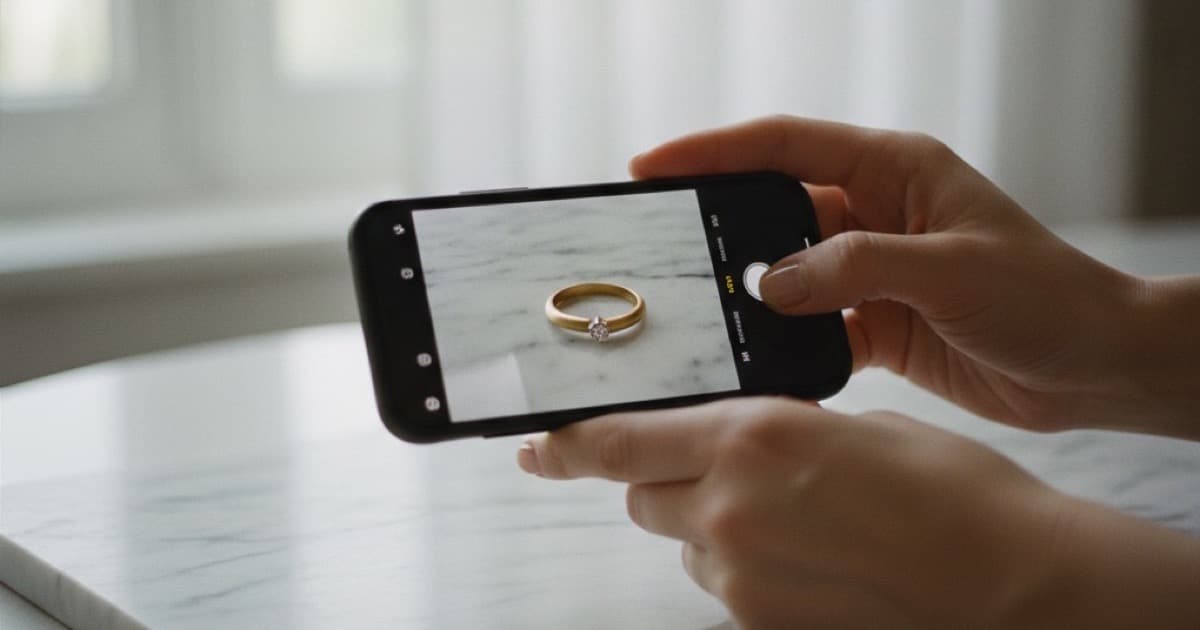
You want to know what your jewelry is worth, but you don't want to drive across town, wait in line at a jeweler, or pay $100 for the privilege. A free online jewelry appraisal sounds perfect. But do they actually work?
Some do. Most don't. The accuracy depends entirely on the method, and there's a wide gap between a blurry photo submission and an AI tool trained on millions of jewelry images. Here's how each option stacks up so you can pick the right one.
Want to skip ahead? Get a free jewelry appraisal right now — upload a photo and the AI returns a value range in seconds, no sign-up required.
How Free Online Jewelry Appraisals Work
Online appraisals skip the in-person visit. Instead of handing your ring to a gemologist behind a counter, you submit information digitally. The appraiser (or algorithm) analyzes what you've provided and returns an estimate.
There are four main types, and they vary wildly in accuracy, speed, and what you actually get back.
Photo-based submission services let you upload images to a website, sometimes with a form asking about metal type, stone size, and any markings. A human appraiser reviews your submission and emails back an estimate within 1 to 5 business days. These typically cost $25 to $75, though a few sites offer a free first evaluation. Accuracy is decent for straightforward pieces but limited: the appraiser can't test metal purity, measure stone dimensions precisely, or check for treatments that only show under magnification.
AI-powered appraisal tools use image recognition to identify your piece instantly. You snap a photo, the AI identifies the jewelry type, metal, gemstones, era, and style, then generates a value estimate based on comparable market data. Results come back in seconds, not days. The best tools also read stamps and hallmarks from photos, which human appraisers sometimes miss in low-resolution uploads.
Social media and forum estimates come from jewelry communities on Reddit, Facebook groups, and hobby forums. Post a photo of your piece and wait for responses. Free, but unreliable. You'll get conflicting opinions from people with varying levels of expertise, and nobody has handled your piece in person.
Retail jeweler "free appraisals" are technically in-person, but many jewelers now accept online submissions too. The catch: their estimates often skew toward retail replacement value (what it would cost to buy the same piece new in their store), not what a buyer would actually pay you. They're also incentivized to upsell you on cleaning, resetting, or insurance.
The accuracy of any online jewelry appraisal depends on three factors: the quality of the photos you submit, the complexity of the piece being evaluated, and whether the service can identify materials without physical testing. A clear, well-lit photo of a simple gold band with visible hallmarks will produce a reliable estimate from most services. A multi-stone vintage brooch with no markings is harder. AI tools perform best when they can read stamps, identify gemstone types visually, and cross-reference against pricing databases in real time. Human reviewers are better at catching subtle details like stone treatments or period-specific construction techniques, but they need higher-quality images and more time to deliver results.
What You Can (and Can't) Expect from Online Appraisals
Online appraisals give you a ballpark, not a legally binding document. That's fine for most situations.
Good for:
- Figuring out if grandmother's ring is worth $200 or $2,000
- Screening a box of inherited pieces to find the valuable ones
- Getting a price range before selling on eBay or to a local buyer
- Satisfying curiosity without spending money
Not good for:
- Insurance documentation (most insurers require in-person appraisals from credentialed professionals)
- Legal proceedings like divorce settlements or probate
- IRS-qualified appraisals for charitable donations over $5,000
- Pieces where the difference between real and synthetic stones means thousands of dollars
If you need a number for insurance or legal purposes, you'll still need a certified in-person appraisal. But for everything else, an online estimate saves you time and money.
Getting the Best Results from an Online Appraisal
Your estimate is only as good as the photos you provide. A few minutes of preparation makes a big difference.
Lighting: Natural daylight works best. Avoid flash, which washes out details and creates misleading reflections on gemstones. Photograph near a window on an overcast day for the most accurate color.
Angles: Shoot from directly above, plus at least one side angle. For rings, get a close-up of the inside band where stamps and hallmarks live. For necklaces, photograph the clasp (it often has the purity mark).
Background: Use a plain white or neutral surface. Busy backgrounds confuse AI recognition tools and make it harder for human appraisers to isolate details.
Scale reference: Place a coin or ruler next to the piece. This helps estimate carat weight and overall dimensions without physical measurement.
Existing documentation: If you have a receipt, certificate, or previous appraisal, include it. Even a GIA number inscribed on a diamond's girdle gives the appraiser a massive head start.
If your piece has any stamps or markings, make sure they're visible in at least one photo. These tiny inscriptions (like 585, 750, 925, or PT950) tell an appraiser more about your piece than almost anything else. Our guide on reading jewelry stamps and hallmarks explains what each marking means.
How Jewelry Identifier Compares to Other Online Options
Jewelry Identifier is built specifically for this: upload a photo from any device (phone, tablet, desktop) and get an AI-powered identification and value estimate in seconds. No waiting days for an email reply.
What sets it apart from other online options:
- Identification and appraisal in one step: Most services do one or the other. Jewelry Identifier tells you what you have (metal type, gemstones, era, style) and what it's worth in a single scan.
- Stamp and hallmark reading: The AI reads those tiny inscriptions inside ring bands and on clasps, then translates them into plain English.
- PDF reports: Each appraisal generates a detailed report with material breakdown, gemstone grading, and comparable sales data. Useful if you're showing a buyer what your piece is worth.
- Works from any device: No app install required for the web tool. The mobile app adds offline access for estate sales, antique fairs, and flea markets where cell signal is spotty.
Your first appraisal is free. After that, the web tool and mobile app offer additional scans through a subscription.
For pieces worth over $5,000 or anything you need appraised for insurance, pair the AI estimate with a professional in-person appraisal. The AI scan tells you which pieces justify that $50 to $150 professional fee.
Frequently Asked Questions
Are free online jewelry appraisals accurate?
They provide reasonable estimates for common pieces (gold rings, diamond studs, silver jewelry) but struggle with unusual items, unmarked pieces, or anything requiring lab testing. AI tools are most accurate when they can read hallmarks and identify standard gemstone types. Expect accuracy within 15 to 25% of professional appraisal values for typical jewelry.
Can I use an online appraisal for insurance?
Most insurance companies won't accept online-only appraisals. They require in-person evaluations from credentialed appraisers (GIA, ASA, or AGS certified) who can physically examine and test the piece. Online appraisals work well as a preliminary step to identify which pieces need formal coverage.
What information do I need for an online jewelry appraisal?
At minimum: clear photos from multiple angles. Better results come from including any stamps or hallmarks visible on the piece, the approximate weight, any existing documentation (receipts, certificates, previous appraisals), and details about the piece's history if known. The more information you provide, the narrower the value estimate.
How is an online appraisal different from a pawn shop estimate?
Pawn shops offer liquidation value, which is the lowest tier. They'll pay 20 to 40% of what your piece is actually worth because they need room for profit. Online appraisals typically estimate fair market value (what a willing buyer would pay), which runs 40 to 60% of retail replacement. Check our guide on how much pawn shops pay for gold for specifics.
Do online appraisals work for antique or vintage jewelry?
They can identify the era, style, and materials, but vintage pieces often have value beyond their raw materials. A piece's provenance, maker, and historical significance affect the price in ways that require specialized knowledge. For vintage jewelry worth more than a few hundred dollars, follow up with an appraiser who specializes in estate or antique pieces.
Want to see what your jewelry is worth in seconds? Try it now: get your free jewelry appraisal with Jewelry Identifier.