 Jewelry Identifier
How Much Is My Gold Necklace Worth in 2026?
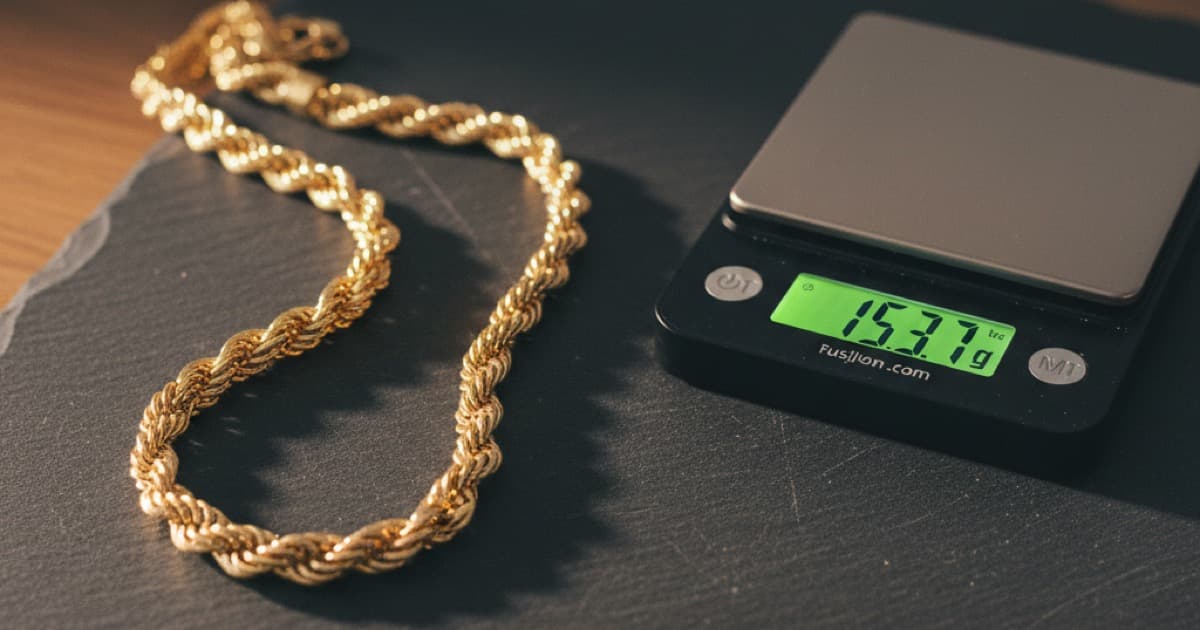
You've got a gold necklace and you want to know what it's worth. Maybe it's been sitting in a jewelry box for years. Maybe you inherited it. Maybe gold prices are at record highs and you're wondering if now is the time to sell. The answer depends on three things: the gold's purity, the necklace's weight, and whether the piece has value beyond its metal content.
A gold necklace is worth its gold weight multiplied by current spot price, adjusted for purity. A 14K gold necklace weighing 20 grams is worth roughly $2,280 in pure gold value at today's prices ($3,000/oz). But what you'll actually get depends on who's buying and whether your necklace has design or brand value on top of the melt price.
How to Calculate Your Gold Necklace's Melt Value
Melt value is the floor: the minimum your necklace is worth if sold purely for its gold content. Here's the math.
Step 1: Find the karat. Look for a stamp on the clasp or near the clasp. Common gold necklace stamps:
- 999 or 24K: 99.9% pure gold (soft, rare in necklaces)
- 750 or 18K: 75% pure gold (common in fine jewelry)
- 585 or 14K: 58.5% pure gold (most common in US jewelry)
- 417 or 10K: 41.7% pure gold (minimum to be called "gold" in the US)
- 375 or 9K: 37.5% pure gold (common in UK jewelry)
Can't find the stamp? It might be worn down or hidden near the clasp mechanism. A magnifying glass helps. If you still can't find it, the necklace might be gold-plated rather than solid gold. Plated necklaces (stamped GF, GP, or HGE) have minimal gold content and are worth $5 to $20 at most. Our guide on gold plated vs solid gold explains how to tell the difference.
Step 2: Weigh the necklace. Use a kitchen scale or postal scale that reads in grams. A typical gold chain weighs between 5 and 50 grams depending on length, thickness, and style. Rope chains and Cuban links tend to be the heaviest (and most valuable by weight).
Step 3: Do the math. Convert the gold spot price from troy ounces to grams (1 troy ounce = 31.1 grams), multiply by the necklace weight, then multiply by the purity percentage.
With gold at $3,000 per troy ounce (roughly $96 per gram):
- 10g 14K chain: 10 × $96 × 0.585 = $562 melt value
- 20g 18K chain: 20 × $96 × 0.75 = $1,440 melt value
- 30g 14K rope chain: 30 × $96 × 0.585 = $1,685 melt value
These are melt values. Intact necklaces in good condition typically sell for 10 to 30% above melt to buyers who want to wear or resell them (not scrap them).
Gold necklace values have climbed significantly since 2020, driven by record-high gold prices that have pushed past $3,000 per troy ounce in 2026. A 14K gold necklace weighing 15 grams that was worth around $400 in melt value five years ago is now worth over $840 in gold content alone. The actual selling price depends on condition, style, and buyer. Scrap dealers and pawn shops pay 70 to 85% of melt value. Private buyers and jewelry resellers pay 90 to 130% of melt for intact pieces in good condition, since they can resell without melting. Designer necklaces from brands like Cartier, Tiffany, or Bvlgari command premiums of 50 to 200% above melt value. Vintage or antique gold necklaces with historical significance or distinctive craftsmanship can exceed melt value by even wider margins, though this requires specialized appraisal.
What Makes a Gold Necklace Worth More Than Melt
Some gold necklaces are worth significantly more than their raw gold value.
Brand and designer pieces. A Cartier Love necklace in 18K gold retails for $2,000+ but its gold content might only be worth $500 to $800. The brand premium survives on the resale market. Check inside the clasp for brand engravings.
Chain style and craftsmanship. Hand-finished Italian gold chains, intricate Byzantine links, and vintage box chains carry premiums over plain rope or curb chains. The labor and artistry add value that doesn't show up in a melt calculation.
Gemstone accents. If your necklace has diamonds or colored stones, those add value separately from the gold. Even small accent diamonds (0.10 to 0.25 carats each) add up when there are several of them.
Vintage and antique pieces. Gold necklaces from the Art Deco, Victorian, or Edwardian eras are collected specifically for their period design. A 1920s gold filigree necklace might be worth 2 to 5 times its melt value to the right buyer. Check our vintage jewelry identification guide for dating clues.
Cultural and religious pieces. Heavy 22K or 24K gold necklaces common in South Asian, Middle Eastern, and East Asian jewelry traditions are worth more than their Western equivalents of the same weight because of higher purity and cultural demand.
Where to Sell a Gold Necklace
Your payout depends entirely on where you sell.
Gold buyers and refiners pay 70 to 90% of melt value. They're buying the metal, not the necklace. Fast and straightforward, but you leave money on the table if your piece has design value.
Pawn shops pay 50 to 70% of melt value. Lowest payout but immediate cash. Read our guide on how much pawn shops pay for gold before walking in.
Online gold buyers (APMEX, Cash for Gold USA, Kitco) pay 75 to 90% of melt. You ship the necklace, they test and weigh it, and send payment. Get quotes from at least 2 buyers.
Jewelry resellers and consignment pay 40 to 80% of retail value (which is higher than melt for nice pieces). If your necklace is from a known brand or has collectible appeal, this route pays more than scrapping it.
Private sale (eBay, Facebook Marketplace, Craigslist) gets you the highest price (80 to 120% of melt, or full market value for branded pieces) but requires effort: photographing, listing, negotiating, and shipping.
How Jewelry Identifier Helps You Value a Gold Necklace
Not sure what karat your necklace is? Can't read the tiny stamp on the clasp? Jewelry Identifier reads those markings for you. Snap a photo of your gold necklace and the AI identifies the metal type, reads the purity stamp, identifies the chain style, and estimates the value based on current gold prices and comparable sales.
The PDF report breaks down the material value separately from design value, so you know exactly what you're working with. Your first appraisal is free on the web tool.
Frequently Asked Questions
How much is a 14K gold necklace worth?
It depends on weight. At today's gold prices (~$3,000/oz), a 14K gold necklace is worth roughly $56 per gram in pure gold value. A typical 15-gram chain has about $840 in gold content. You'll get 70 to 90% of that from a gold buyer, or more if the piece has design or brand value.
Is 10K gold worth selling?
Yes. 10K gold is 41.7% pure, which means it's worth roughly $40 per gram at current prices. A 20-gram 10K necklace has about $800 in gold value. It's less per gram than 14K or 18K, but still worth real money at today's record gold prices.
How can I tell if my gold necklace is real?
Check for a karat stamp (10K, 14K, 18K, or the numerical equivalents 417, 585, 750). Real gold won't be attracted to a magnet (though the clasp spring might be). If there's no stamp and you're unsure, a quick photo scan with Jewelry Identifier can help identify the metal, or read our full guide on how to tell if gold is real.
Should I sell my gold necklace now or wait?
Gold is near all-time highs in 2026. Nobody can predict whether prices will go higher, but historically, selling during price peaks gets you the best return. If you don't wear the necklace and aren't attached to it, the current market is favorable.
What's the difference between scrap value and resale value?
Scrap value is what a refiner pays to melt the gold. Resale value is what a buyer pays for the intact necklace, which includes the gold value plus any design, brand, or collector premium. Resale value is always equal to or higher than scrap value.
Wondering what your gold necklace is worth at today's prices? Try it now: get your free gold necklace appraisal in seconds with Jewelry Identifier.