 Jewelry Identifier
How to Tell if a Ruby Is Real: At-Home Tests and What to Look For
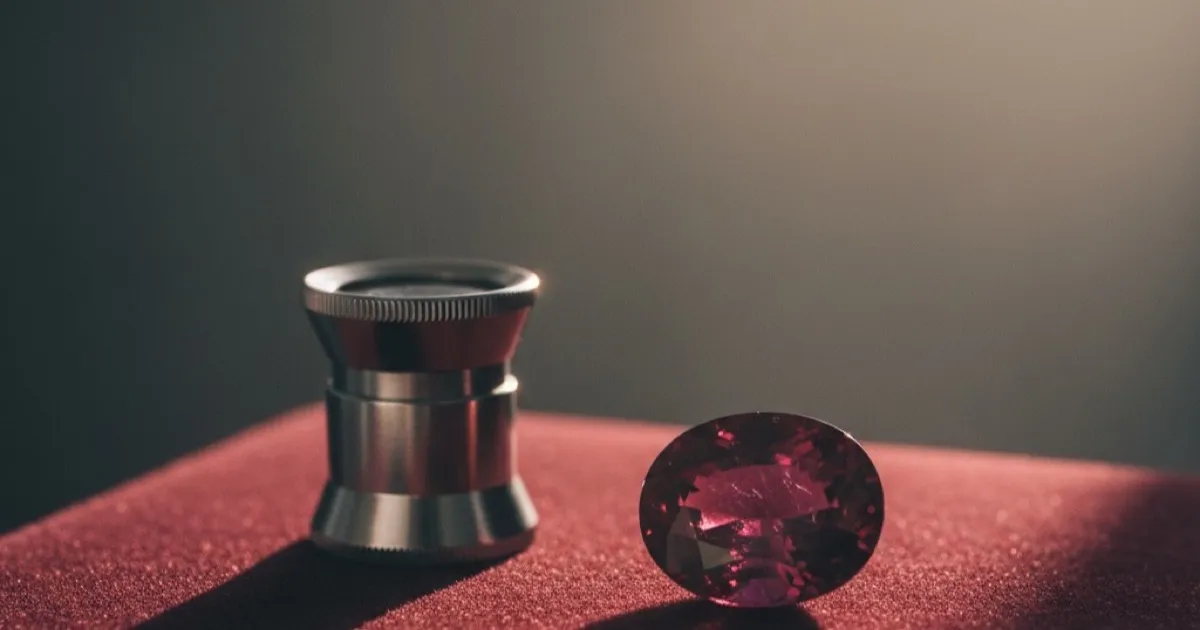
Rubies are among the most valuable colored gemstones in the world. A fine natural ruby can sell for more per carat than a diamond. That kind of value attracts fakes — glass, synthetic corundum, garnet, and dyed stones all get sold as rubies to unsuspecting buyers.
If you own a ruby or you're thinking about buying one, you need to know how to tell if a ruby is real before you spend serious money. These tests range from quick visual checks to more involved methods, and together they'll give you a reliable answer without needing a gemological lab.
What Makes a Ruby a Ruby
A ruby is a variety of the mineral corundum (aluminum oxide) colored red by chromium. Sapphires are the same mineral — any corundum that isn't red is classified as sapphire. Only red corundum qualifies as ruby.
The most prized color is called "pigeon blood" — a vivid, slightly purplish red with strong saturation. Rubies come from Myanmar (Burma), Mozambique, Thailand, Sri Lanka, Madagascar, and several other countries. Burmese rubies are historically the most valued, but fine stones come from many sources.
Natural rubies almost always contain inclusions — tiny internal features like silk (fine rutile needles), crystals, and fingerprint-like patterns. These inclusions are not flaws; they're proof that the stone formed naturally over millions of years deep in the earth. A completely flawless ruby should raise suspicion, not admiration.
The Color Test
Hold the ruby under good lighting and examine the color carefully. Natural rubies display a rich, deep red that varies depending on the viewing angle. This color shift is called pleochroism, and it's a characteristic of natural corundum.
What to look for:
- Red with slight variation — natural rubies show slightly different shades of red from different angles (red to orangey-red or purplish-red)
- Strong fluorescence under UV — many natural rubies glow bright red under ultraviolet light, especially Burmese stones
- Color zoning — subtle bands of lighter and darker red within the stone are common in natural rubies
What raises red flags:
- Perfectly uniform color — too-even color throughout the entire stone suggests synthetic or glass
- Unnaturally bright — if the stone looks like a red traffic light, it may be glass or synthetic
- Color only on the surface — some coated stones have color just on the outside. Check the pavilion (bottom) of the stone for color consistency
Glass and garnet are the most common ruby substitutes. Red glass looks good at first glance but lacks the depth and subtle color shifts of real corundum. Garnet is a genuine gemstone but typically has a darker, more brownish-red color without the vivid saturation of ruby.
The Inclusion Test
This is one of the most telling tests. Grab a jeweler's loupe (10x magnification) or use your phone's macro camera.
Look inside the stone for natural inclusions. Real rubies almost always contain visible inclusions when examined under magnification. Common natural ruby inclusions include:
- Silk — fine, needle-like rutile crystals that cross at 60-degree angles. This is the most characteristic inclusion in natural ruby
- Fingerprints — partially healed fractures that look like fingerprint patterns
- Crystal inclusions — tiny crystals of other minerals trapped inside
- Color zoning — alternating light and dark bands following the crystal growth pattern
If the stone is perfectly clean under 10x magnification with zero inclusions, it's almost certainly synthetic. Lab-created rubies are physically identical to natural ones but grow under controlled conditions that produce far fewer inclusions. Some synthetic rubies show curved growth lines (called striae) instead of straight color bands — this is a dead giveaway of flame-fusion synthesis, the most common method for producing cheap synthetic rubies.
Glass rubies will show round air bubbles under magnification. These are never found in natural corundum.
The Hardness Test
Ruby is a 9 on the Mohs hardness scale, second only to diamond (10). This means ruby will scratch almost any other material but can only be scratched by diamond.
Try scratching the stone with a steel file or knife blade (hardness 6.5). If it scratches, it's not ruby. Real ruby won't be affected by steel.
You can also try scratching a piece of glass with the ruby. Genuine ruby will scratch glass easily and cleanly. Glass itself has a hardness of about 5.5.
Be careful with this test:
- Garnet (hardness 6.5-7.5) can also scratch glass, so passing this test doesn't confirm ruby
- Synthetic ruby has the same hardness as natural ruby, so this test doesn't distinguish between them
- Don't scratch the top face of a valuable stone — test on the girdle or an inconspicuous area
The hardness test is most useful for ruling out glass and softer imitations. It won't help you determine if a hard red stone is natural ruby versus synthetic ruby or red spinel.
The UV Light Test
Many natural rubies fluoresce strongly under ultraviolet light, glowing bright red or orange-red. This fluorescence comes from the chromium that gives rubies their red color.
Shine a UV flashlight (available cheaply online) on the stone in a dark room.
- Strong red glow — consistent with natural ruby, especially Burmese stones. Burmese rubies are famous for their intense fluorescence
- Weak or no glow — doesn't rule out ruby (Thai rubies often have low fluorescence due to iron content), but combined with other test results, it adds information
- Unnatural bright glow in weird colors — some synthetic materials fluoresce differently than natural corundum
This test is useful but not definitive on its own. Synthetic rubies also fluoresce under UV since they contain the same chromium. The UV test is best used alongside the inclusion test to build a complete picture.
The Breath Test
This is a quick screening test based on thermal conductivity. Ruby conducts heat well and dissipates moisture quickly.
Breathe on the stone like you'd fog up a mirror. Watch how fast the fog disappears.
- Fog clears in 1-2 seconds — consistent with ruby or another corundum
- Fog lingers for 4-5 seconds or longer — suggests glass, which has lower thermal conductivity
This test is crude but useful as a quick first check at a market or shop. It won't distinguish between natural and synthetic ruby (both are corundum with the same thermal properties), but it catches glass fakes quickly.
Common Ruby Imitations
Knowing what gets passed off as ruby helps you test smarter:
Red glass — the cheapest fake. Looks good from a distance but shows bubbles and swirl marks under magnification. Feels warmer than ruby, lighter in hand, and scratches easily. Fails hardness, inclusion, and breath tests.
Synthetic ruby — lab-created corundum with the same chemical composition as natural ruby. Hardness, density, and refractive index match natural ruby. The key difference: inclusions. Synthetic rubies are too clean or show curved striae instead of straight color banding. Only detectable through careful magnification or lab testing.
Garnet — a natural gemstone, but not ruby. Usually darker and more brownish-red. No fluorescence under UV. Single refractive (ruby is doubly refractive, which you can detect with a polariscope).
Red spinel — another genuine gemstone historically confused with ruby. Many famous "rubies" in crown jewels are actually spinel. Spinel has similar hardness and appearance but is singly refractive and lacks the silk inclusions typical of ruby.
Composite ruby — a thin slice of natural ruby bonded to glass with colored cement. The thin ruby layer passes some tests, but the glass body shows bubbles and has different properties. Look at the stone from the side to spot the junction between materials.
For a comprehensive guide to telling genuine gemstones from fakes, see our gemstone identification guide.
Natural vs. Lab-Created Rubies
Lab-created rubies aren't "fake" in the traditional sense. They're real corundum with the same chemical formula, crystal structure, and physical properties as mined rubies. The difference is origin, and that difference affects value dramatically.
A 1-carat natural Burmese ruby of fine quality can sell for $5,000-$15,000 or more. A 1-carat lab-created ruby of similar appearance costs $5-$50. The value gap exists because natural rubies took millions of years to form and are genuinely rare.
At-home tests can catch glass and garnet easily, but distinguishing natural from synthetic ruby typically requires:
- Magnification — look for natural inclusions (silk, fingerprints, crystals) vs synthetic indicators (curved striae, gas bubbles, too-perfect clarity)
- UV fluorescence patterns — natural and synthetic can differ subtly
- Professional testing — a gemological lab can use spectroscopy and microscopy for definitive identification
If you're buying a ruby worth more than a few hundred dollars, get a certificate from GIA, AGL, or another reputable gem lab. For everyday checks on inherited or flea-market finds, the home tests above will catch the most common fakes.
For guidance on evaluating all types of real vs fake jewelry, including how to spot fakes across gemstones and metals, see our full guide.
How Jewelry Identifier Helps
Testing rubies at home gives you a starting point, but some checks require training to interpret correctly. Jewelry Identifier lets you photograph your ruby and get an instant AI analysis that identifies the stone type and estimates its value.
The app examines color, clarity, and surface characteristics to determine what you're looking at. It works on loose stones and mounted jewelry alike, and you can use it at estate sales, antique shops, or at home.
Try it now — get your free jewelry appraisal in seconds.
Frequently Asked Questions
Are dark red rubies more valuable?
Not necessarily. The most valuable color is a medium to medium-dark red with strong saturation, often called "pigeon blood." Rubies that are too dark appear almost black and lose their brilliance. Lighter stones with weak color are also less valuable. The sweet spot is a vivid, lively red.
Do real rubies have bubbles inside?
No. Air bubbles are a clear sign of glass or lead-glass-filled composite stones. Natural rubies contain mineral inclusions like rutile silk, crystal inclusions, and fingerprint patterns, but never round gas bubbles. If you see bubbles under magnification, the stone is not natural ruby.
Can a ruby scratch glass?
Yes. Ruby has a Mohs hardness of 9 and will scratch glass (hardness 5.5) easily. However, this test alone doesn't confirm a stone is ruby. Garnet, spinel, synthetic ruby, and several other hard stones can also scratch glass.
How can I tell if my ruby is lab-created?
The main indicator is inclusions. Natural rubies contain silk, fingerprints, and crystal inclusions. Lab-created rubies are either too clean or show curved growth lines (striae) under magnification. For a definitive answer, submit the stone to a gemological laboratory like GIA.
Why do some rubies glow under UV light?
The chromium that gives rubies their red color also causes fluorescence under ultraviolet light. Burmese rubies are especially fluorescent, glowing bright red under UV. Thai and African rubies may fluoresce less due to higher iron content. Both natural and synthetic rubies can fluoresce.