 Jewelry Identifier
How to Tell if Amber Is Real: 6 Easy Tests
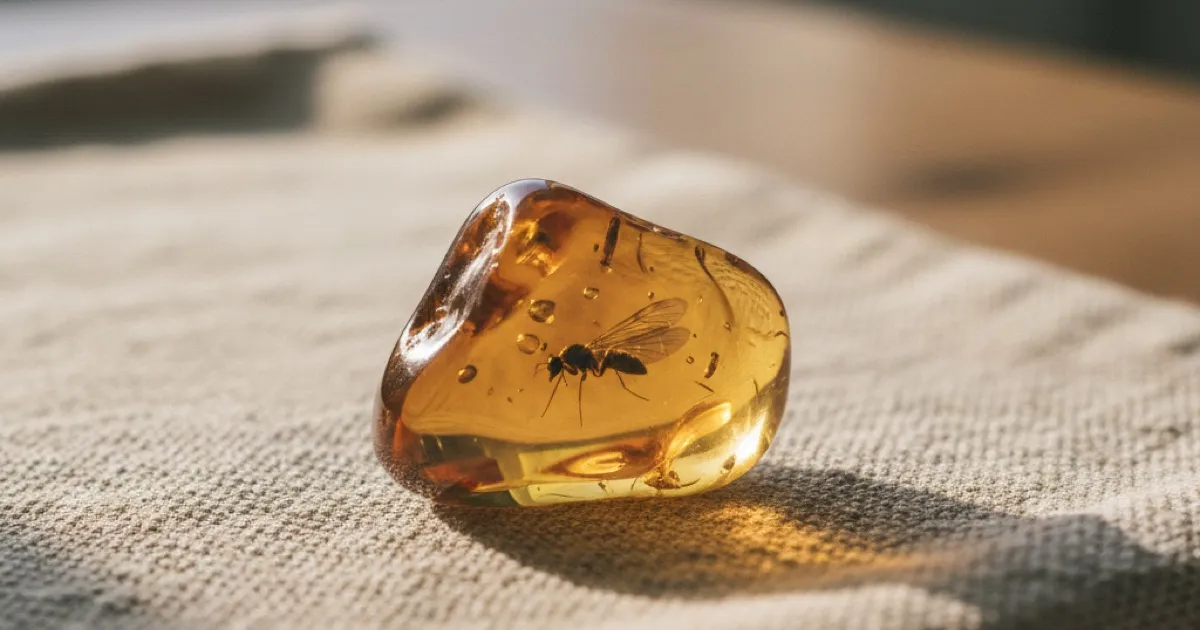
Amber is fossilized tree resin, millions of years old. Baltic amber with a trapped insect inside can sell for hundreds or even thousands of dollars. But the amber market is full of fakes — copal (young resin that hasn't fully fossilized), plastic, glass, and pressed amber reconstructions all get passed off as the real thing.
If you bought amber jewelry, inherited a piece, or picked one up at a market, knowing how to tell if amber is real will save you from overpaying for plastic. These six tests use household items and take just minutes to run.
What Real Amber Looks Like
Amber ranges in color from pale yellow to deep reddish-brown. Some varieties are green, blue, or nearly black. Baltic amber (the most common and commercially available type) is typically honey-yellow to warm orange.
Key traits of genuine amber:
- Warm color with depth — light passes through amber with a warm glow, showing internal variation
- Imperfections — tiny bubbles, plant debris, or insects trapped inside. Perfectly clear amber exists but is less common than amber with inclusions
- Lightweight feel — amber is one of the lightest gemstones. It feels much lighter than glass or most stones
- Warm to the touch — unlike glass or stone, amber doesn't feel cold when you pick it up
The most valuable amber contains well-preserved insect inclusions. If you see a perfectly positioned, museum-quality bug in a cheap piece of amber, be suspicious. Forgers embed modern insects in copal or resin to imitate valuable specimens.
The Salt Water Float Test
This is the most popular amber test, and for good reason — it's easy, non-destructive, and surprisingly reliable.
Amber has a specific gravity of about 1.05-1.10, which means it barely sinks in fresh water but floats in saturated salt water. Most fakes are denser and sink in both.
How to do it:
- Mix about 7 tablespoons of salt into 1.5 cups of warm water. Stir until the salt dissolves completely
- Drop the piece into the salt water
- Watch what happens
If it floats — consistent with real amber (or copal, which has similar density). Glass, most plastics, and stone imitations sink.
If it sinks — the piece is too dense to be amber. It's likely glass, a heavier plastic, or a different stone entirely.
A few notes: remove the piece from any metal setting first, since the metal's weight will pull genuine amber down. Also, some dense plastics like Bakelite (a vintage material sometimes confused with amber) will also sink. And copal floats just like amber, so passing this test doesn't prove the piece is fully fossilized amber.
Rinse the piece in fresh water after testing to remove the salt residue.
The Static Electricity Test
Amber is one of the original materials used to study static electricity — the Greek word for amber, "elektron," is where we get the word "electricity." Real amber builds a static charge when rubbed.
Rub the piece briskly against a piece of wool, cotton, or your hair for 30-60 seconds. Then hold it near small pieces of tissue paper, hair clippings, or tiny paper confetti.
If the small pieces jump toward the amber — the piece builds a static charge, consistent with real amber.
If nothing happens — glass and most stones don't build static charges. This points toward a non-amber material.
Copal and some plastics can also build static charges, so this test alone isn't definitive. But combined with other tests, it helps build the picture.
The Hot Needle Test
This is one of the most telling tests for amber authentication. Heat a sewing needle or pin with a lighter until the tip glows, then touch it to an inconspicuous area of the piece.
What to check for:
Real amber — produces a piney, resinous smell (like pine sap or incense). The needle enters the surface with slight resistance. A small white smoke may appear.
Copal — smells similar to amber but the needle enters more easily because copal is softer and less fully fossilized.
Plastic — produces a sharp, chemical, acrid smell (like burning plastic or rubber). Often produces black smoke. The needle may enter very easily or melt a clean hole.
Glass — the needle won't penetrate at all. No smell, no mark.
The smell is the key indicator. If you've ever smelled pine resin or frankincense, real amber smells similar. Plastic smells nothing like it. Once you've smelled burning amber, you won't forget the difference.
Test on the back of the piece, inside a drill hole, or on an area covered by the setting. The hot needle leaves a tiny mark.
The UV Light Test
Real amber fluoresces under ultraviolet light. This is one of the cleanest tests because it's completely non-destructive.
Shine a UV flashlight (longwave UV, 365nm works best) on the piece in a dark room.
Real amber — glows blue, green, or yellowish-green under UV light. Baltic amber typically shows a strong blue-white or green fluorescence.
Copal — may fluoresce but usually with a duller, more yellowish glow compared to aged amber.
Plastic — usually shows no fluorescence, or fluoresces in an unnatural, uniform way.
Glass — no fluorescence.
The UV test is quick and reliable for catching glass and plastic fakes. It's less useful for distinguishing amber from copal, but the fluorescence of genuine amber is usually stronger and more vivid than copal's response.
The Scratch and Texture Test
Amber is relatively soft — 2 to 2.5 on the Mohs hardness scale. That's softer than a copper coin (3.5) and much softer than glass (5.5).
Try scratching the surface with your fingernail. You shouldn't be able to leave a mark with your nail alone. Now try scratching with a copper coin or a knife blade.
Real amber — a knife will produce small, powdery chips or crumbles. Amber doesn't produce curled shavings like plastic does. The scratched area feels slightly rough and granular.
Plastic — a knife produces curled shavings (like peeling a candle). The texture is smoother and more uniform than amber.
Glass — a knife won't scratch glass at all, since glass is harder than steel.
Copal — behaves similarly to amber under scratching but may feel slightly stickier or tackier, especially in warm conditions.
Also check the surface with your fingers. Real amber has a slightly warm, organic feel. Plastic feels smooth and artificial. Glass feels cold and slick.
For a broader overview of identifying genuine gemstones across all categories, see our gemstone identification guide.
Common Amber Imitations
Knowing what you're up against helps you test smarter:
Copal — young tree resin (hundreds to thousands of years old, versus amber's millions). Looks almost identical to amber. Passes many tests. The hot needle test and UV test are your best tools — copal softens more easily and fluoresces differently. Copal also dissolves in acetone, while true amber resists it.
Pressed amber (ambroid) — small pieces of genuine amber fused together under heat and pressure. It's technically real amber material, but the fusing process reduces its value. Under magnification, you can sometimes see elongated bubbles or flow patterns from the pressing process.
Plastic (including Bakelite) — the most common fake. Fails the hot needle smell test immediately. Modern plastics are lighter than glass but often heavier than amber. Bakelite is a vintage plastic that can be confused with amber due to its similar color and era.
Glass — heavier, colder, harder than amber. Fails almost every test. Easy to catch.
Phenolic resin — an industrial material sometimes carved to look like amber. Burns with a chemical smell, doesn't fluoresce properly, and feels harder than amber.
For more on separating genuine pieces from imitations, check our guide on real vs fake jewelry.
Why Amber Value Varies So Much
Not all genuine amber is created equal. Value depends on several factors:
- Age and origin — Baltic amber (40-50 million years old) is the most traded. Dominican amber (15-40 million years old) is valued for its clarity and rare blue color
- Inclusions — amber with well-preserved insects or plant matter is worth significantly more. A piece with a rare insect can sell for thousands
- Color — cherry red, blue, and green amber command premium prices. Standard honey-yellow is more affordable
- Size — larger pieces are rarer and more valuable per gram
- Clarity — clear amber is generally more valuable than cloudy, though some collectors prefer the "butterscotch" opaque look
A simple Baltic amber pendant might cost $15-$50. A piece with a visible insect inclusion could cost $100-$500. Museum-quality specimens with rare insects sell for $5,000 or more.
How Jewelry Identifier Helps
Running through multiple tests takes time, and interpreting results like UV fluorescence and hot needle smell takes practice. Jewelry Identifier lets you photograph your amber piece and get an instant AI analysis.
The app identifies the material, flags potential fakes, and gives you an estimated value. It examines color, transparency, and surface characteristics that are hard to evaluate with the naked eye alone. Use it at flea markets, estate sales, or at home on pieces you already own.
Try it now — get your free jewelry appraisal in seconds.
Frequently Asked Questions
What is the difference between amber and copal?
Amber is fully fossilized tree resin, typically millions of years old. Copal is younger resin (hundreds to thousands of years old) that hasn't completed the fossilization process. They look very similar, but copal is softer, dissolves in acetone, and fluoresces differently under UV light. Copal is worth much less than true amber.
Can real amber have insects inside?
Yes. Genuine amber with insect inclusions is highly valued. The insects were trapped in sticky tree resin millions of years ago and preserved as the resin fossilized. Be cautious of "too perfect" specimens at low prices — forgers embed modern insects in copal or synthetic resin to imitate valuable amber.
Does amber float in water?
Amber sinks in fresh water but floats in saturated salt water (about 7 tablespoons of salt per 1.5 cups of water). This is because amber's density (1.05-1.10 g/cm³) is just slightly above fresh water but below salt water. Most fakes are denser and sink in both.
Is amber worth anything?
Yes, but value varies widely. Simple Baltic amber jewelry ranges from $15 to $100. Pieces with insect inclusions sell for $100 to $500+. Rare specimens with unusual inclusions or colors can reach thousands. Fake amber (plastic, glass, copal) has little to no value.
Can amber be different colors?
Yes. Amber comes in over 250 documented shades. The most common is honey-yellow to warm orange. Rarer colors include cherry red, green, blue (Dominican amber), and nearly black. Color affects value, with rarer colors commanding higher prices.