 Jewelry Identifier
How to Value a Diamond Ring: A Step-by-Step Guide
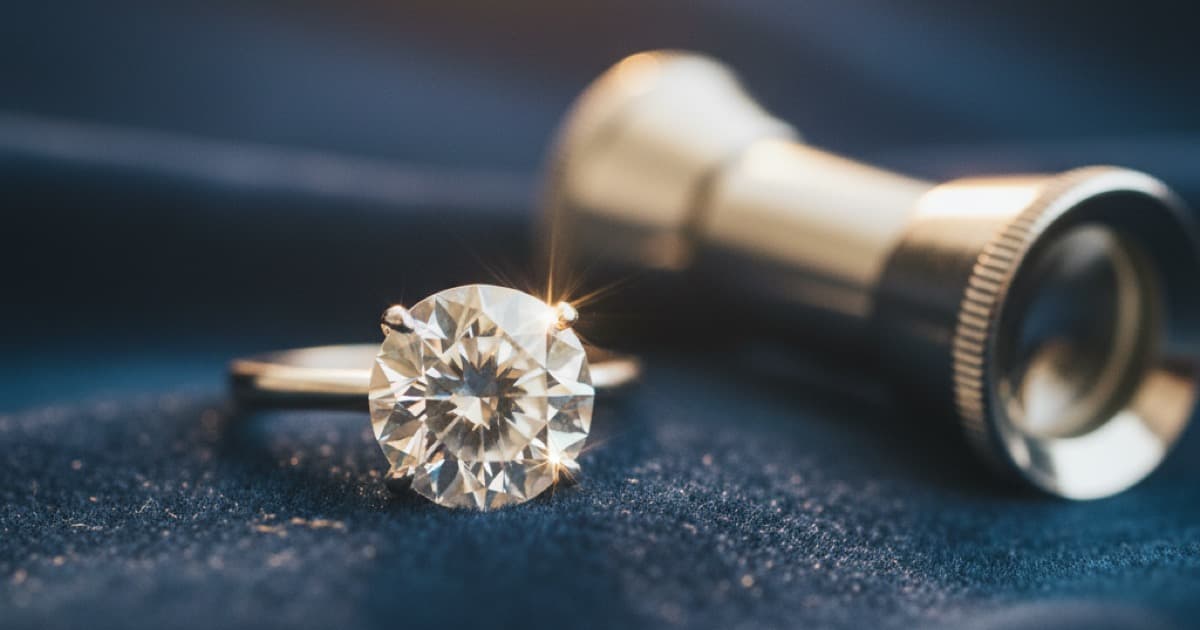
Maybe you're about to sell a diamond ring. Maybe you inherited one and have no idea what it's worth. Or maybe you just want to check whether that insurance appraisal from 2019 still makes sense. Whatever the reason, you need to know how to value a diamond ring yourself before trusting someone else's number.
The value of a diamond ring comes down to two things: the stone and the setting. The stone is graded on the 4Cs (cut, color, clarity, carat weight), and the setting adds value based on its metal, craftsmanship, and brand. Here's how to evaluate both.
The 4Cs: How Diamonds Are Graded and Priced
Every diamond's value starts with the 4Cs. These aren't marketing terms. They're the grading system developed by the Gemological Institute of America (GIA) that the entire diamond industry uses to price stones.
Carat weight is the most straightforward. One carat equals 0.2 grams. Prices jump at key thresholds: a 0.99-carat diamond can cost 15 to 20% less than a 1.00-carat stone of identical quality. The same happens at 0.50, 1.50, and 2.00 carats. If you're buying, going just under these thresholds saves money. If you're selling, hitting them adds value.
Cut affects how much a diamond sparkles. GIA grades cuts from Excellent to Poor. An Excellent cut diamond reflects nearly all light that enters it, creating that distinctive fire and brilliance. A Poor cut looks dull, even if the stone is flawless otherwise. Cut has the biggest impact on how a diamond looks to the naked eye, and it's the one factor many people undervalue.
Color is graded D (colorless) through Z (light yellow or brown). Most diamonds sold in jewelry fall between G and J. The difference between a G and an H is nearly invisible without side-by-side comparison, but it can mean a 10 to 15% price difference. Below J, the yellow tint becomes noticeable.
Clarity measures internal flaws (inclusions) and surface blemishes. Grades range from Flawless (FL) to Included (I1, I2, I3). Most affordable diamonds are SI1 or SI2 (Slightly Included), where flaws exist but aren't visible without 10x magnification. VS2 and above are "eye-clean," meaning you can't spot the inclusions by looking at the ring normally.
A 1-carat round brilliant diamond with good grades (G color, VS2 clarity, Excellent cut) sells for roughly $4,500 to $6,500 at retail in 2026. Drop to SI1 clarity and H color, and you're looking at $3,500 to $5,000. These ranges shift constantly with market conditions, which is why older appraisals can be significantly off.
The resale value of a diamond ring depends heavily on whether you have GIA certification. A certified 1-carat round brilliant diamond with G color, VS2 clarity, and Excellent cut typically resells for $3,000 to $5,000 on the secondary market in 2026, roughly 50 to 70% of current retail. Without certification, buyers assume worst-case grades, which can cut the price by another 20 to 30%. The setting adds value too: a platinum or 18K gold setting from a recognized brand (Tiffany, Cartier, Harry Winston) carries a premium that a generic setting doesn't. For most rings, the metal in the setting accounts for $200 to $1,500 of the total value, depending on weight and purity. The brand premium, when it exists, can double or triple the ring's resale price compared to an identical unbranded piece.
How the Setting Affects Value
The diamond gets most of the attention, but the setting matters more than people think.
Metal type and purity provide a baseline. Platinum settings are worth more than gold, and 18K gold is worth more than 14K. Weigh the ring (most jewelers will do this for free) and check the stamp inside the band for the purity mark.
Common stamps and what they mean:
- PT950 or PLAT: 95% platinum
- 750 or 18K: 75% pure gold
- 585 or 14K: 58.5% pure gold
- 925: Sterling silver (rare for diamond rings)
If you can't read the stamp, a photo can help. Our guide on jewelry stamps and hallmarks covers all the common markings.
Brand and designer add significant premiums. A Tiffany setting ring will resell for 30 to 50% more than an identical no-name ring. Cartier, Van Cleef & Arpels, and Harry Winston carry even higher premiums. Check for brand engravings inside the band or on the prongs.
Craftsmanship and style play a role too. A hand-finished pavé setting with dozens of accent diamonds is worth more than a simple solitaire prong setting, all else being equal. Vintage settings from specific eras (Art Deco, Edwardian) have collector value that exceeds their material worth.
Where to Check Diamond Ring Prices
You've got the 4Cs and the setting details. Now you need comparable sales to put a number on it.
GIA certificate lookup: If your diamond has a GIA report number (check the girdle inscription or any paperwork), look it up on GIA's report check page. This confirms the grades and gives you a solid foundation for pricing.
Online diamond marketplaces: Sites like James Allen, Blue Nile, and Rare Carat list thousands of certified diamonds with prices. Search for stones matching your diamond's specs to see current retail. Your resale value will be 40 to 60% of these listings.
Completed auction results: eBay's "sold" filter shows what similar diamond rings actually sold for. This is closer to fair market value than retail listings. Filter by the 4Cs if possible.
Professional appraisal: For diamonds over 1 carat or rings worth more than $5,000, a professional appraisal gives you a documented value. Expect to pay $50 to $150, but the precision is worth it for high-value pieces.
Common Mistakes When Valuing a Diamond Ring
Confusing retail with resale. That $10,000 price tag doesn't mean your ring is worth $10,000 today. Retail includes the jeweler's markup (typically 100 to 200% over wholesale). Resale value runs 30 to 50% of retail for most diamond rings.
Trusting the insurance appraisal. Insurance appraisals use replacement value, which is the highest possible number. It's what it would cost to buy the same ring new at retail. Useful for insurance claims, misleading for selling. If your insurance appraisal says $8,000, expect $3,000 to $4,500 from a private buyer.
Ignoring the certificate. A diamond without GIA or AGS certification is worth substantially less, even if the stone is high quality. Buyers can't verify the grades without lab documentation, so they'll offer less to account for the risk.
Overvaluing sentimental worth. Your grandmother's ring may mean everything to you, but the market prices it on materials and craftsmanship alone. Sentimental value is real, but it doesn't translate to dollars when selling.
How Jewelry Identifier Helps You Value a Diamond Ring
Before paying for a professional appraisal, get a quick estimate with Jewelry Identifier. Snap a photo of your diamond ring and the AI identifies the stone type, estimates carat size, reads any stamps or hallmarks on the band, and provides a value range based on comparable market data.
It's particularly useful for the first step: figuring out whether your ring is worth $500 or $5,000 before you commit to a $100 professional appraisal. The web tool generates PDF reports with material breakdowns and comparable sales, which you can share with potential buyers. Your first appraisal is free.
Frequently Asked Questions
How much is a 1-carat diamond ring worth?
It depends on cut, color, and clarity. A 1-carat round brilliant with good grades (G color, VS2 clarity, Excellent cut) retails for $4,500 to $6,500 in 2026. Resale value runs 40 to 60% of retail, so expect $2,500 to $4,000 from a private buyer. Lower grades or fancy shapes (oval, pear) shift the range further.
Does the setting affect a diamond ring's value?
Yes. The metal type (platinum vs gold), purity (18K vs 14K), brand (Tiffany carries a 30 to 50% premium), and craftsmanship all add value. For most rings, the setting accounts for $200 to $1,500. Designer or vintage settings can be worth much more.
How do I find my diamond's GIA number?
Check for a tiny inscription on the diamond's girdle (the thin edge around the middle) using a jeweler's loupe or 10x magnifier. The number matches the GIA report. If there's no inscription, check any paperwork that came with the ring. Without a certificate, consider getting the stone graded by GIA ($50 to $150 for loose stones).
Should I get my diamond ring appraised before selling?
For diamonds over 0.50 carats, yes. A professional appraisal costs $50 to $150 but can help you negotiate a better price. For smaller stones or fashion rings, an AI appraisal tool gives you enough information to price it fairly without the extra cost.
Why is my diamond ring worth less than I paid?
Retail markup. Jewelers typically mark up diamonds 100 to 200% over wholesale cost. The moment you walk out of the store, your ring's resale value drops to 30 to 50% of what you paid. It's similar to buying a new car. The good news: if you've held the ring for years and diamond prices have risen, the gap narrows.
Curious what your diamond ring is worth right now? Try it: get your free diamond ring appraisal in seconds with Jewelry Identifier.