 Jewelry Identifier
How Much Does a Jewelry Appraisal Cost in 2026?
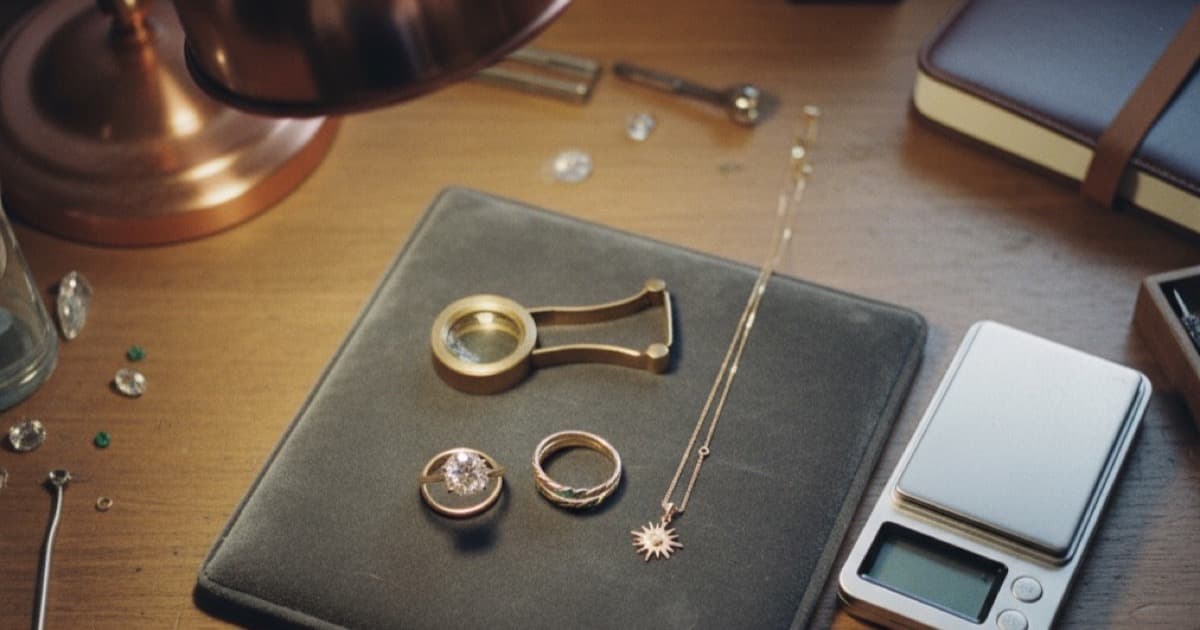
You've got a ring from your grandmother, a diamond pendant you haven't worn in years, or a gold bracelet you're thinking about selling. Before you do anything, you want to know what it's worth. And the first question that comes up: how much does a jewelry appraisal cost?
The short answer: a professional jewelry appraisal costs between $50 and $150 per piece, depending on the appraiser, location, and complexity of the item. Simple rings and pendants fall at the lower end. Multi-stone estate pieces, high-value watches, or items requiring lab analysis push closer to $150 or beyond.
What a Jewelry Appraisal Actually Costs in 2026
Appraisal pricing varies by method. Here's what you'll pay for each type:
Independent appraisers charge $50 to $150 per item. Most bill a flat fee rather than a percentage of value (appraisers who charge a percentage have a financial incentive to inflate values, which is why the American Society of Appraisers prohibits percentage-based fees). Expect to pay on the higher end in major cities like New York or Los Angeles, and closer to $50 in smaller markets.
Retail jewelers sometimes offer "free" appraisals, but these come with a catch. Their numbers often skew high because they're comparing your piece to retail replacement cost, not resale value. If you're getting appraised for insurance, that works in your favor. If you're trying to figure out what a buyer would actually pay, it doesn't.
Online appraisal services range from $25 to $75. You upload photos, provide measurements, and receive a written report. The tradeoff is accuracy: without physically handling the piece, an appraiser can't test metal purity, check stone quality under magnification, or weigh the item precisely. For a ballpark figure, online appraisals work. For insurance documentation, most insurers require an in-person evaluation.
AI-powered appraisal tools offer instant estimates for free or a few dollars. These won't replace a certified appraiser for legal or insurance purposes, but they're useful for a quick read on what you're looking at before deciding whether a professional appraisal is worth the investment.
A certified jewelry appraisal in 2026 typically costs $50 to $150 per piece when performed by an independent appraiser charging a flat fee. The total depends on three factors: the appraiser's credentials (GIA-trained appraisers charge more than generalists), the complexity of the piece (a solitaire ring takes 20 minutes while a multi-stone vintage brooch can take over an hour), and your location (urban appraisers charge 30 to 40% more than those in smaller markets). Avoid appraisers who charge a percentage of the appraised value, as the American Society of Appraisers considers this a conflict of interest. For insurance appraisals, expect replacement value figures that run 2 to 3 times higher than what you'd get selling the piece privately.
When You Actually Need a Professional Appraisal
Not every piece of jewelry warrants a $100 appraisal. Save your money on costume jewelry, fashion pieces, and anything you already know is worth less than the appraisal itself.
You do need a professional appraisal for:
- Insurance coverage: Most insurance companies require an appraisal for pieces valued over $1,000 to $5,000 (thresholds vary by insurer). If you're navigating this process, our jewelry appraisal for insurance guide breaks down exactly what insurers expect. The appraisal document needs to come from a credentialed appraiser, not a store receipt.
- Estate settlements: When dividing inherited jewelry among heirs, a certified appraisal ensures fair distribution. Probate courts often require formal valuations.
- Divorce proceedings: Community property states require jewelry appraisals for equitable division of assets.
- Selling high-value pieces: If you're selling a diamond over 1 carat or a piece worth $5,000+, knowing the appraised value gives you negotiating power.
- Tax donations: Donating jewelry valued over $5,000 to charity requires an IRS-qualified appraisal.
For everything else (curiosity about grandmother's brooch, checking if a thrift store find is real, sorting through a jewelry box), you don't need to spend $100. A quick identification or estimate gets you the information you need.
How to Find an Appraiser and What to Expect
Look for appraisers with credentials from recognized organizations:
- GIA (Gemological Institute of America) Graduate Gemologist
- ASA (American Society of Appraisers) certified member
- AGS (American Gem Society) certified appraiser
Ask upfront about fees, turnaround time, and what the written report includes. A thorough appraisal report should describe the piece in detail (metal type and purity, gemstone identification and grading, measurements, weight), state the type of value being assessed (replacement, fair market, or liquidation), and include the appraiser's credentials and signature.
The process itself takes 20 to 60 minutes per item. The appraiser examines your piece under magnification, tests the metal, weighs the item, and grades any gemstones. Some appraisers provide the report on the spot. Others mail or email it within a week.
One tip: don't tell the appraiser what you think the piece is worth beforehand. Let them reach their conclusion independently.
Appraisal Value vs. What You'll Actually Get
This trips up a lot of people. The appraised value on your insurance document isn't what someone will pay for your jewelry.
Insurance appraisals use replacement value, which is what it would cost to buy an identical piece at retail. That's the highest number you'll see. Fair market value (what a willing buyer would pay a willing seller) typically runs 40 to 60% lower. And liquidation value (what a pawn shop or estate buyer offers) is lower still, often 20 to 30% of retail replacement.
So if your ring appraises at $10,000 for insurance:
- Fair market value: roughly $4,000 to $6,000
- Pawn shop or quick-sale offer: roughly $2,000 to $3,000
This is why knowing what type of value you need matters before you pay for an appraisal. If you're selling, ask for fair market value (our guide on how to determine jewelry value covers the key factors). If you're insuring, ask for replacement value.
How Jewelry Identifier Helps You Save on Appraisal Costs
Before spending $50 to $150 on a professional appraisal, you can get a preliminary estimate for free using Jewelry Identifier. Upload a photo of your piece and the AI identifies the metal type, gemstones, style, and provides an estimated value range within seconds.
This is useful for triage. If you've got a box of 15 inherited pieces and don't know which ones are worth the professional appraisal fee, a quick AI scan separates the $50 costume pieces from the $5,000 diamonds. You spend your appraisal budget on the pieces that actually warrant it.
The app reads stamps and hallmarks too, so if you can't decipher that tiny marking inside a ring band, snap a photo and get an instant translation. Your first appraisal is free on the web tool, with detailed PDF reports that include material breakdown and comparable sales data.
Frequently Asked Questions
How often should I get jewelry reappraised?
Every 2 to 3 years for insurance purposes. Precious metal and gemstone prices fluctuate, and your coverage should reflect current replacement costs. Gold alone has risen from $1,800 to over $3,000 per ounce in recent years, meaning older appraisals may significantly undervalue your pieces.
Can I get a jewelry appraisal for free?
Retail jewelers sometimes offer free appraisals, but expect inflated values aimed at selling you insurance or upgrades. For a no-cost initial estimate, AI-powered tools like Jewelry Identifier provide instant valuations from photos. These work well for screening pieces before committing to a paid professional appraisal.
Is an online jewelry appraisal legitimate?
Online appraisals ($25 to $75) can provide reasonable estimates, but most insurance companies won't accept them. The appraiser can't physically test metals or examine stones under magnification, which limits accuracy. They're best for getting a general idea of value, not for legal or insurance documentation.
What's the difference between an appraisal and a grading report?
An appraisal assigns a dollar value to a piece of jewelry. A grading report (like a GIA certificate) evaluates a loose gemstone's characteristics (cut, color, clarity, carat) without assigning a price. You might need both: the grading report for the stone, and an appraisal for the complete piece with its setting.
Should I get separate appraisals for insurance and selling?
Yes. Insurance appraisals use replacement value (retail cost to replace), while selling requires fair market value (what a buyer would pay). These numbers can differ by 40 to 60%. Getting the wrong type wastes money on an appraisal that doesn't serve your actual purpose.
Wondering what your jewelry is worth right now? Try it yourself: get your free jewelry appraisal in seconds with Jewelry Identifier.