 Jewelry Identifier
Jewelry Stamps and Markings: What They Mean (Chart)
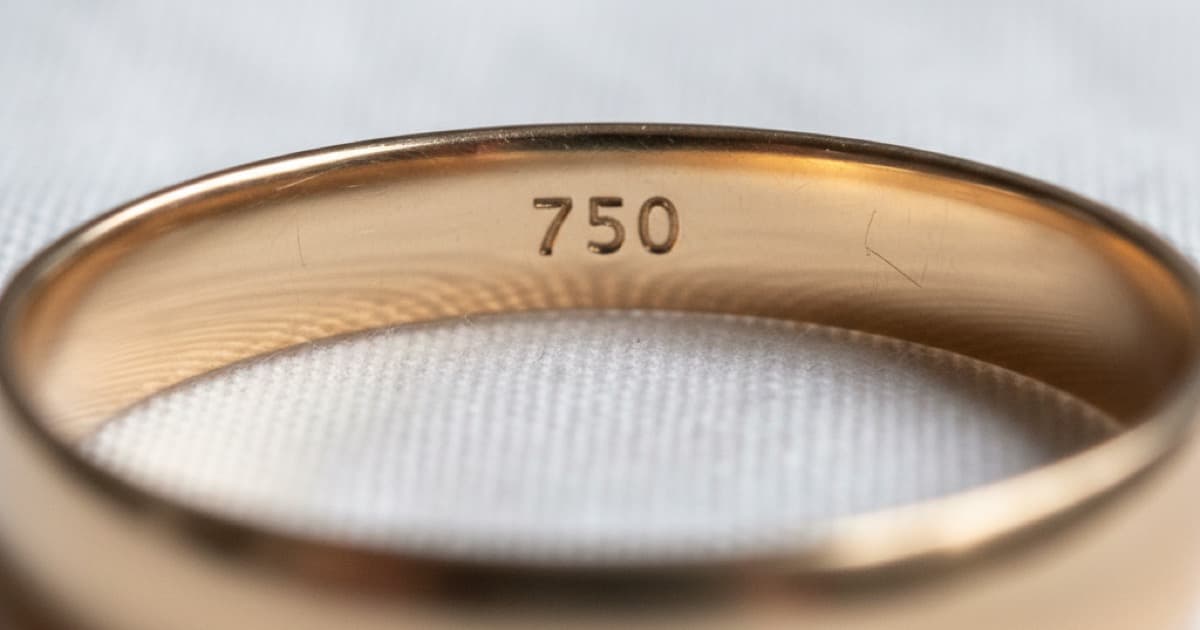
You found a tiny marking inside a ring, on the back of a pendant, or near a necklace clasp. It looks like a number, a letter, or a symbol you can't quite make out. That stamp tells you what your jewelry is made of, where it came from, and sometimes who made it. Here's what all those jewelry stamps and markings actually mean.
Jewelry stamps indicate metal purity, maker identity, and country of origin. The most common stamps are karat marks for gold (10K, 14K, 18K), fineness numbers (375, 585, 750, 925, 950), and maker's marks (initials or symbols unique to each manufacturer). Learning to read these markings is the fastest way to identify what you're holding.
Can't find your stamp below, or can't read it? Photograph it and run it through the free Hallmark Reader — it reads worn, tiny, and unusual marks from a photo. You can also look up any single mark in our jewelry hallmarks directory.
Gold Purity Stamps
Gold stamps tell you the percentage of pure gold in the alloy. The two systems (karat and fineness) say the same thing in different ways.
| Stamp | Karat | Gold Content | Common In | |-------|-------|-------------|-----------| | 999 or 24K | 24 karat | 99.9% pure | Coins, bars, some Asian jewelry | | 916 or 22K | 22 karat | 91.6% pure | Indian, Middle Eastern jewelry | | 750 or 18K | 18 karat | 75% pure | Fine jewelry worldwide | | 585 or 14K | 14 karat | 58.5% pure | Most US jewelry | | 417 or 10K | 10 karat | 41.7% pure | Budget US jewelry | | 375 or 9K | 9 karat | 37.5% pure | UK, Australian jewelry | | 333 or 8K | 8 karat | 33.3% pure | German jewelry |
A "K" or "KT" after the number means karat (gold). The three-digit numbers are fineness marks showing parts per thousand of pure gold. Both systems are legally equivalent.
If you see KP (like 14KP), the P stands for "plumb," meaning the gold content is exact rather than a minimum. A regular 14K stamp allows up to a 0.5K tolerance, but 14KP means it's precisely 58.5% gold.
Silver Purity Stamps
Silver stamps work the same way as gold fineness marks, showing parts per thousand of pure silver.
| Stamp | Name | Silver Content | Notes | |-------|------|---------------|-------| | 999 | Fine silver | 99.9% pure | Too soft for most jewelry | | 958 | Britannia silver | 95.8% pure | Rare, used in some British pieces | | 925 | Sterling silver | 92.5% pure | The standard for silver jewelry | | 900 | Coin silver | 90% pure | Older American pieces | | 800 | European silver | 80% pure | Common in European antique jewelry |
Sterling or STER means the same as 925. Some Mexican silver is stamped TAXCO or MEXICO with a fineness number. If you see EPNS (Electroplated Nickel Silver), the piece isn't solid silver at all.
Platinum and Palladium Stamps
| Stamp | Metal | Purity | Notes | |-------|-------|--------|-------| | PT950 or PLAT | Platinum | 95% pure | Most common platinum stamp | | PT900 | Platinum | 90% pure | Slightly less pure, still valuable | | PT850 | Platinum | 85% pure | Minimum to be labeled platinum in most countries | | PD950 | Palladium | 95% pure | Looks like platinum, lighter weight | | PD500 | Palladium | 50% pure | Budget platinum alternative |
Platinum is denser than gold, so a platinum ring feels heavier than a gold ring of the same size. If you've got a white metal ring that feels unusually heavy and you can't find a stamp, it might be unstamped platinum (common in pre-1950s jewelry).
Gold-Plated and Gold-Filled Stamps
These stamps mean the piece is NOT solid gold. The gold is a surface layer over a base metal.
| Stamp | Meaning | Gold Content | Value | |-------|---------|-------------|-------| | GF or 1/20 14K GF | Gold-filled | 5% gold by weight | $5-$30 | | GP or HGE | Gold-plated / Heavy Gold Electroplate | Thin surface layer | $2-$10 | | GEP | Gold Electroplate | Very thin gold layer | $2-$10 | | RGP | Rolled Gold Plate | Thin gold sheet bonded to base | $3-$15 | | Vermeil | Gold over sterling silver | Gold layer on 925 silver | $10-$50 |
Gold-filled is worth more than gold-plated because it has a thicker gold layer (legally at least 5% of the total weight). But neither is worth melting for gold content. Our guide on gold plated vs solid gold covers how to tell the difference visually.
Maker's Marks and Brand Stamps
Beyond purity, many pieces carry a maker's mark: a symbol, initials, or logo that identifies who manufactured the jewelry.
Luxury brands stamp their name clearly:
- T&CO or the Tiffany logo: Tiffany & Co.
- CARTIER + serial number: Cartier
- VCA: Van Cleef & Arpels
- HW: Harry Winston
- BVLGARI (repeated): Bulgari
Antique maker's marks are trickier. They're often a single letter, a pair of initials, or a small symbol (crown, star, anchor) inside a shaped cartouche. Identifying these requires a reference database. Our jewelry maker's marks guide covers the most common historical marks.
Country assay marks indicate where the piece was tested:
- Anchor: Birmingham, England
- Leopard's head: London, England
- Castle: Edinburgh, Scotland
- Harp: Dublin, Ireland
- Eagle's head: French gold (18K+)
- Owl: French import gold
Other Common Stamps and What They Mean
| Stamp | Meaning | |-------|---------| | PAT or PAT PEND | Patented or patent pending design | | © | Copyrighted design | | Numbers (1-31) | Date marks (common in Scandinavian jewelry) | | CZ | Contains cubic zirconia (not diamond) | | SYN | Synthetic stone | | LAB | Lab-created stone | | SOL | Solitaire setting | | CHINA, KOREA, ITALY | Country of manufacture | | 295, 375 (odd numbers) | Sometimes misread stamps; check with magnification |
How Jewelry Identifier Reads Stamps for You
Can't make out the tiny markings on your jewelry? The free Hallmark Reader reads stamps and hallmarks from photos. Snap a close-up of the marking and the AI identifies the metal type, purity, and (when visible) the maker. It's faster than squinting through a magnifying glass and cross-referencing a chart.
The app translates stamps into plain English: "750" becomes "18K gold, 75% pure." It also estimates the piece's value based on the identified materials. Try the Hallmark Reader free, no sign-up. To scan stamps on the spot at estate sales and antique shops, get the Jewelry Identifier app — it reads marks through your phone camera and estimates value.
For stamps you can't photograph clearly (too small, too worn), try placing the jewelry on a flat white surface and using your phone's macro mode or zoom. Even a partial stamp gives the AI enough to work with in most cases.
Frequently Asked Questions
What does 925 mean on jewelry?
925 means the piece is sterling silver: 92.5% pure silver mixed with 7.5% other metals (usually copper) for strength. It's the global standard for silver jewelry. If you see "925" with a gold-colored piece, it's likely gold-plated or gold-vermeil over sterling silver.
What does 750 mean on a ring?
750 means the ring is 18-karat gold: 75% pure gold. It's the most common gold purity for fine jewelry outside the US. The equivalent karat stamp is "18K" or "18KT." At current gold prices, the gold content alone makes 750-stamped jewelry worth roughly $72 per gram.
How do I read a hallmark I can't identify?
Start with the numbers. If you see 3 digits (375, 585, 750, 925, 950), it's a fineness mark telling you the metal purity. Symbols next to the number are usually assay office marks (where the metal was tested) or date letters. Take a clear photo and run it through the free Hallmark Reader, look it up in the hallmarks directory, or check our full hallmarks guide.
Does no stamp mean the jewelry is fake?
Not necessarily. Jewelry made before the 1950s often wasn't stamped. Very small pieces sometimes lack stamps due to space. Handmade and artisan jewelry may not be stamped either. The absence of a stamp means you can't confirm the metal by marking alone, so you'll need testing (acid test, electronic tester, or AI analysis from a photo).
What does GF mean on jewelry?
GF stands for "gold-filled." The piece has a layer of gold mechanically bonded to a base metal core. By US law, gold-filled items must be at least 5% gold by weight (typically marked as 1/20 14K GF, meaning 1/20th of the weight is 14K gold). It's more durable than gold plating but worth far less than solid gold.
Got a stamp you can't decode? Scan your jewelry marking with the free Hallmark Reader — no sign-up needed — or download Jewelry Identifier to read stamps with your camera.