 Jewelry Identifier
Diamond Price Per Carat: 2026 Guide with Real Ranges
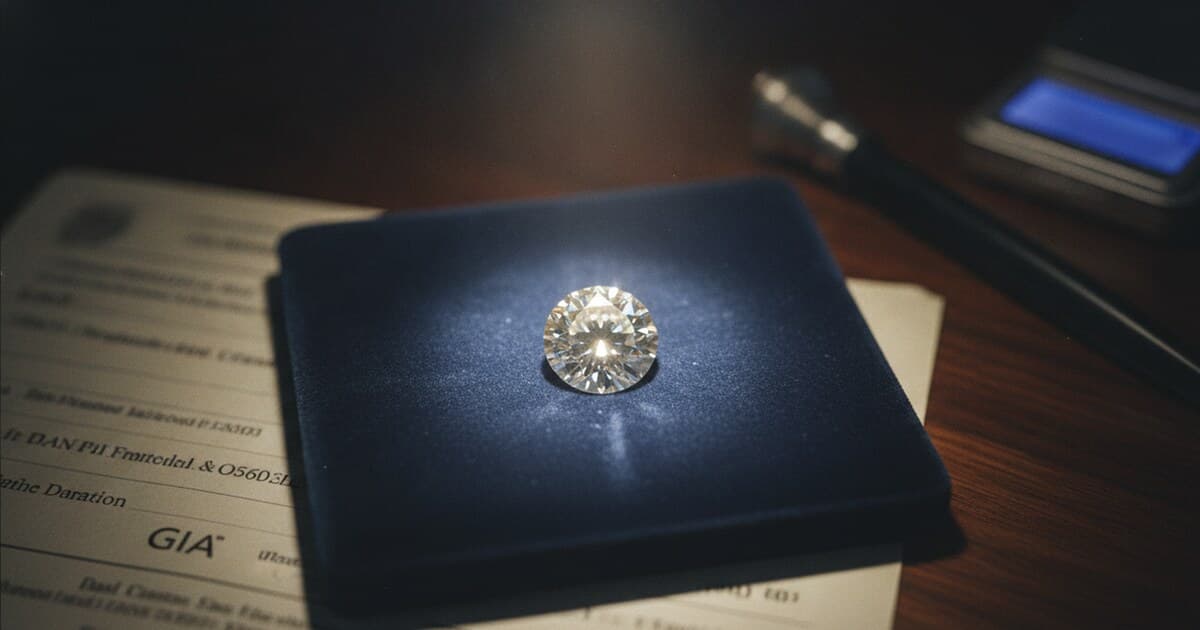
A 1-carat diamond doesn't cost twice what a 0.5-carat stone costs. It costs four to five times as much. That's the non-linear pricing structure of diamonds, and it catches most buyers off guard.
Diamond price per carat is the standard unit jewelers and dealers use to compare stones of different sizes. In 2026, prices range from roughly $1,000 per carat for smaller stones to $13,000 per carat or more for larger ones — and those numbers shift significantly based on cut, color, and clarity. Understanding this metric lets you comparison-shop intelligently instead of comparing total price tags that hide what you're actually paying.
This guide covers current price ranges by carat size, the factors that move the number up or down, how natural and lab-grown diamonds compare today, and what diamond price per carat means if you're selling rather than buying.
Diamond price per carat in 2026 averages around $1,000 for a 0.5ct stone, $3,800 for a 1ct stone, and $8,500 or more for a 2ct stone. Cut quality, color, and clarity shift those numbers by 50% or more for the same weight. Lab-grown diamonds currently cost 67-80% less per carat than natural stones of equivalent grade.
If you need a quick estimate on a diamond you already own, Jewelry Identifier pulls comparable sales data and returns an estimated value from a photo. Your first appraisal is free.
Diamond Price Per Carat: What the Numbers Look Like in 2026
Diamond pricing doesn't scale the way most people expect. A 2-carat stone doesn't cost twice what a 1-carat stone costs. It costs roughly four to five times more, because larger rough diamonds are rarer, and cutters lose far more material yielding them.
Here are average per-carat prices for round brilliant natural diamonds with mid-range grades (G-H color, VS2-SI1 clarity, GIA-certified):
| Carat Weight | Avg. Per-Carat Price | Total Stone Price | |---|---|---| | 0.50 ct | ~$1,000 | ~$500 | | 1.00 ct | ~$3,800 | ~$3,800 | | 2.00 ct | ~$8,500 | ~$17,000 | | 3.00 ct | ~$13,600 | ~$41,000 | | 5.00 ct | ~$23,400 | ~$117,000 |
These are market averages for well-graded stones, not outliers. A D-color, flawless 1-carat stone can exceed $20,000. A K-color, SI2 stone of the same weight might run $2,500. Same carat weight, dramatically different price per carat.
Diamond prices are exponential, not linear. A polished 1-carat round brilliant averages around $3,800 per carat in 2026, but the same figure for a 2-carat stone is roughly $8,500 per carat, more than double. The price-per-carat rate climbs sharply at benchmark weights: 0.50, 1.00, and 2.00 carats. Rough diamonds large enough to yield these finished weights are genuinely rare in nature; cutters work through far more material to produce one 2-carat polished stone than two 1-carat stones. GIA-certified round brilliants command a 10-15% premium over non-certified stones of equivalent grade, because third-party grading removes uncertainty from the transaction. At the low end of quality, a 1-carat diamond with K-L color and SI2 clarity sells for roughly $2,500. At the top, D-color, flawless with an ideal cut exceeds $20,000. That tenfold range on the same carat weight is why carat weight alone tells you almost nothing about a diamond's actual price.
What Pushes Diamond Price Per Carat Up or Down
Cut quality is the most powerful lever, and the most overlooked. A well-cut diamond returns more light, looks brighter and visually larger than its actual dimensions, and commands a real premium over a poorly cut stone of the same weight. GIA's cut grade for round brilliants runs from Excellent to Poor, and jumping from Good to Excellent on a 1-carat stone adds $1,000 or more.
Color matters more in larger stones. GIA grades color on a D (colorless) to Z (light yellow) scale. Most buyers get the best value in the G-H range. These stones look colorless to the naked eye once set in white gold or platinum but cost meaningfully less than D-F grades.
Clarity follows a similar pattern. VS2 and SI1 are the sweet spots. VS2 stones have minor inclusions that require 10x magnification to see. SI1 inclusions are slightly more visible but eye-clean in most cases. Dropping to SI2 saves money but needs careful inspection, because some SI2 stones show inclusions without magnification.
Certification adds a measurable premium. GIA-certified diamonds sell for 10-15% more than non-certified stones with similar stated grades. That premium reflects the confidence that a neutral third party evaluated the stone, not the seller.
Natural vs. Lab-Grown: The 2026 Diamond Price Gap
Lab-grown diamonds are physically and chemically identical to mined diamonds. A gemologist with a loupe can't separate them without specialized equipment. What's different is origin, and price.
In 2026, lab-grown diamonds cost 67-80% less per carat than equivalent natural stones. A 1-carat lab-grown in D-VVS grades with ideal cut runs roughly $950-$1,300, compared to $8,000-$15,000 for the natural equivalent. For buyers who want maximum visual size per dollar, lab-grown diamonds are worth serious consideration.
For sellers, the math works differently. Lab-grown diamonds hold essentially no resale value. Natural diamonds resell at 20-50% of retail, which is already a steep discount. Lab-grown stones often sell for far less because supply has grown faster than demand and the price floor keeps dropping.
The practical split: if the piece is something you'll keep and never sell, lab-grown makes strong economic sense. If resale or long-term value matters to you, natural diamonds hold their ground better.
How to Use Diamond Price Per Carat When Shopping
Price per carat gives you a real comparison unit across different stones. A 0.95-carat diamond and a 1.05-carat diamond can look virtually identical on a finger, but the 1.05ct crosses the 1.00-carat "magic number" threshold and carries a 10-20% price premium. That threshold effect happens at 0.50ct, 1.00ct, and 2.00ct because buyers search by round numbers, which concentrates demand and bids up the price.
Buying at 0.98 or 0.99 carats instead of 1.00 can save several hundred dollars on a stone that's visually indistinguishable from the heavier option.
Shape also moves the per-carat rate. Round brilliants are the most expensive shape because they lose the most rough material during cutting. Fancy shapes (ovals, cushions, pears, emerald cuts) typically run 10-25% less per carat for equivalent quality grades. An oval diamond also tends to look 10-15% larger than a round of identical weight because of its elongated footprint.
When comparing stones, hold constant: carat weight, cut grade, color grade, clarity grade, and certification body. Change one variable at a time to see exactly what each factor costs you. Price per carat is the metric that makes that comparison honest.
What Diamond Price Per Carat Means If You're Selling
If you're selling a diamond ring or loose stone, the retail PPC figures above tell you what buyers paid in the market. They don't tell you what you'll receive.
Resale prices for natural diamonds run 20-50% of retail. A diamond you paid $5,000 for at retail might realistically sell for $1,500-$2,500, depending on where you sell it. Gold buyers and pawn shops typically pay 40-60% of a diamond's resale value, compounding the discount further. For a detailed breakdown by venue, where to sell jewelry covers your options ranked by payout.
If the stone is part of an engagement ring, how much is my engagement ring worth walks through the combined valuation for both the metal and the stone. For understanding pawn shop offers specifically, how much do pawn shops pay for gold explains the melt-value math that shapes every offer.
Jewelry Identifier can estimate the current market value of your specific diamond using comparable sales data. Photograph the stone and the setting, and the tool runs it against recent sold comps. Your first appraisal is free.
Frequently Asked Questions
How much is a 1-carat diamond worth?
A 1-carat natural diamond in mid-range grades (G-H color, VS2-SI1 clarity, GIA-certified) sells for roughly $3,000-$7,000 in 2026. Premium grades (D-F color, VVS or flawless) push that range to $8,000-$15,000. Lab-grown 1-carat stones in comparable grades start around $950. The cut quality is the biggest single variable within any grade tier.
How much does a 1-carat diamond cost?
Retail pricing for a 1-carat round brilliant natural diamond starts around $3,000 for value-grade stones and climbs past $15,000 for top grades. An excellent-cut G/VS2 GIA-certified stone typically runs $4,500-$6,500 and represents the value sweet spot for most engagement ring buyers.
How much is a 0.25-carat diamond worth?
A quarter-carat (0.25ct) natural diamond averages roughly $600-$1,200 at retail, depending on quality. The per-carat rate is lower for smaller stones because demand concentrates at the 0.5ct and 1ct thresholds. Lab-grown 0.25ct stones with good grades sell for $150-$400.
How many carats is a $20,000 diamond?
A $20,000 budget buys a D-color, flawless 1-carat natural diamond at the high end, or a well-graded 2.5-3 carat stone with G-H color and VS2-SI1 clarity. Lab-grown diamonds stretch that budget considerably — $20,000 would buy a 5-carat or larger lab-grown stone in excellent grades.
Knowing the market rate per carat helps whether you're buying, insuring, or deciding what to do with a stone you already own. Get a free appraisal at Jewelry Identifier to see what your specific diamond is worth against current market comps.