 Jewelry Identifier
Engagement Ring Buying Guide: What to Check Before You Buy
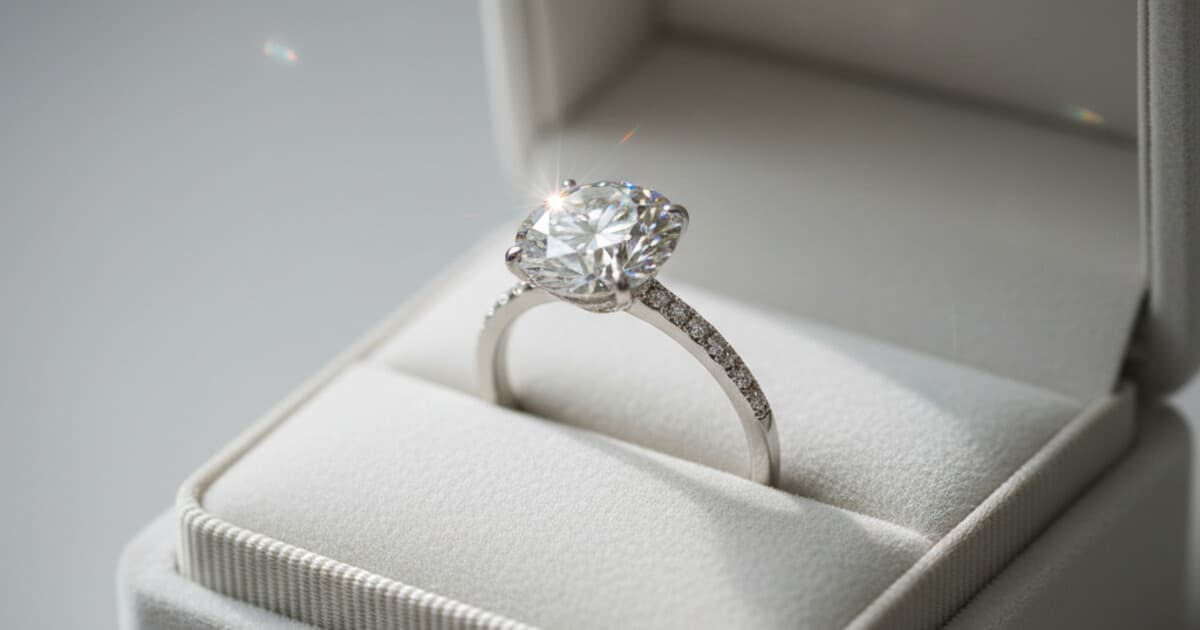
Buying an engagement ring is one of the biggest purchases most people make outside of a car or house. The average ring costs around $5,500, yet most buyers spend less than a week researching before walking into a jeweler. That's a fast timeline for something you'll wear every day for decades.
This engagement ring buying guide covers what actually matters: what the 4Cs mean for your budget, how to set a spending limit without guilt, which settings hold value, and how to verify the stone before you hand over payment.
The key steps in any engagement ring buying guide: prioritize cut quality above all other factors, choose a G-H color grade (it looks colorless in most settings and costs 30-40% less than D), go eye-clean on clarity with VS2 or SI1, and always request a GIA or AGS grading report. Compare the asking price against real sold listings before you commit.
The 4Cs Explained: What They Mean for Your Budget
Cut, color, clarity, carat. You've heard these. Here's what they actually mean when you're spending real money.
Cut determines how a diamond reflects light. It's the most important factor in how the stone looks. GIA grades cut from Excellent to Poor. Stick to Excellent or Very Good. A smaller, well-cut diamond will outshine a larger, poorly cut one in any lighting condition.
Color runs from D (colorless) to Z (visibly yellow). Most people can't see a difference between D and G in everyday lighting. A G or H stone looks white in a ring setting and costs 30-40% less than D-grade diamonds. That's the budget sweet spot for most buyers.
Clarity measures internal flaws called inclusions. VS2 (very slightly included) and SI1 (slightly included) grades are eye-clean in nearly all cases, meaning inclusions aren't visible without 10x magnification. Flawless diamonds look identical to VS2 stones to the naked eye but cost two to three times more.
Carat is weight, not visual size. A 1.00ct and 0.90ct diamond look almost identical in a ring setting, but the price gap runs 15-20%. Choosing just below round-number thresholds (0.90ct instead of 1.00ct, 1.45ct instead of 1.50ct) saves considerably with no visible difference.
The practical priority: cut first, color in the G-H range, eye-clean clarity, then the biggest carat your budget can sustain.
When buying diamonds, understanding how the 4Cs interact saves more money than any single shopping tip. Prioritizing cut delivers the most visual impact per dollar spent. For color, the G-H range sits just below colorless grades but reads as white in nearly all ring settings, particularly yellow or rose gold, which naturally masks warm tones. For clarity, VS2 and SI1 grades are eye-clean in the vast majority of stones; inclusions at those grades aren't visible without 10x magnification. The GIA clarity scale runs from Flawless to I3. Most experienced jewelers won't recommend going below SI2 for engagement rings, because inclusions become visible at that point. On carat weight, price jumps at every 0.25ct milestone: 0.50, 0.75, 1.00, 1.50, 2.00. Buying just below these thresholds saves 15-20% with no perceptible visual difference in a finished ring. These four factors work together, and understanding the trade-offs lets you get the best-looking stone for your actual budget.
How to Set a Budget Without Overpaying
The "two months' salary" rule is a marketing line from De Beers in 1947. Ignore it.
A smarter approach: decide what you can spend without taking on meaningful debt. Most financial advisors suggest keeping the purchase at or under one month's take-home pay. An engagement is a joyful event. Starting it with financial stress isn't.
Here's where the money goes on a typical ring:
- Center stone: 50-70% of total cost
- Setting complexity: adds $300-1,500 for halo, pave, or three-stone designs vs. a plain solitaire
- Metal type: adds $200-600 for platinum over 14k gold
- Jeweler markup: retail stores typically mark up 100-200%; online retailers mark up 30-60%
Buying online from vetted retailers (James Allen, Brilliant Earth, Blue Nile) typically saves 20-40% vs. mall jewelers for equivalent stone quality. Most offer 30-day returns and detailed photography that makes it a lower-risk call than it used to be.
Ring Settings: What to Know Before You Choose
Solitaire settings are the strongest choice for long-term value. A four- or six-prong solitaire with a round brilliant diamond has the widest resale appeal if you ever need to sell or upgrade.
Common setting styles and what they cost:
- Solitaire: Timeless, lowest setting cost ($200-600), all attention on the center stone
- Halo: Small diamonds surround the center, making it look larger. Adds $400-800. Can make a 0.75ct look like a 1.00ct visually.
- Three-stone: Strong symbolism, good resale value, slightly harder to resize
- Pave band: Small diamonds along the band add sparkle. Beautiful, but prongs can work loose over years of wear.
For metal, 14k gold is the practical standard: durable, easy to repair anywhere, and cheaper than 18k or platinum. Platinum is denser and hypoallergenic, but it scratches more visibly. (No metal is actually lost in a platinum scratch; the surface displaces rather than sheds. Some people like that patina. Others don't.)
How to Verify the Stone Before You Buy
Always ask for the grading report. Any diamond over 0.50ct should come with a GIA or AGS certificate. This is a lab-issued document confirming the 4Cs independently of whoever's selling it. If a jeweler can't produce one, walk.
Check that the report number matches the stone. GIA inscribes the certificate number on the diamond's girdle, verifiable under magnification. This is a 30-second check that protects against stone swaps.
Read the metal stamps. The hallmarks stamped into a ring band tell you exactly what you're buying. "585" or "14K" means 14-karat gold. "750" or "18K" means 18-karat gold. "Plat" or "PT950" means platinum. A "GP" stamp means gold-plated, not solid gold. For a full breakdown of what these markings mean, our guide to jewelry stamps and hallmarks covers every common marking you'll encounter.
Compare the price against real sold data. A jeweler's asking price is their markup, not the market price. Looking at what comparable rings have actually sold for gives you a baseline for negotiation. Our jewelry valuation guide explains the five factors that drive final prices on any piece.
For private-seller purchases, these verification steps matter twice as much. Request all documentation, examine stamps under magnification, and get an independent appraisal before you pay.
How Jewelry Identifier Helps You Buy Smarter
Most buyers walk into a jeweler with less information than the person selling to them. Jewelry Identifier helps level that.
From a photo of any ring, the app identifies the metal type, reads stamps and hallmarks, and gives an AI-estimated value. The free eBay Price Checker tool pulls completed listings for similar rings, so you can see what comparable pieces have actually sold for on the secondary market. That data is useful context: a ring quoted at $4,500 in a retail store with recent eBay comps at $2,800-3,200 tells you something about the markup you're looking at.
The app isn't a substitute for a GIA certificate on a major purchase. As a quick check on pricing and a way to decode metal stamps on the spot, it's worth having open on your phone during any jewelry appointment. The web tool at jewelryappraisals.app gives you a full appraisal with comparable sales data without installing anything. Your first appraisal is free.
Frequently Asked Questions
Is it better to buy an engagement ring online or in a store?
Online retailers like James Allen, Blue Nile, and Brilliant Earth typically price 20-40% below brick-and-mortar stores for equivalent stone quality. The trade-off is buying without seeing the ring first. Most reputable online retailers offer 30-day returns and high-resolution photography, which makes the decision lower-risk than buying blind from a photo.
Which of the 4Cs matters most for how the ring looks?
Cut matters most. A diamond's brilliance comes almost entirely from how it's cut, not its size or clarity grade. Always buy the best cut you can afford (Excellent or Very Good on GIA's scale) and use the remaining budget to choose color and clarity.
Does an engagement ring hold its value?
Retail jewelry typically loses 20-50% of its purchase price immediately, similar to a new car. Certified diamonds from GIA or AGS hold value better than uncertified stones and are easier to resell. A certified round brilliant in a solitaire setting has a genuine secondary market. Unusual cuts or highly customized settings are harder to move.
How do I know if the price is fair?
Compare the asking price against recent sold prices for similar rings. eBay completed listings, Worthy, and I Do Now I Don't show real transaction prices. A significant gap between asking price and actual sold comps signals high retail markup. Use those comps as a starting point for negotiation or to decide whether to look elsewhere.
Should I get the ring appraised after buying?
Yes, for insurance purposes. A jewelry appraisal for insurance sets the replacement value, which is typically 10-30% above retail price because it estimates replacement cost, not resale value. Get it done by an independent appraiser, not the jeweler who sold it. Re-appraise every few years as metal and diamond prices shift.
Before any jeweler visit, know your 4Cs priorities, set a hard spending limit, and pull up real sold prices so you're not negotiating blind. If you want to verify hallmarks or get an estimated value on any ring you're considering, try the free appraisal tool at jewelryappraisals.app. Your first appraisal is free, and you don't need the app to use it.