 Jewelry Identifier
How to Price Jewelry for eBay: A Seller's Guide
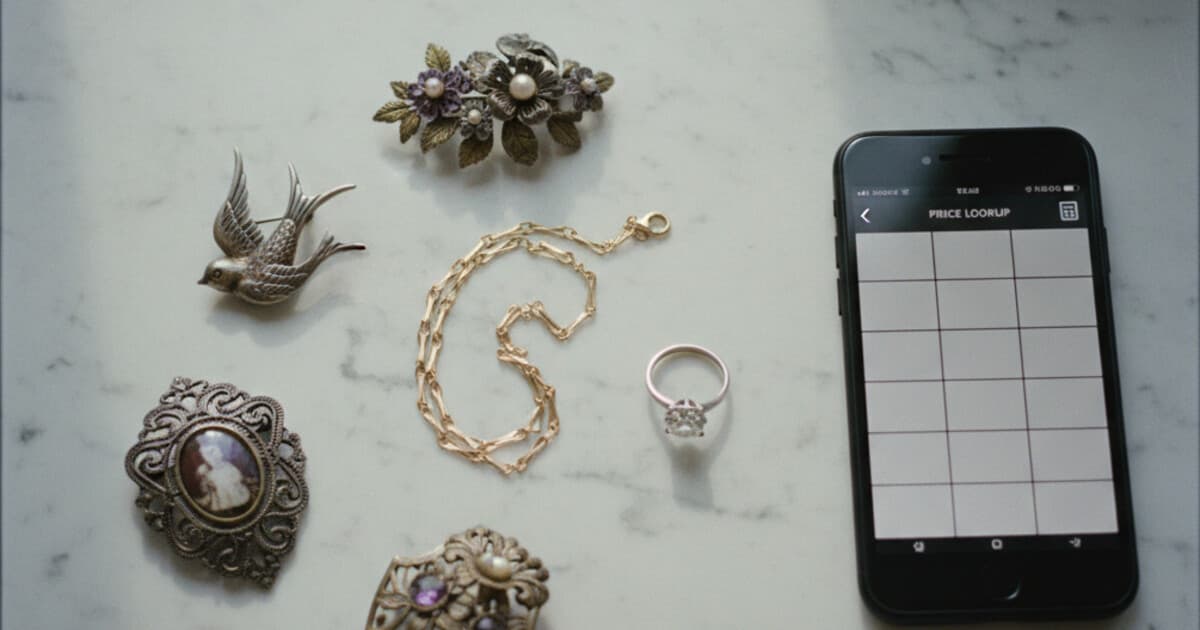
You pulled out a gold necklace from your grandmother's jewelry box. Or maybe you picked up a lot of vintage brooches at an estate sale. Either way, you're staring at a pile of jewelry and asking the same question: what should I actually list it for on eBay?
Pricing jewelry for eBay is where most sellers lose money. List too high and it sits unsold for months. List too low and you leave real cash behind. The problem is almost never the jewelry itself — it's not knowing what buyers are actually paying right now.
This guide walks you through exactly how to price jewelry for eBay, from researching sold listings to calculating melt value floors to grading condition so your listing converts.
To price jewelry for eBay, search the item on eBay, filter results to "Sold" listings, and note what similar pieces actually sold for (not asking prices). Match your item's metal type, condition, and gemstone details to comparable sales. For gold and silver, calculate melt value first as a price floor. Buyers know spot prices and won't go below it.
Why Most Sellers Get eBay Jewelry Pricing Wrong
The biggest mistake is pricing based on what you paid for a piece, what you think it's worth, or what other sellers are asking. None of those numbers tell you what a buyer will actually click "Buy It Now" on.
Active listings show seller optimism. Sold listings show market reality.
eBay's search filters let you see completed and sold listings. Those are the only numbers that matter. If a 14K gold bracelet sold 12 times last month at $85, listing yours at $140 because "it looks nicer" won't close. And if yours genuinely is heavier or better condition, $95-$105 might work. But $140 is just a guess.
The melt value floor: For gold and silver, always calculate melt value before setting your price. At current gold prices (spot gold hit $4,000+/oz in 2026), a 14K bracelet weighing 5 grams has a melt value around $65-70. That's your floor. No informed buyer pays below melt for unmarked, uncertified gold. You can list above that based on design or maker, but if comparable pieces are selling at or near melt, the market is telling you something.
Costume jewelry works entirely differently. Melt value is zero, so pricing comes down to brand, era, condition, and how well you present the piece.
How to Research Sold Prices on eBay
This is the core skill. Do this before every listing.
Step 1: Search with specifics. Search for your item by metal type, style, and any visible markings. "14K yellow gold rope chain 20 inch" beats "gold necklace" by a wide margin. The more specific your search, the more useful your results.
Step 2: Filter to Sold listings. In the left sidebar, check "Sold Items" under "Show Only." You'll see completed auctions and Buy It Now sales, with green prices showing what actually moved.
Step 3: Sort by Most Recent. Jewelry markets track gold and silver prices. A sold price from 18 months ago might be 30-40% off current market. Focus on the last 60-90 days.
Step 4: Note the spread. If similar bracelets sold between $55 and $95, that's your working range. The lower end usually means worse photos, thin listing descriptions, or an auction that ended slow. The upper end reflects better presentation, more trust signals, and a patient seller who waited for the right buyer.
Step 5: Count recent sales volume. If 2 of the last 50 comparable listings sold, demand is low. Price at the low end and move fast. If 35 of 50 sold, you have room to be more aggressive.
When pricing jewelry for eBay in 2026, the most reliable method starts with filtering sold listings rather than active ones. Active listings reflect what sellers hope to get; sold listings reflect what buyers actually paid. To find a realistic price range, search your item by metal type, weight, and any visible markings or brand. Filter to "Sold Items" in eBay's left sidebar and sort by most recent to account for current spot metal prices. For gold jewelry, melt value sets the floor: a 14K gold chain weighing 8 grams has a melt value around $105-110 at current prices, meaning any buyer with a gram scale won't go below that. For silver and vintage pieces, design and maker recognition can push prices 2-5x above melt. Sellers who document this research before listing consistently price 15-20% closer to final sale price than those who rely on asking prices or gut feel alone.
You can skip the manual eBay search with the free eBay Price Checker tool at Jewelry Identifier, which pulls sold and completed listings for jewelry items directly.
How to Price Jewelry by Type
Gold, silver, vintage, and costume jewelry each follow their own pricing logic. Treating them the same is how you misprice.
Gold jewelry: Calculate melt value as your floor (weight in grams × karat purity × current gold price per gram). Most buyers with a gram scale know this number. Signed pieces from recognized makers (Tiffany, Cartier, David Yurman) can sell for 2-10x melt. Unknown maker, clean design, good weight? Expect 1.2-1.8x melt as a realistic target on eBay.
Silver jewelry: Sterling silver (.925) follows silver spot price. At $30/oz, a 20-gram silver ring melts at about $19. Vintage silver from identifiable periods — Art Deco, mid-century Scandinavian, or Taxco Mexican silver — can go significantly higher based on maker and style. Navajo and other Native American silver jewelry commands particular collector premium.
Diamonds and gemstones: Retail markups on diamonds are substantial, and resale on eBay reflects that gap. A $3,000 retail diamond ring might realistically sell for $600-900 on eBay, sometimes less. Lab-created diamonds have pushed resale prices down further for comparable stones. For colored gemstones (rubies, sapphires, emeralds), size and certification matter more. GIA-certified stones get significantly more buyer attention and command higher prices.
Vintage and antique: Research the period and maker separately before pricing. Art Deco and Victorian jewelry from known makers sells consistently well. Mid-century signed costume jewelry from collectible brands (Miriam Haskell, Eisenberg, Weiss) can fetch $50-500 depending on condition and rarity. See our vintage jewelry identification guide if you're sorting through an estate lot and need help dating pieces.
Costume jewelry: Brand drives almost all the value here. Unsigned pieces typically sell for $5-25. Signed pieces from collectible brands go much higher. Our guide to costume jewelry worth money breaks down which brands collectors actively pay premium prices for.
Condition, Photos, and Listing Quality
You can price a piece correctly and still not sell it. Photos and condition descriptions do as much work as the number in the price field.
Condition grading on eBay jewelry:
- New with tags/New without tags: Unworn, original packaging when possible
- Pre-owned: Worn but in good shape, no missing stones, functional clasps
- For parts or not working: Missing stones, broken findings, cracked enamel
Don't oversell condition. A buyer who receives something worse than described leaves negative feedback and opens returns. Price a "pre-owned" piece accurately rather than stretching it.
Photos that actually convert: Shoot on a neutral background (white, gray, or black depending on the metal). Show the clasp, any hallmarks or stamps, the back of the piece, and close-ups of any gemstones. If there's wear or damage, photograph it. Buyers respect honesty, and it cuts disputes.
One photo of a necklace against a busy background will underperform against 6 clean photos showing every angle. Better photos mean you can price at the higher end of your research range without scaring buyers off.
Hallmarks and stamps: Document them. Buyers searching for specific karat marks (18K, 750, 925) will find your listing through those terms. Unknown or unsigned pieces are worth less, full stop. If you can't read a stamp clearly with the naked eye, the Jewelry Identifier app can identify hallmarks from a photo before you write your listing. For a full breakdown of what different stamps mean, see our guide to how to check jewelry prices on eBay for what comparable sold data shows across stamp types.
How Jewelry Identifier Helps You Price for eBay
Before you list, you need to know what you actually have. That's where Jewelry Identifier comes in.
The app identifies jewelry pieces, gemstones, and precious metals from a photo. Snap a picture and get information on metal type, gemstone identification, and estimated value. It also reads hallmarks and karat stamps, which is genuinely useful when you're sorting through an estate lot and can't tell 14K from gold-filled by eye alone.
For eBay specifically, the free eBay Price Checker tool on jewelryappraisals.app pulls current sold and completed listings for jewelry items, so you can see real market prices without manually searching eBay yourself. No sign-up required for the basic check.
The web dashboard offers more detailed comparable sales data, plus a PDF appraisal report you can reference when writing your listing description. Buyers trust sellers who know what they're selling, and that trust shows up in your final sale price.
Your first full appraisal is free at jewelryappraisals.app/sign-up. If you're processing more than a few pieces at once, knowing accurate values before you list pays for itself quickly.
Frequently Asked Questions
How do I know if my jewelry is priced too high on eBay? If your listing has been active for 30+ days with no watchers and no offers, it's priced too high. Go back to your sold listings research and compare your listing to what actually closed. Drop 10-15% and relist. If it still doesn't move after another 30 days, reconsider whether eBay is the right venue for that piece.
Should I use auction or Buy It Now format for jewelry? For identifiable, correctly priced pieces (14K gold chain, named designer piece), Buy It Now gets you a predictable price without waiting. Auctions work well for unusual or rare items where buyer competition could push the price above what you'd set as a fixed price. Don't use auctions for common pieces — you'll often sell below Buy It Now value.
Does jewelry sell well on eBay? Gold and silver sell consistently, especially with gold at record highs in 2026. Vintage signed pieces and estate lots attract active collector markets. Generic fashion jewelry without brand recognition is harder to move unless priced aggressively at $5-15.
How do I price a jewelry lot versus individual pieces? Research each piece individually first. If the total individual value of a group comes to under $30, bundling often makes sense — it saves listing fees and appeals to resellers. For pieces worth $50+ each, list separately for better returns.
Do I need an appraisal before selling jewelry on eBay? A formal appraisal isn't necessary for standard resale. For valuable pieces, an AI-powered estimate from Jewelry Identifier helps you understand melt value, gemstone value, and comparable sold prices before you list, so you don't accidentally sell a $400 ring for $60.
Pricing jewelry for eBay comes down to one core practice: research sold listings, not asking prices. Start with specific searches, filter to sold items, note the spread from recent transactions, and calculate melt value for any gold or silver pieces. That gives you the floor and the realistic ceiling.
From there, condition and photos carry the listing. The best-priced piece loses to a well-photographed one with honest descriptions more often than most sellers expect.
If you're working through an estate lot or inherited pieces you don't recognize, get your free jewelry appraisal at jewelryappraisals.app/sign-up. Knowing exactly what you have before you list means you price with confidence, not guesswork.