 Jewelry Identifier
How to Tell if Garnet Is Real: 6 Simple Tests
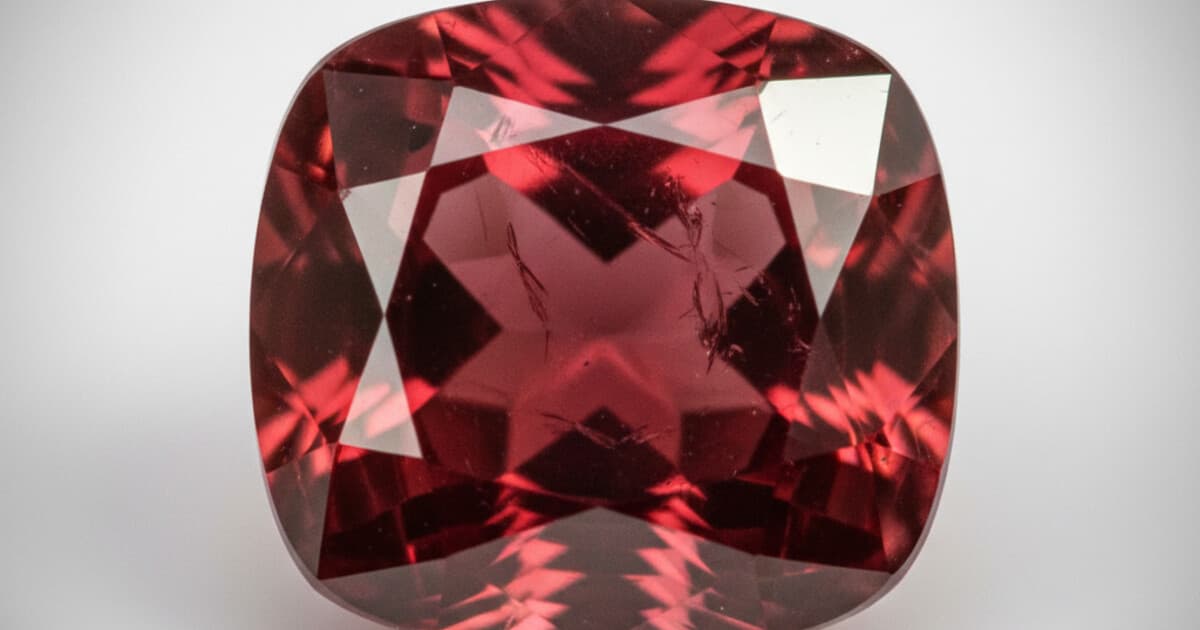
How to Tell if Garnet Is Real: 6 Simple Tests
Garnets are everywhere in estate jewelry, vintage rings, and antique markets. So is red glass. The two look nearly identical to the naked eye, which is why so many garnet pieces get misidentified, overvalued, or passed off as something more expensive.
If you've inherited a deep-red stone or picked one up at an estate sale, knowing how to tell if garnet is real can save you from a bad appraisal or a worse sale. The good news: garnets have several physical properties that make them testable at home. You don't need a lab for most of this.
Real garnets stay cool to the touch longer than glass, show crystalline inclusions (not bubbles) under magnification, and many varieties are weakly magnetic due to iron content. They're also hard enough to scratch glass. Glass fakes fail at least two of these four tests, giving you a solid baseline before paying for a professional appraisal.
What Makes Garnet Unique
Garnet isn't a single mineral. It's a family of silicate minerals that share a crystal structure but vary in composition, color, and physical properties. The most common variety in jewelry is almandine, the deep red-to-violet stone most people picture when they hear "garnet."
You'll also encounter tsavorite (vivid green), demantoid (green with unusually high fire), spessartine (orange-red), and hessonite (brownish-orange). Each has slightly different specs, but the six tests below work reliably across the common red and orange varieties.
Red garnets are most often confused with red glass, red spinel, ruby, and synthetic corundum. Glass fakes are the easiest to catch once you know what to look for. Real garnets are naturally cold and retain that coolness longer than glass, which warms up to body temperature within seconds. Garnets also contain natural crystalline inclusions: tiny needles, crystal fingerprints, and growth planes visible under a 10x loupe. Glass fakes show round, spherical gas bubbles instead of these structured formations. Almandine and pyrope garnets contain iron, making them weakly to moderately magnetic. A strong neodymium magnet held close to a loose almandine will attract it noticeably. Garnets are singly refractive, meaning light passes through as a single ray, while doubly refractive look-alikes like ruby and tourmaline behave differently optically. Garnet ranks 6.5 to 7.5 on the Mohs hardness scale, hard enough to scratch glass but softer than sapphire or diamond. Together, these properties let you build a strong case for or against a real garnet without specialized equipment.
6 Tests to Try at Home
Test 1: The Temperature Test
Pick up the stone and hold it in your palm for about 10 seconds.
Real gemstones stay cool longer than glass or plastic. Glass equalizes to your body temperature almost immediately. If the stone warms up right away, that's a flag.
This test works best when the stone starts at room temperature. A stone that's been sitting in direct sunlight for an hour will feel warm regardless of what it is.
Test 2: The Inclusion Check
Get a 10x loupe or a strong magnifying glass and look inside the stone, not at the surface.
Real garnets have crystalline inclusions: needle-like crystals, rutile silk, fingerprint patterns, or growth planes. These look like internal structure frozen in place.
Glass fakes have bubbles. Round, spherical bubbles inside a stone mean glass. If you see bubbles, that's your answer.
High clarity with zero inclusions is also worth noting. Some synthetic garnets are suspiciously perfect. Natural garnets, even clean ones, usually show something under magnification.
Test 3: The Magnet Test
This one catches most people off guard. Some garnets are magnetic.
Almandine and pyrope garnets contain iron and manganese, which gives them a weak to moderate magnetic response. Hold a strong neodymium magnet (widely available online for a few dollars) near the loose stone on a flat, non-magnetic surface.
If the stone slides or tilts toward the magnet, it's likely a garnet. Most glass and crystal fakes show no response at all.
This test works best with loose stones. A metal setting can interfere with the result.
Test 4: The Scratch Test
Garnet ranks 6.5 to 7.5 on the Mohs hardness scale. That's harder than glass, which sits at 5.5.
Find a glass plate or the flat back of a glass tile. Drag the stone across the surface with firm pressure.
A real garnet leaves a clear scratch in the glass. If the stone doesn't scratch the glass, or if the "stone" itself gets scratched, you're dealing with something softer, probably glass or a soft synthetic.
Do this on a less visible edge of the stone. Forcing a stone with inclusions near the surface across glass can cause chipping.
Test 5: The Light Test
Take the stone outside or hold it near a bright window and look at it in natural daylight.
Real garnets have depth in their color. Under incandescent light, many red garnets shift slightly toward reddish-purple or brownish-red. A small number of color-change garnets show a dramatic shift from greenish-blue in daylight to reddish-purple under incandescent light.
Glass fakes tend to look uniformly bright red in every lighting condition. They lack the color depth and saturation variation that characterize natural stones. If the color looks identical whether you're standing under a lamp or by a window, look more carefully.
Test 6: The Refraction Test
Garnets are singly refractive. Light passes through as a single ray. Ruby, tourmaline, and emerald are doubly refractive.
Hold the stone table-down and look through the back at the facet edges inside. A loupe helps.
If the edges appear doubled, the stone isn't garnet. It could be ruby, red tourmaline, or another doubly refractive stone. Single, sharp edges are consistent with garnet.
This test doesn't distinguish garnet from glass (glass is also singly refractive), but it's useful for ruling out ruby or tourmaline when you're trying to figure out which red stone you're looking at. Pair it with the magnet test and inclusion check for a fuller picture.
Garnet vs Ruby: Why It Matters
Many red garnets get called rubies, sometimes by accident, sometimes not. Both are deep red natural gemstones that show up in antique and estate jewelry. The price gap between them is enormous, so telling them apart matters.
Rubies rank 9 on the Mohs scale, much harder than garnet. A ruby can scratch garnet, not the other way around. Rubies are also doubly refractive (garnets aren't), and most rubies fluoresce strongly red under shortwave UV light. Most garnets don't fluoresce at all.
Price comparison: a 2-carat natural ruby in good quality can fetch $5,000 to $30,000 or more. A comparable red garnet is typically $50 to $500. If a piece was described to you as a ruby, a professional appraisal is worth every cent.
For a broader look at how to tell natural gemstones from synthetics and fakes, the gemstone identification guide covers the full range of stones with practical tests for each.
Common Garnet Imitations
| Imitation | Key Tell | |-----------|----------| | Red glass | Bubbles under loupe, warms fast, no magnetic pull | | Red spinel | Singly refractive, no iron response to magnet | | Red tourmaline | Doubly refractive, different inclusion types | | Synthetic garnet (YAG) | No magnetic response, suspiciously perfect clarity | | Garnet-topped doublets | Visible seam at girdle under magnification |
Garnet-topped doublets deserve special attention. They were widely used in Victorian and Edwardian jewelry: a thin cap of real garnet bonded onto a glass base. The garnet top passes some tests because it's genuine, but the body is glass. Look at the stone at the girdle under magnification. A seam or color shift between layers is the giveaway.
Garnet is also the birthstone for January, which means a lot of inexpensive "garnet" birthstone jewelry circulates in the market. The birthstone guide shows what authentic birthstones look like and how to verify them.
How Jewelry Identifier Can Help
If you've worked through the tests above and you're still unsure, a photo-based AI analysis can give you a second opinion before you book a professional appraisal.
Jewelry Identifier reads visual characteristics from a photo of your stone and matches them against its database of natural gemstones, synthetics, and common fakes. It identifies the likely stone type, notes relevant characteristics, and gives you an estimated value range. It's useful for sorting through estate pieces and deciding which ones are worth a gemologist's time.
Try it now: get your free jewelry appraisal in seconds.
Frequently Asked Questions
Can garnets be faked convincingly? Yes. Red glass and garnet-topped doublets are the most common fakes and can look almost identical without magnification. The magnet test and loupe check (looking for bubbles vs crystalline inclusions) are the two fastest filters you can run at home.
Are all garnets red? No. Garnets come in nearly every color: green (tsavorite, demantoid), orange (spessartine, hessonite), yellow, pink, purple, and colorless. Red almandine is just the most common variety in jewelry, which is why most people associate garnets with red.
How valuable is garnet compared to ruby? Common red almandine garnets sell for $5 to $100 per carat. Tsavorite garnet can reach $500 to $2,000 per carat. Fine rubies of comparable size run $5,000 to $30,000 per carat or higher. The difference matters enormously when appraising or selling a piece.
Does a real garnet scratch glass? Most do. Garnet's Mohs hardness is 6.5 to 7.5, harder than glass at 5.5. If your stone can't scratch glass, it's likely softer than garnet, or it's glass itself.
Can UV light tell me if garnet is real? Most garnets don't fluoresce under UV. A red stone that shows strong red fluorescence is more likely ruby or synthetic corundum than garnet. Absence of fluorescence is consistent with garnet but isn't a definitive test on its own.
When to Call a Professional
The six tests above catch most common fakes. But some well-made synthetic garnets can fool visual inspection, and garnet-topped doublets are specifically designed to pass partial tests.
If the piece has meaningful value and you need a confirmed answer, take it to a GIA-trained appraiser. They'll use a spectroscope and refractometer and give you a definitive identification in a few minutes.
Before spending on a full appraisal, run the piece through Jewelry Identifier for a fast, free first read. It helps you sort through multiple pieces quickly so you know where to focus your appraisal budget.