 Jewelry Identifier
Jewelry Appraisal for Insurance: What You Need and What It Costs
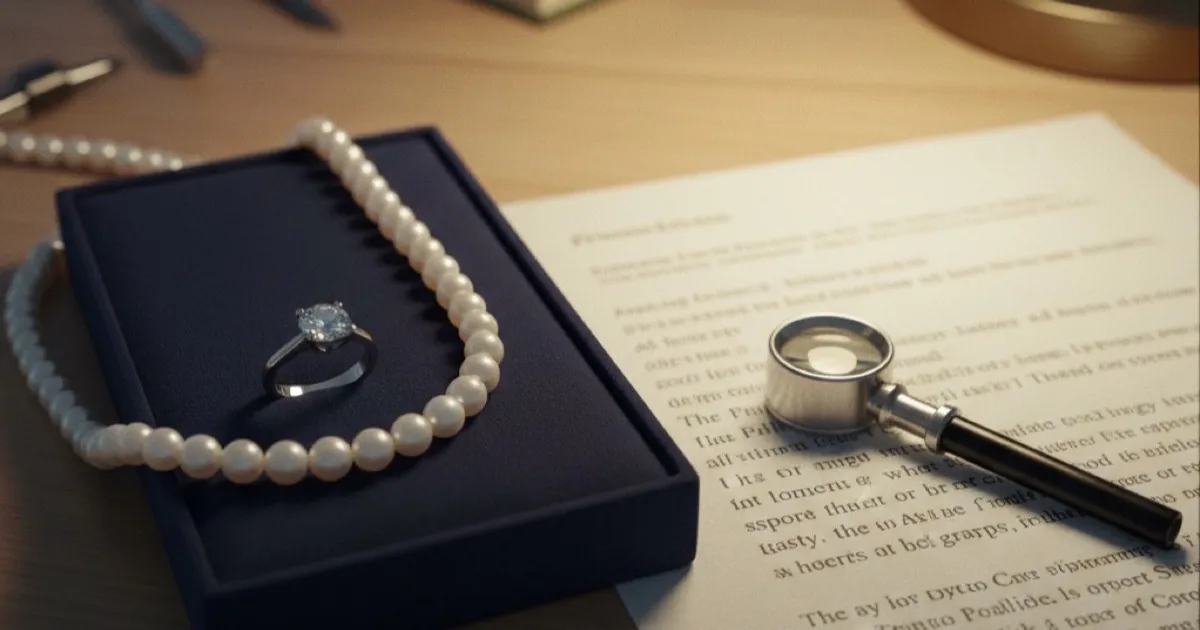
If you own jewelry worth more than a few hundred dollars, your homeowners or renters insurance probably doesn't cover it the way you think. Most standard policies cap jewelry losses at $1,000 to $2,500 — regardless of what your pieces are actually worth. To get real coverage, insurers require a jewelry appraisal for insurance that documents exactly what you own and what it would cost to replace.
This guide covers what an insurance appraisal includes, what it costs, how to find the right appraiser, and when you need to update it. Skip any of these steps and you risk being underinsured when it matters most.
Why Insurance Companies Require Jewelry Appraisals
Insurance works on documentation. Your insurer needs to know two things: what the item is, and what it would cost to replace it today. A jewelry appraisal for insurance provides both.
Without an appraisal, you're stuck with whatever default coverage your policy includes. Here's what that looks like in practice:
- Standard homeowners policy — typically covers jewelry up to $1,000-$2,500 total for theft. A single engagement ring can exceed that limit
- No coverage for "mysterious disappearance" — standard policies usually don't cover a lost ring — only documented theft or specific perils
- Depreciation — some policies pay actual cash value (depreciated), not replacement cost
A proper appraisal unlocks two better options: scheduling individual pieces on your existing policy (called a "rider" or "floater"), or buying a standalone jewelry insurance policy. Both require a current appraisal document from a qualified appraiser.
What a Jewelry Appraisal for Insurance Includes
An insurance appraisal is a specific type called a "retail replacement value" appraisal. It documents what it would cost to replace your piece with one of similar kind and quality at current retail prices.
A thorough appraisal report includes:
- Detailed physical description — metal type, karat, weight, dimensions, construction method, condition
- Gemstone analysis — species, cut, carat weight, color grade, clarity grade, measurements, treatments (if any)
- Photographs — multiple angles, sometimes with measurement references
- Retail replacement value — the dollar figure your insurance will use for coverage
- Appraiser credentials — their qualifications, professional affiliations, and signature
- Date of appraisal — insurers want current values, not what you paid five years ago
The appraiser examines the piece in person, typically using a jeweler's loupe, gemological microscope, and sometimes advanced tools like a refractometer or spectroscope. For diamond grading, they'll assess the 4Cs (cut, color, clarity, carat weight) following GIA standards.
The report is usually 1-3 pages per piece. Some appraisers include a detailed plot diagram for diamonds showing inclusion locations.
How Much Does a Jewelry Appraisal Cost
Appraisal pricing varies by region and appraiser, but here are typical ranges:
- Per-item flat fee — $50-$150 per piece. This is the most common pricing model and the one consumer advocates recommend
- Hourly rate — $50-$150 per hour. Better for large collections where examining many pieces at once is more efficient
- Percentage of value — some appraisers charge 1-2% of the appraised value. Avoid this model — it creates a conflict of interest where the appraiser benefits from inflating values
For a single engagement ring, expect to pay $75-$150. A collection of 5-10 pieces might run $300-$600 with a per-item fee, or $200-$400 hourly if the appraiser works efficiently.
The cost is worth it. An uninsured or underinsured loss on a $5,000 ring costs far more than a $100 appraisal.
For help choosing between local and online appraisal services, see our jewelry appraisal near me vs online comparison.
How to Find a Qualified Appraiser
Not all appraisers are equal. Jewelry store "appraisals" done at the counter where you bought the ring are often inflated — stores want you to feel good about your purchase, which means higher numbers. Insurance companies know this and may challenge inflated appraisals.
Look for these credentials:
- GIA (Gemological Institute of America) Graduate Gemologist — the gold standard in gemological education
- ASA (American Society of Appraisers) — requires peer-reviewed appraisal work and continuing education
- AAA (Appraisers Association of America) — rigorous membership standards
- NAJA (National Association of Jewelry Appraisers) — dedicated to jewelry appraisal specifically
A qualified appraiser should work independently from any jewelry store, charge a flat fee or hourly rate (never a percentage), have verifiable credentials, provide a detailed written report, and be willing to explain their methodology.
Ask upfront about their pricing model, turnaround time, and what the final report includes. A good appraiser will spend 15-30 minutes per piece for standard jewelry, longer for complex or antique items.
How Often to Update Your Jewelry Appraisal
Insurance appraisals are not one-and-done. Jewelry values change with market conditions, and insurers want current documentation.
The standard recommendation: every 2-3 years. Some insurers require updates every 3-5 years as a policy condition.
Why values change:
- Precious metal prices fluctuate — gold has doubled in price over the past five years. A ring appraised at $3,000 in 2020 might be worth $5,000+ today based on gold weight alone
- Gemstone markets shift — demand for certain stones rises and falls. Colored gemstones have appreciated significantly in recent years
- Retail replacement costs increase — labor costs, material costs, and retail markups all trend upward
- Condition changes — wear, damage, or repairs affect value
If your appraisal is more than 5 years old, you're almost certainly underinsured. The cost of an update appraisal ($50-$100 per piece) is far less than the gap between your outdated coverage and today's replacement cost.
For a deeper look at what drives jewelry value, see our guide on how to determine jewelry value.
Insurance Options for Jewelry
Once you have your appraisal, you have two main coverage paths:
Scheduling on Homeowners/Renters Insurance
You add specific pieces to your existing policy as "scheduled items" (also called riders or floaters). Each piece is listed with its appraised value.
Pros:
- Simple — one policy, one premium, one provider
- Usually no separate deductible for scheduled items
- Covers more perils than the base policy (often including mysterious disappearance)
Cons:
- Filing a jewelry claim can affect your homeowners premium
- Coverage limits and terms vary widely between insurers
- Some insurers don't offer scheduling for pieces above certain values
Typical cost: $1-$2 per $100 of coverage annually. A $5,000 ring costs roughly $50-$100 per year to schedule.
Standalone Jewelry Insurance
Specialized jewelry insurers (like Jewelers Mutual, Lavalier, or BriteCo) offer policies dedicated to jewelry.
Pros:
- Claims don't affect your homeowners policy
- Often broader coverage (worldwide, all perils including mysterious loss)
- Specialists understand jewelry claims better than general insurers
- May offer repair or replacement through vetted jewelers
Cons:
- Separate policy to manage
- May have a deductible (varies by provider)
For most people with one or two valuable pieces, scheduling on your existing policy is the simplest option. If you have a larger collection or want dedicated coverage without affecting your home insurance, standalone policies are worth comparing.
Common Mistakes That Cost You Money
Avoid these when getting jewelry appraised for insurance:
Using the store's appraisal from when you bought it. Retail stores inflate appraisals to make the purchase feel like a deal. Insurance companies may accept them, but you'll overpay on premiums based on inflated values — and if you file a claim, the insurer may dispute the value anyway.
Never updating the appraisal. Gold prices, gemstone markets, and retail costs change constantly. An appraisal from 2018 is almost useless for coverage in 2026.
Insuring for sentimental value. Insurance covers the cost to replace the physical item, not its emotional significance. Appraisals should reflect fair market replacement cost.
Forgetting to photograph your pieces. Keep photos alongside your appraisal documents. If a piece is lost or stolen, photos help the claims process and reduce disputes.
Not reading the policy details. "All-risk" doesn't always mean all risks. Check whether your coverage includes mysterious disappearance, damage, and loss outside your home. Some policies exclude certain scenarios.
For a broader look at understanding what your jewelry is worth across different contexts, our estate jewelry appraisal guide covers additional appraisal types beyond insurance.
How Jewelry Identifier Helps
Before you spend $100+ on a formal appraisal, it helps to know which pieces in your collection are worth insuring separately. Not every piece justifies the appraisal expense — costume jewelry and fashion pieces rarely need individual coverage.
Jewelry Identifier lets you photograph each piece and get an AI-powered identification and estimated value. The app identifies gemstone types, metal types, and reads stamps and hallmarks to give you a ballpark figure.
This is not a replacement for a certified insurance appraisal — no app can provide the legally recognized documentation insurers require. But it's a practical first step: sort your collection, flag the pieces that are likely valuable enough to warrant a formal appraisal, and walk into the appraiser's office knowing what you have.
Try it now — get your free jewelry appraisal in seconds.
Frequently Asked Questions
Do I need a jewelry appraisal for insurance?
Yes, if you want coverage beyond your policy's default jewelry limit (usually $1,000-$2,500). To schedule individual pieces or buy standalone jewelry insurance, insurers require a written appraisal documenting the item and its retail replacement value. Without one, you're limited to whatever your base policy covers.
How often should I get jewelry appraised for insurance?
Every 2-3 years is the standard recommendation. Some insurance policies require updates every 3-5 years as a condition of coverage. Metal and gemstone prices fluctuate, so outdated appraisals can leave you significantly underinsured.
Can I use a purchase receipt instead of an appraisal?
Some insurers accept receipts for recently purchased items (within the past year or two), but most prefer or require a formal appraisal. Receipts don't include the detailed description and replacement value analysis that appraisals provide. For older pieces, inherited jewelry, or pieces without receipts, an appraisal is the only option.
How much does jewelry insurance cost?
Typically $1-$2 per $100 of appraised value per year. A $5,000 engagement ring costs roughly $50-$100 annually to insure. Rates vary by insurer, location, and whether you have a deductible. Standalone jewelry policies and homeowners riders are usually priced similarly.
What's the difference between appraised value and what I paid?
Appraised value for insurance is the retail replacement cost — what it would cost to buy an equivalent piece today. This can be higher than what you paid (if you got a deal or prices have risen) or lower (if you overpaid or the market has shifted). The appraised value is what the insurer uses to determine your coverage amount and premium.