 Jewelry Identifier
Platinum Jewelry: How to Identify It and What It's Worth
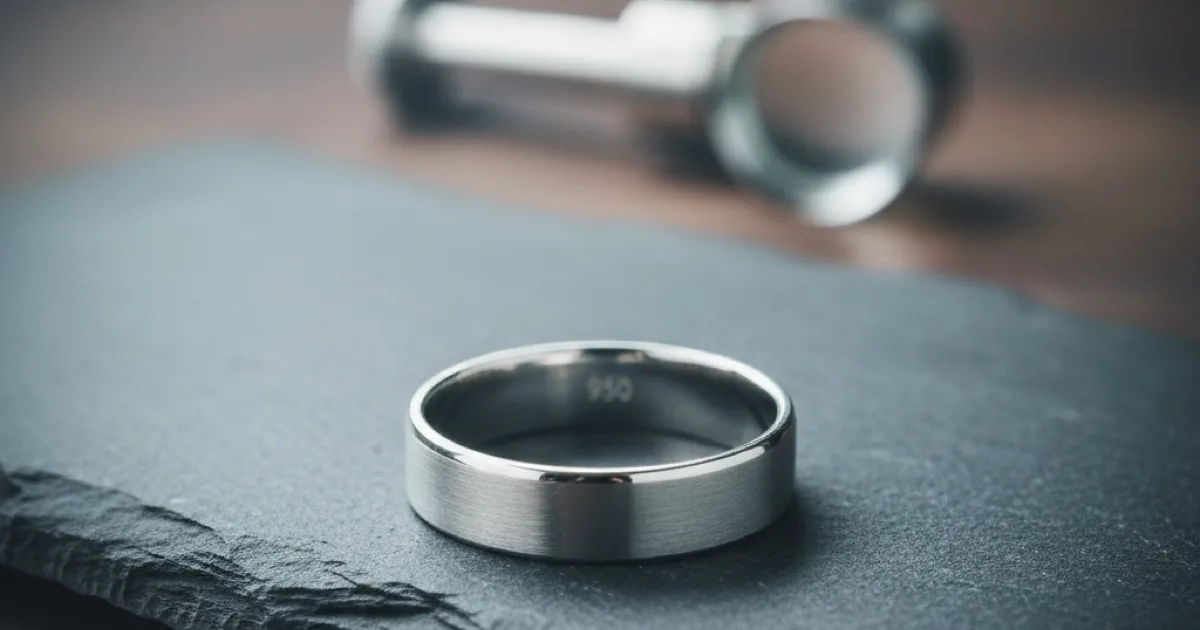
Platinum looks like silver. It weighs like gold. And it costs more than both. If you have a piece of jewelry that looks silvery but feels surprisingly heavy, you might be holding platinum — one of the most valuable metals in jewelry. Platinum jewelry identification isn't always straightforward because it looks so much like white gold and sterling silver at a glance.
This guide covers how to tell platinum from other white metals, what stamps to look for, at-home tests you can try, and what platinum jewelry is typically worth.
Why Platinum Is Easy to Confuse With Other Metals
Platinum, white gold, and sterling silver all appear silvery-white. In a jewelry box, they're almost impossible to distinguish by color alone. That's why so many people own platinum without knowing it — and why others think they have platinum when they actually have white gold.
Here's a quick comparison:
- Platinum — Dense, heavy, naturally white, doesn't tarnish. Develops a matte patina over time rather than losing shine
- White gold — Gold alloyed with white metals and usually rhodium-plated for shine. Lighter than platinum. Rhodium plating wears off over time, revealing a slightly yellowish tone
- Sterling silver — Much lighter than platinum, tarnishes to black/gray, softer metal that scratches easily
- Palladium — Similar to platinum but lighter and less expensive. Rare in vintage jewelry, more common after 2010
- Stainless steel — Very hard, lightweight, cheap. Common in fashion jewelry
The weight is the biggest giveaway. Platinum is one of the densest metals used in jewelry. A platinum ring feels noticeably heavier than an identical white gold ring.
Platinum Stamps and Hallmarks
The fastest way to identify platinum is to find a stamp. Grab a magnifying glass and check inside the band (for rings), on the clasp (for necklaces and bracelets), or on the post (for earrings).
Platinum Stamps to Look For
- 950 or Pt950 — 95% pure platinum (most common for fine jewelry)
- 900 or Pt900 — 90% pure platinum
- 850 or Pt850 — 85% pure platinum
- PLAT — Generic platinum mark
- Pt — Platinum abbreviation
- IRID PLAT — Platinum-iridium alloy (common in vintage pieces)
In the United States, jewelry must be at least 50% platinum to carry any platinum mark. Items marked "PLAT" or "Pt" without a number are assumed to be 95% platinum.
Stamps That Mean It's NOT Platinum
- 10K, 14K, 18K — Gold (white gold if the piece looks silvery)
- 925, SS, STER — Sterling silver
- GP, GF — Gold plated or gold filled
- STAINLESS — Stainless steel
Our stamps and hallmarks guide covers all common jewelry marks in detail. If the stamp is worn or hard to read, the gold plated vs solid gold guide helps distinguish between plated and solid precious metals.
At-Home Tests for Platinum
If there's no visible stamp (common with very old pieces or pieces that have been resized), these tests help narrow it down.
The Weight Test
This is the most useful DIY test. Platinum is extremely dense — about 21.4 g/cm³, compared to 19.3 for gold and 10.5 for silver.
Hold the piece in your palm. If it's a ring, compare it to a gold ring of similar size. Platinum feels significantly heavier. A platinum wedding band typically weighs 60-80% more than the same band in 14K white gold.
If you have a kitchen scale accurate to 0.1 grams, weigh the piece. A men's 6mm platinum wedding band typically weighs 10-14 grams. The same band in 14K white gold weighs 6-9 grams.
The Magnet Test
Platinum is not magnetic. Hold a strong magnet (neodymium magnets work best) against the piece. If it sticks, it's not platinum. It's likely stainless steel or a base metal alloy.
White gold and sterling silver are also non-magnetic, so passing the magnet test doesn't confirm platinum — it just rules out steel and some base metals.
The Tarnish Test
Look at how the metal has aged. Platinum doesn't tarnish. Ever. It develops a soft, matte patina that many collectors prefer. But it never turns black, green, or yellowish.
- If the piece has black tarnish: it's sterling silver
- If it shows a yellowish tinge where the surface has worn: it's rhodium-plated white gold
- If it has a uniform matte grayish tone but no color change: likely platinum
The Scratch Test
Platinum is softer than you'd expect for a luxury metal. It scratches, but unlike gold and silver, metal isn't removed when platinum scratches — it's displaced. A scratch on platinum pushes metal to the side rather than scraping it away. This means platinum loses virtually no weight from normal wear.
If you see fine scratches with a matte, even surface underneath (no color change), that's consistent with platinum. If you see a yellowish color under the scratches, it's white gold with rhodium plating.
The Acid Test (Professional)
Jewelers use nitric acid and aqua regia to test platinum definitively. Platinum resists nitric acid — a drop on the metal's surface produces no reaction. Gold dissolves in aqua regia but resists nitric acid alone. Silver dissolves in nitric acid with a green reaction.
This test requires professional equipment and handling. Don't attempt it at home — the acids are dangerous and can damage jewelry if applied incorrectly. Any jeweler can perform this test for $10-20 or sometimes free if you're considering selling.
What Platinum Jewelry Is Worth
Platinum trades at roughly $950-1,050/oz (fluctuates with markets). For comparison, gold is around $2,300/oz. Despite platinum's lower spot price per ounce, platinum jewelry often sells for more than equivalent gold pieces because:
- Platinum jewelry uses higher purity (95% vs gold's typical 58.5% at 14K)
- Platinum is denser, so pieces weigh more
- Platinum is harder to work with, increasing labor costs
Typical Platinum Jewelry Values
- Platinum wedding band (men's 6mm): $600-1,200
- Platinum engagement ring setting (no stone): $800-2,500
- Platinum diamond solitaire ring: $2,000-30,000+ (stone quality drives the price)
- Platinum chain necklace: $500-3,000+ depending on weight
- Platinum bracelet: $800-4,000+
- Vintage platinum jewelry: 10-50% premium over melt for Art Deco and other sought-after periods
For a broader context on how jewelry metals affect pricing, see our gold jewelry guide and our guide on how to determine jewelry value.
Vintage Platinum: A Special Case
Platinum was widely used in fine jewelry from the 1900s through the 1940s, especially during the Art Deco period (1920s-30s). During World War II, governments restricted civilian use of platinum for war production, so jewelry from 1942-1947 is almost never platinum.
If you have a piece that appears to be from the early 20th century with fine filigree work and a silvery color, there's a good chance it's platinum. Art Deco platinum pieces are highly collectible and often worth significantly more than their metal and stone value.
Our vintage jewelry identification guide covers how to date pieces by their design characteristics.
How Jewelry Identifier Helps Identify Platinum
Not sure whether that silvery ring is platinum, white gold, or silver? Jewelry Identifier can help you figure it out from a photo. The AI reads stamps and hallmarks — including worn or partially obscured marks that are hard to read with the naked eye. It identifies the metal type and provides an estimated value.
For the best results, photograph any visible stamps with good lighting and close focus. The app also identifies gemstones in platinum settings and factors them into the value estimate.
Two free identifications per day let you check multiple pieces without cost.
Not sure if that silvery piece is platinum, white gold, or silver? Get a free jewelry appraisal — upload a photo and we'll identify the metal, read the stamps, and estimate its value.
Frequently Asked Questions
Can a jeweler tell platinum from white gold by looking at it?
An experienced jeweler can often distinguish them by weight, patina, and wear patterns. But for a definitive answer, they'll use an acid test or X-ray fluorescence (XRF) scanner. Visual identification alone isn't 100% reliable, especially for newer pieces where rhodium-plated white gold looks identical to polished platinum.
Is platinum jewelry always stamped?
No. Very old pieces (pre-1920s), handmade artisan jewelry, and pieces that have been resized may lack stamps. If a ring was cut and resoldered during resizing, the stamp may have been removed. Pieces from certain countries may use different marking systems or no marks at all.
Does platinum jewelry need maintenance?
Platinum is low-maintenance compared to white gold. It never needs replating (white gold needs rhodium replating every 1-2 years). Over time, platinum develops a matte patina that many people like. If you prefer a polished look, a jeweler can buff it back to a high shine in minutes. The metal isn't lost during polishing — it's just redistributed.
Is platinum heavier than gold?
Yes. Platinum is denser than gold — 21.4 g/cm³ vs 19.3 g/cm³. A platinum ring weighs about 60-80% more than an identical ring in 14K white gold (which is only 58.5% gold, diluted with lighter alloys). This weight difference is noticeable when you hold both.
Have a silvery ring or bracelet and can't tell if it's platinum? Jewelry Identifier reads the stamps, identifies the metal, and gives you an estimated value — all from a photo. Try it free with two daily identifications and find out what that piece is really made of.