 Jewelry Identifier
Ruby Price Per Carat: 2026 Value Guide with Real Ranges
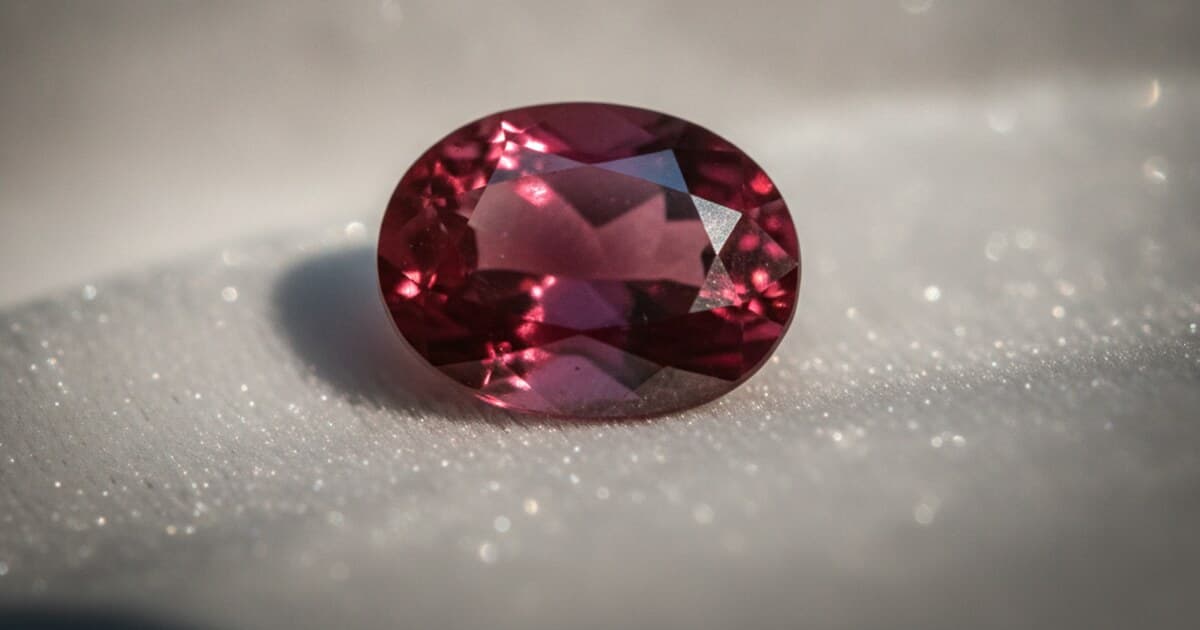
Natural rubies have one of the widest price spreads in the gemstone world. A commercial-grade stone with visible flaws might sell for $100 per carat. A flawless pigeon-blood ruby from Burma can reach $1,000,000 per carat at auction. Understanding where any given stone lands on that range requires knowing five specific factors, and they work differently for rubies than for any other gem.
Ruby price per carat in 2026 runs from roughly $50 for fracture-filled commercial material to over $100,000 for top unheated pigeon-blood stones above 3 carats. Heat-treated commercial rubies typically sell for $300 to $1,200 per carat. Fine red rubies with good clarity reach $2,000 to $6,000 per carat. Treatment status and color quality drive the biggest price swings, more than size or cut alone.
Natural ruby prices in 2026 range from $100 to over $100,000 per carat, depending on color quality, treatment status, origin, and size. Heat-treated commercial rubies sell for $300 to $1,200 per carat. Fine red stones with good clarity fetch $2,000 to $6,000. Unheated rubies with certified no-heat status command 2 to 4 times the price of comparable heated stones.
If you have a ruby ring, pendant, or loose stone and want a quick estimate, Jewelry Identifier analyzes photos and pulls comparable sold listings to estimate current market value. Your first appraisal is free.
What Drives Ruby Price Per Carat
Color matters more for rubies than for any other major gemstone. The trade target is pure vivid red with a slight blue overtone, called "pigeon blood." Stones that tip toward brown, orange, or purple lose value quickly. A ruby one shade too dark or too pale can drop 30 to 50 percent in price compared to an optimally colored stone of identical weight.
Clarity comes second. Natural rubies almost always carry inclusions (fine rutile needles called "silk") that are expected and accepted by the market. Buyers tolerate moderate inclusions in rubies far more readily than in diamonds. What cuts value is cloudiness or large fractures that block light transmission through the stone.
Treatment status is the third major variable. Roughly 95 percent of commercial rubies have been heated.
The process is widely accepted by the trade as permanent and stable. Unheated rubies with certified no-heat documentation trade at 2 to 4 times the price of heated equivalents of similar quality.
Size adds a scarcity premium at fine quality levels. Ruby rough large enough to yield clean stones above 3 carats is genuinely rare. A 5-carat ruby doesn't cost 5 times what a 1-carat ruby costs at the same quality grade; the per-carat rate accelerates sharply, often running 10 to 20 times higher for exceptional stones.
Origin plays a role in the premium tier. Burmese rubies with top pigeon-blood color carry a 30 to 50 percent premium over equivalent stones from other sources. Mozambican rubies, now the dominant commercial source, have narrowed that gap considerably over the past decade.
Ruby Price Per Carat by Quality and Size
The table below shows retail prices for natural rubies across three quality tiers. Fracture-filled stones (where glass has been injected into fractures to improve transparency) aren't included because the market treats them separately. They typically sell for $15 to $80 per carat and lose most of that value if the filling is ever disturbed by cleaning or heat.
| Carat Weight | Commercial Grade | Fine Red | Top / Pigeon Blood | |---|---|---|---| | Under 0.5 ct | $50–$300 | $500–$1,200 | $1,200–$3,000 | | 0.5–1 ct | $100–$500 | $800–$2,500 | $2,500–$7,000 | | 1–2 ct | $300–$1,200 | $2,000–$6,000 | $7,000–$15,000 | | 2–5 ct | $500–$5,000 | $8,000–$25,000 | $20,000–$100,000 | | Over 5 ct | $1,500–$10,000 | $20,000–$80,000 | $100,000+ |
These are retail prices. Selling to a dealer returns 40 to 60 percent of these figures. For context, diamond price per carat follows a similar non-linear structure where fine-quality material above 2 carats accelerates sharply in price per unit weight.
How Heat Treatment Changes Ruby Price Per Carat
Heat treatment is applied to roughly 95 percent of commercial rubies on the market. The process exposes stones to temperatures between 1,600 and 1,900 degrees Celsius, dissolving rutile silk inclusions and improving color distribution. The gemological trade has accepted heated rubies as natural since the 1980s, and the treatment is considered permanent and stable. What creates price separation is documented "no heat" status, certified by a laboratory like GIA, Gubelin, or SSEF. A GIA-certified unheated 1.36-carat ruby can sell for approximately $8,610 per carat, substantially above the $800 to $2,500 range for a heated equivalent of similar size. The premium widens with size: unheated stones above 3 carats with top pigeon-blood color regularly reach $50,000 to $200,000 per carat. Lab certification runs $150 to $400 per stone. For a fine 2-carat unheated ruby, that report can add $10,000 or more to the sale price. Unheated status can't be established visually; only laboratory infrared spectroscopy and inclusion mapping confirms it.
One more treatment category worth knowing: glass-filling. Some heavily fractured rubies have their fractures filled with lead glass to improve transparency. This is different from heat treatment; the trade classifies it as damage repair, not enhancement. Dealers are required to disclose glass-filling, but older estate pieces sometimes don't come with documentation. If you're evaluating inherited ruby jewelry, a lab test that checks for glass filling is worth the cost.
Ruby Origin and Its Effect on Price
Origin carries real weight in the premium tier, though it matters less for commercial-grade stones. It must be documented by a gemological lab, because no visual inspection confirms it.
Burma (Myanmar) holds the benchmark position. Mogok Valley material sets the standard for pigeon-blood color, and Burmese rubies with top color carry a 30 to 50 percent premium over equivalent stones from other sources. That premium is partly prestige and partly the genuine rarity of optimal Burmese material.
Mozambique is the primary commercial source today. Rubies from the Montepuez deposit produce vivid red material that rivals Burmese quality at the fine tier. The price gap between Mozambican and Burmese stones has narrowed significantly since 2010, and top Mozambican stones now trade close to Burmese prices.
Thailand produces darker, more brownish-red rubies that command lower prices. Sri Lanka yields lighter, more pinkish material (sometimes called "light rubies") which sells at a discount to saturated red stones but has its own buyer base.
For estate jewelry without papers, a lab report estimates possible origins based on inclusion patterns and trace element chemistry. Assignment isn't always conclusive, but a possible-Burmese note adds value in private sales.
Natural vs Lab-Grown Ruby Prices
Lab-grown rubies are chemically identical to natural ones: both are corundum colored by chromium. The difference is how they formed.
Natural rubies took millions of years and are genuinely scarce, particularly at fine quality. Lab-grown stones grow in weeks and cost far less to produce. A 1-carat lab-grown ruby retails for $20 to $150 depending on cut quality and seller. A 1-carat natural ruby in commercial grade starts around $300.
The resale difference is significant. Natural rubies hold real secondary market value. Lab-grown rubies have essentially no resale market. If you're evaluating an inherited piece or buying with long-term value in mind, the natural vs lab-grown distinction matters more than almost any other single factor.
How to Find Out What Your Ruby Is Worth
For most ruby jewelry (commercial-grade rings, pendants with heated stones, estate pieces with unclear treatment history), checking comparable eBay sold listings gives a solid baseline. Searching "ruby ring" with weight and quality descriptors shows what similar pieces have actually sold for in the last 90 days.
Open Jewelry Identifier, photograph the piece, and the tool runs your stone against current eBay sold comps automatically. It reads the metal stamps on the setting too, which adds their own melt value to the total estimate. Your first appraisal is free and returns results in seconds.
For stones that might be fine quality (visually clean, vivid red, over 1 carat), a professional lab report is worth the investment. A $200 to $400 GIA report clarifies treatment status, can confirm origin, and can potentially add thousands to the selling price. If you're ready to sell, where to sell jewelry covers the main venues ranked by payout, including options best suited for fine colored stones.
Frequently Asked Questions
How much is a 1-carat ruby worth?
A 1-carat natural ruby ranges from $300 (heavily included commercial grade, heated) to $15,000 (top pigeon-blood color, unheated, eye-clean). Most 1-carat rubies in jewelry sell for $800 to $3,000. Color grade, treatment status, and lab certification are the three factors that move the number most within that range.
Are rubies more expensive than diamonds?
Fine natural rubies are often more expensive per carat than comparable diamonds. A 2-carat unheated pigeon-blood ruby can reach $10,000 to $30,000 per carat. A 2-carat natural diamond in VS1/G grades typically runs $8,000 to $12,000 per carat. At the auction market's top tier, exceptional rubies outprice all but the rarest diamonds.
What makes a ruby pigeon blood?
Pigeon blood describes a specific vivid red with a slight blue overtone. Labs like Gubelin and SSEF certify the designation when a stone meets the color threshold. GIA uses "vivid red" but doesn't use the pigeon blood term in its reports. The certification adds a measurable price premium because it documents the color grade from a neutral third party rather than relying on a seller's description.
How much is 1 gram of ruby worth?
Rubies are priced per carat, not per gram. One gram equals 5 carats. A 1-gram (5-carat) natural ruby in commercial grade sells for $7,500 to $50,000 total depending on quality; fine quality material can push well beyond that. The per-gram comparison understates value because ruby prices accelerate sharply with size; a 5-carat fine ruby costs far more than five 1-carat rubies of equivalent quality.
Does heat treatment lower ruby value?
Heat treatment doesn't lower value for commercial and mid-range rubies; the market expects it and prices it in. Unheated rubies carry a premium because they're genuinely rarer, not because heated stones are penalized. What does lower value is glass-filling, which the trade classifies as damage repair. Undisclosed treatment history on high-value stones also creates buyer hesitation that can reduce price at sale.
Knowing the ruby price per carat framework helps you read the market clearly, whether you're buying a piece, insuring one, or figuring out what an inherited stone is worth. Try a free jewelry appraisal at Jewelry Identifier to get a current value estimate from real comparable sales, with metal weight and stone identification included.