 Jewelry Identifier
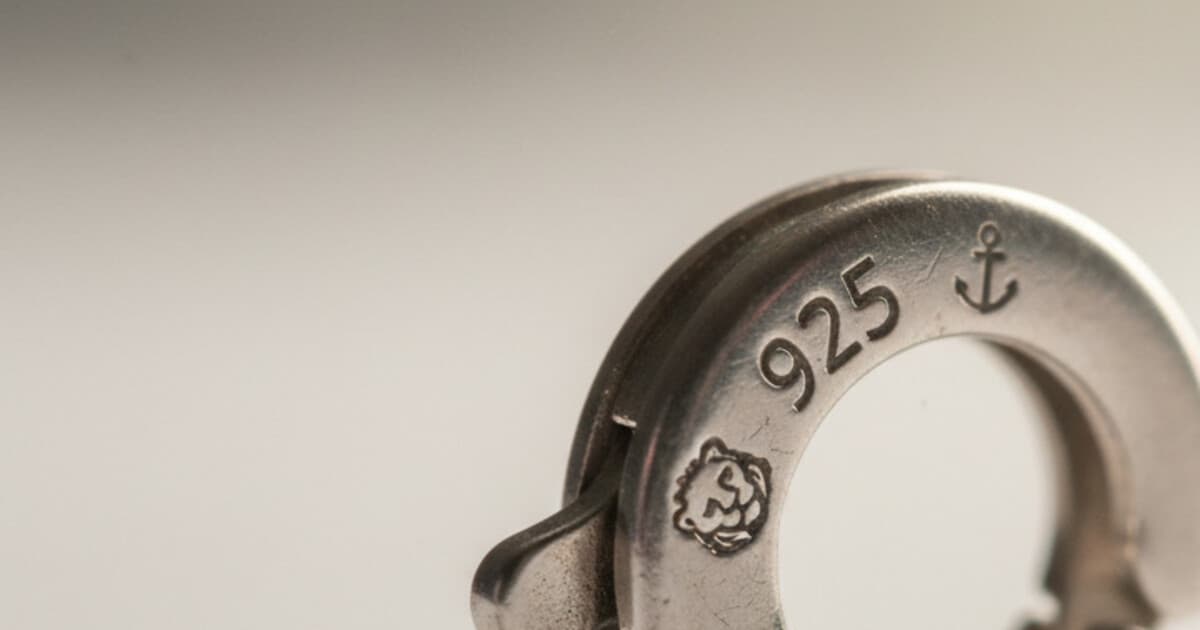
What Does 925 Mean on Jewelry? Understanding Silver Stamps
What Does 925 Mean on Jewelry? Understanding Silver Stamps
You pull out a silver necklace, squint at the clasp, and find a tiny stamp: 925. Maybe it's on a ring. Maybe it's on a bracelet you inherited. If you've ever wondered what that number means and whether it makes your piece more (or less) valuable, you're not alone. It's one of the most common jewelry questions there is.
The answer is simple once you know it — and knowing it tells you a lot about what you're holding.
925 on jewelry means the piece is sterling silver. It's 92.5% pure silver mixed with 7.5% other metals, usually copper. That's where the number comes from: 925 parts silver per 1,000. Sterling silver is the standard for jewelry worldwide because pure silver (99.9%) is too soft to hold its shape in rings, clasps, and detailed settings.
What "925" Actually Measures
The 925 stamp is a fineness mark. Fineness measures metal purity in parts per thousand rather than percentages, so 925 = 92.5%.
Jewelers around the world adopted this system to give buyers a consistent way to understand what they're paying for. When you see 925, you know exactly what's in the metal: 925 grams of silver in every 1,000 grams of material.
The remaining 7.5% is typically copper. Copper doesn't cheapen the silver — it hardens it. Pure silver scratches and bends too easily for everyday jewelry. The copper addition makes sterling silver durable enough to wear daily while keeping the color and luster intact.
Sterling silver (stamped 925) contains 92.5% pure silver alloyed with 7.5% copper or other metals. This ratio exists because fine silver (99.9% pure) is too malleable for practical jewelry use — it deforms easily under normal wear. The copper alloy increases hardness while preserving silver's characteristic bright white color and high reflectivity. The 925 standard originated in Britain and is now recognized internationally by assay offices and customs authorities. Jewelry stamped 925 is considered genuine sterling silver under the laws of most countries, including the United States, United Kingdom, and European Union. The alloy may also include small amounts of germanium or zinc in some modern formulations to reduce tarnishing, but copper remains the most common hardening agent.
Is 925 Silver Good Quality?
Yes. Sterling silver is the benchmark quality for silver jewelry. It's not a compromise — it's the intentional standard that makes silver wearable.
Here's how it compares to other silver grades you might see on a piece:
| Stamp | Purity | Common Use | |-------|--------|-----------| | 999 or .999 | 99.9% pure silver | Bullion coins, bars, and some fine jewelry | | 950 | 95% silver | High-end European jewelry (especially French) | | 925 | 92.5% silver | Standard sterling silver — most jewelry | | 900 | 90% silver | Older American coins, some flatware | | 800 | 80% silver | European flatware, some vintage jewelry |
If you find 925 on a piece, it's genuine sterling silver. That's a meaningful distinction from silver-plated items, which have only a thin silver coating over a base metal.
Silver-plated pieces typically carry no silver fineness stamp at all, or they might say "EPNS" (electroplated nickel silver) or "SP." A 925 stamp means the entire piece is sterling through and through.
Other Silver Stamps You Might See
The 925 mark doesn't always stand alone. Depending on where the piece was made, you'll often see it alongside other markings:
Maker's marks are the manufacturer's initials or logo, usually stamped near the fineness mark. A small "T&Co" next to 925 on a necklace, for example, points to Tiffany & Co.
Assay office marks appear on British and European pieces. In the UK, silverware that passed official testing gets an additional hallmark from one of the assay offices (London's anchor, Edinburgh's castle, etc.). These appear alongside the 925 or "sterling" mark.
Date letters show up on British silver — a single letter indicating the year the piece was tested. Combined with the assay mark, this lets you date a British piece precisely.
Country marks like "Italy 925" or "Mexico 925" tell you where the piece was made. These are especially common on tourist and export jewelry.
If you see a stamp that reads "925 Italy" on a necklace you picked up at an estate sale, you've got genuine sterling silver made in Italy. The country of origin doesn't affect the silver content.
For a full breakdown of other jewelry stamps and what they mean — gold marks like 585 and 750, platinum, and plated marks — browse the complete jewelry hallmarks directory.
Can 925 Silver Be Fake?
A stamp can be forged. It happens, mostly on mass-produced jewelry sold through unverified online sources.
The good news is that testing silver at home isn't complicated. A few methods work well:
The magnet test. Silver isn't magnetic. Hold a strong magnet near the piece — if it pulls hard, the base metal is likely steel or iron under a silver coating. If there's no attraction, that's a good sign, though not definitive on its own.
The ice test. Silver conducts heat faster than almost any other metal. Place a piece of ice on the jewelry — real silver will melt the ice noticeably faster than a base metal or silver-plated piece will.
The rub test. Take a white cloth or paper towel and rub the piece firmly. Genuine silver oxidizes slightly when rubbed and may leave a faint black mark on the cloth. Silver-plated pieces often won't do this the same way.
The acid test. Jeweler's acid kits (available for under $20) drop a small amount of nitric acid on an inconspicuous spot. Genuine silver turns a specific color; base metals react differently. This is the most reliable at-home method.
For a detailed walkthrough of each test with what to look for, check our guide on how to tell if silver is real.
Does 925 Silver Tarnish?
It does — and that's actually normal. The copper in sterling silver reacts with oxygen and sulfur in the air, creating tarnish (silver sulfide) on the surface. Tarnish looks dark or yellowish and can make a piece look old or dirty.
This doesn't mean the silver has degraded. It's purely a surface reaction.
Tarnish removes easily with a silver polishing cloth, mild soap and warm water, or a commercial silver cleaner. Store pieces in a sealed bag or tarnish-resistant pouch when you're not wearing them, and they'll stay bright longer.
Higher-humidity environments (like bathrooms) accelerate tarnishing. Exposure to chlorine (pools, hot tubs), perfume, and some lotions speeds it up too. Keep 925 silver away from these when you can.
Fine silver (999) tarnishes less because there's no copper to react. If tarnish-resistance matters most to you, 950 or 999 silver is a better pick. But for everyday wearability, 925 is still the right choice.
How Jewelry Identifier Can Help
If you've inherited a piece or picked something up at an estate sale and can't read the stamps clearly, a photo can tell you a lot. The Jewelry Identifier app reads hallmarks and stamps directly from a photo — hold your phone over the clasp or inner band and it'll identify the marks and explain what they mean.
The app also checks whether the stamps are consistent with the style, construction, and other marks on the piece, which helps catch fakes that use copied stamps. It works on rings, necklaces, bracelets, and earrings.
Try it now — get your free jewelry appraisal in seconds. Your first appraisal is free.
Frequently Asked Questions
Is 925 silver real silver? Yes. 925 stamps indicate sterling silver — 92.5% pure silver. It's genuine silver, not a plating or imitation. Silver-plated pieces usually don't carry a 925 mark.
Is 925 silver worth anything? Sterling silver has real melt value. As of 2026, silver trades around $30-35 per troy ounce. The silver content of a typical 925 necklace (about 20 grams) is worth roughly $18-25 in raw metal value, before any design, maker, or collectible premium.
What's the difference between 925 and 999 silver? 999 is fine silver (99.9% pure) — softer, less prone to tarnishing, and used mainly for bullion and specialized jewelry. 925 (sterling silver) has copper added for durability, making it better suited to everyday jewelry.
Can you wear 925 silver every day? Yes. Sterling silver is durable enough for daily wear. Store it properly and clean it occasionally, and it'll last decades.
Why does some silver say "sterling" instead of 925? They mean the same thing. American-made silver jewelry often uses the word "sterling" while international pieces typically use the 925 fineness mark. Both indicate 92.5% pure silver.
The Short Version
A 925 stamp means sterling silver: 92.5% pure, internationally recognized, real silver. It tarnishes (that's the copper), but it's durable and worth real money. If you want to verify your piece is genuine, check for consistent hallmarks throughout and run a quick test at home.
Our complete guide to reading jewelry stamps and hallmarks covers every marking you might find — metals, countries, makers, and date letters — if you want to go deeper on what the other marks around your 925 stamp mean.