 Jewelry Identifier
Aquamarine Gemstone: Properties, Value, and How to Identify It
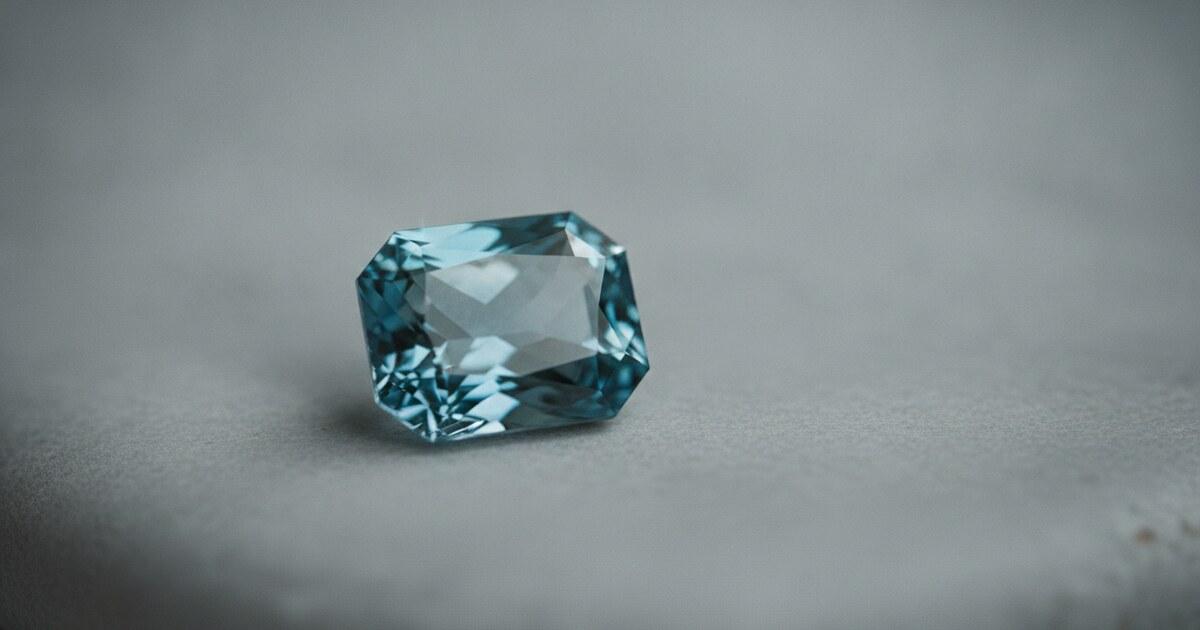
Aquamarine has one of the most recognizable colors in gemology: a cool, luminous blue that sits somewhere between ocean water and clear sky. It's one of the more affordable fine gemstones on the market, but quality and color still create dramatic price differences within the same mineral species. Whether you've inherited a piece, spotted one at an estate sale, or are shopping for a March birthday, understanding what you're looking at changes how you value it.
Aquamarine is a blue variety of the mineral beryl, with a chemical formula of Be₃Al₂Si₆O₁₈. Its characteristic sea-blue color comes from traces of ferrous iron (Fe²⁺). It ranks 7.5 to 8 on the Mohs hardness scale, making it durable enough for daily wear. Brazil is the world's largest producer, though significant deposits also exist in Pakistan, Madagascar, and Nigeria.
What Is Aquamarine? Properties and Mineral Family
Aquamarine belongs to the beryl mineral family, alongside emerald, heliodor (yellow beryl), and morganite (pink beryl). What separates them is trace chemistry: emerald gets its green from chromium and vanadium; aquamarine gets its blue from ferrous iron (Fe²⁺). Different element, same crystal lattice, completely different stone.
The physical properties make aquamarine one of the more practical fine gemstones for jewelry. Its Mohs hardness of 7.5 to 8 means it handles everyday contact without scratching easily. The refractive index runs 1.577 to 1.583, the specific gravity sits at 2.72, and the vitreous (glassy) luster gives faceted stones a brightness that shows well even in modest lighting.
Under a dichroscope, the stone reveals two distinct colors: near-colorless in one optical direction, blue in the other. That's the ferrous iron signature at work.
Brazil's Minas Gerais state has been the dominant commercial source since the late 19th century. The Karakoram Mountains in Pakistan (at elevations above 15,000 feet) produce smaller quantities with exceptional clarity. Madagascar, Mozambique, Nigeria, and Sri Lanka contribute to global supply, as do smaller deposits in Colorado and Maine. Most aquamarine sold today has been heat-treated to remove yellowish or greenish tones and intensify the blue. The treatment is permanent, stable, and widely accepted in the trade. The world's largest faceted aquamarine, the Dom Pedro (10,363 carats, 36 centimeters tall), was cut by Bernd Munsteiner from a crystal found in Minas Gerais and donated to the Smithsonian's National Museum of Natural History in 2012. Raw beryl crystals from Brazilian mines have exceeded 100 pounds, making large faceted aquamarines more commercially available than comparably sized rubies or emeralds. Eye-clean clarity is the norm for quality aquamarine; visible inclusions in a faceted stone signal lower-grade material.
Aquamarine Colors and What Makes a Quality Stone
Color is the primary value driver for aquamarine. The ideal stone is a medium to dark, slightly greenish-blue to pure blue with strong saturation. Stones described as "Santa Maria" (after the Santa Maria de Itabira mine in Brazil) or "Santa Maria Africana" (from Mozambique and Madagascar) represent the benchmark: deep, vivid blue with no gray or brown modifier.
Here's how the color grades break down in practice:
- Light blue / pale aqua: Most common, often used in mass-market jewelry. Pleasing but less valuable.
- Medium blue: The commercial sweet spot. Good saturation without the premium of top-color material.
- Deep "Santa Maria" blue: The benchmark for fine-quality aquamarine. Rare and commands significant premiums.
- Greenish-blue: Natural before heat treatment. Some buyers prefer the warmer tone; most of the trade does not.
Clarity comes second. Eye-clean stones are standard for faceted aquamarine, which is one advantage the gem has over emerald (heavily included as a rule). Large inclusions, fractures, or strong color zoning all reduce value.
Cut matters more for aquamarine than for many other gems. The stone's naturally light color requires well-proportioned faceting to concentrate light and maximize saturation. Poorly cut stones look washed out even in attractive colors.
Aquamarine Gemstone Value: Price Per Carat
Aquamarine is accessible compared to ruby, emerald, and fine sapphire, but price ranges still span a wide band by quality.
For commercial-grade material (light blue, included, smaller):
- Rough and tumbled: $5 to $15 per carat
- Faceted commercial: $15 to $50 per carat
For fine quality (medium to deep blue, eye-clean, well-cut):
- 1 to 5 carats: $80 to $200 per carat
- 5 to 10 carats: $150 to $400 per carat
- 10+ carats: $300 to $800+ per carat
Top "Santa Maria" quality at significant size (5+ carats):
- $500 to $1,500+ per carat depending on color depth
The price jumps at certain carat weights reflect both rarity and demand. Large aquamarines are relatively common compared to other fine gems, which keeps prices grounded, but top-color material in sizes above 10 carats is genuinely scarce. Set aquamarine jewelry commands a substantial premium over loose stones of equivalent quality.
How to Identify Real Aquamarine at Home
The two most common simulants for aquamarine are blue topaz and blue glass. Blue topaz is a natural gemstone with similar color, so it's often confused for aquamarine or sold as a less expensive substitute. Glass and synthetic material are more problematic.
Five tests that help at home:
-
Temperature test: Real aquamarine stays cool longer than glass. Hold the stone against your palm for 30 seconds. Glass warms quickly; a genuine stone of this density takes longer to reach skin temperature. Useful, but not conclusive alone.
-
Loupe inspection: Under a 10x loupe, real aquamarine may show natural liquid inclusions, two-phase inclusions (liquid plus gas bubble), or growth tubes. Glass shows bubbles and swirl marks. Synthetic aquamarine tends to be cleaner than natural material.
-
Dichroism check: Real aquamarine shows dichroism, appearing near-colorless in one viewing direction and blue in another as you rotate it under a light. Blue glass and most glass simulants are singly refractive and show no color shift.
-
Heft comparison: Aquamarine has a specific gravity of 2.72. Blue topaz is significantly heavier at 3.50 to 3.57. Two stones of the same visible size, with one feeling noticeably lighter, is a useful field test for separating the pair.
-
Hardness scratch test: Aquamarine (Mohs 7.5 to 8) scratches quartz (Mohs 7). Blue glass (around Mohs 5.5) won't. Run a quartz crystal across an inconspicuous spot to check without damaging the visible face.
For a definitive answer, a gemological refractometer or AI identification tool removes the guesswork entirely. The gemstone identification guide covers a broader set of testing methods that apply across stone types, including professional options.
Aquamarine Meaning and History
The name comes from the Latin "aqua marina," meaning water of the sea. That etymology reflects centuries of cultural association with the ocean. Ancient Roman sailors carried aquamarine amulets carved with the sea god Neptune to ensure safe passage. The stone's supposed power to calm waves and protect travelers at sea persisted through medieval Europe and into the early modern period.
Aquamarine is March's birthstone and the gemstone for 19th wedding anniversaries. Those associations were formalized in the 20th century, but the stone's symbolic role goes back much further.
In crystal practice today, aquamarine is linked to the throat chakra (the fifth chakra, governing communication and expression), which fits its traditional association with clarity, calm, and truth. It also appears as an alternative stone for Pisces and Aquarius.
What aquamarine symbolizes across traditions:
- Courage and calm in difficult situations
- Clear, honest communication
- Fidelity and deep relationships
- Protection during travel (particularly sea travel)
One of the most significant aquamarines in history was given to Eleanor Roosevelt in 1936 by the Brazilian government: a 1,298-carat step-cut stone, now housed at the Franklin D. Roosevelt Presidential Library in Hyde Park, New York. The birthstone guide covers March alongside all 12 months if you're trying to identify a birthstone piece by its color and characteristics.
How to Care for Aquamarine Jewelry
At Mohs 7.5 to 8, aquamarine is harder than most gemstones in a typical jewelry box. That said, beryl crystals have cleavage planes that can fracture if the stone takes a sharp impact at the wrong angle. It won't scratch from daily contact, but dropping it onto a hard floor is a different matter.
What to avoid:
- Prolonged heat and sunlight: Extended exposure can fade color. Keep aquamarine out of direct sunlight over long periods and don't leave pieces in a hot car.
- Ultrasonic cleaners: Fine for unfractured stones, but risky if there are existing fractures that the vibration could propagate.
- Harsh chemicals: Bleach and acid-based cleaners attack the surface. Remove aquamarine rings before household cleaning.
The correct cleaning method is warm water, mild dish soap, and a soft brush. Rinse thoroughly and dry with a soft cloth. This handles virtually all maintenance without risk. Store pieces individually or wrapped in soft cloth to avoid contact with harder stones like diamonds or sapphires, which could scratch the surface.
Frequently Asked Questions
Is aquamarine an expensive stone?
For fine-quality material, aquamarine falls in the mid-tier of precious gemstones. Commercial-grade light blue runs $15 to $50 per carat; fine medium-blue stones in 1 to 5 carat sizes run $80 to $200 per carat. Top "Santa Maria" blue in large sizes can reach $1,000+ per carat. It's significantly less expensive than ruby, emerald, and fine sapphire of comparable quality, which makes it a popular choice for large-stone statement pieces.
What is aquamarine stone good for?
Traditionally, aquamarine has been used as a protective talisman, particularly for sailors and travelers. In contemporary crystal practice, it's associated with the throat chakra and used to support calm communication, emotional clarity, and stress reduction. As a birthstone, it makes a meaningful gift for March birthdays and 19th anniversaries. These are symbolic and traditional associations, not medical claims.
Who should not wear aquamarine stone?
There's no gemological or medical contraindication for wearing aquamarine. Some crystal traditions suggest that people with certain astrological placements may find the stone's calming energy counterproductive, but these are traditional beliefs rather than facts. If you have sensitive skin, check the metal setting rather than the stone itself, as aquamarine is non-reactive and chemically inert in jewelry form.
What does aquamarine symbolize?
Aquamarine symbolizes courage, calm, and clarity. The sea connection brings associations of protection, safe passage, and the ability to stay composed under pressure. It carries meaning as a stone of honest communication and emotional depth, particularly in throat chakra traditions. For anniversaries and birthstone gifts, it represents fidelity and long-term commitment.
If you've come across an aquamarine piece and want to know what it's worth, the Jewelry Identifier tool at jewelryappraisals.app scans the stone from a photo, identifies the gemstone type, and provides an estimated value with comparable sales data. Your first appraisal is free.