 Jewelry Identifier
Bakelite Jewelry: How to Identify, Test, and Value It
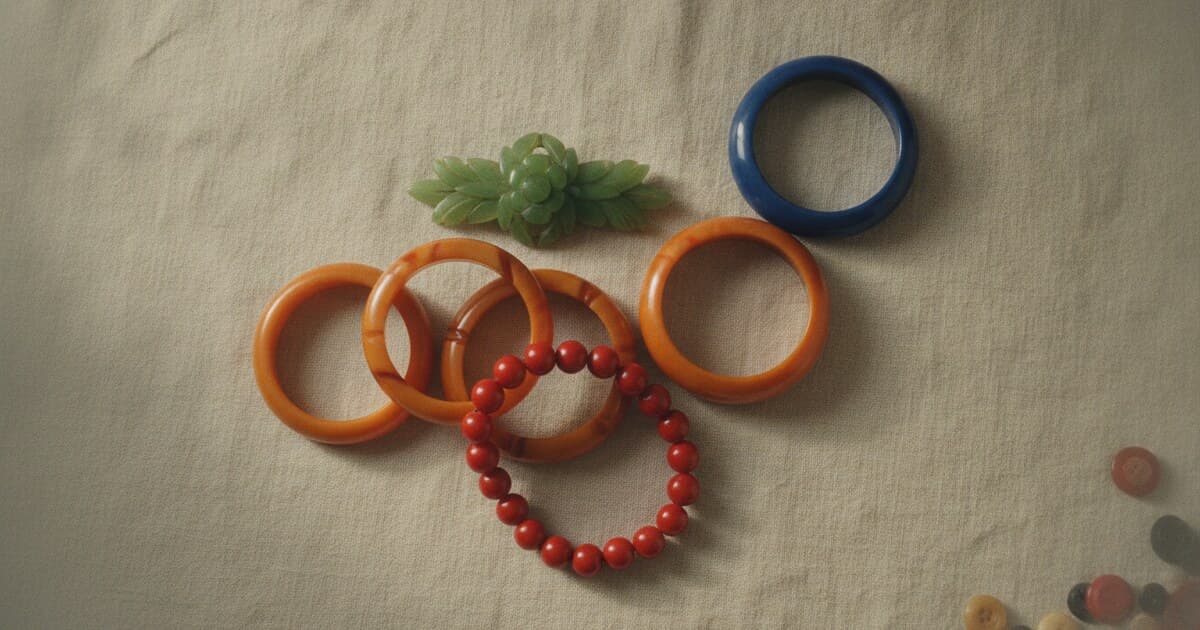
That chunky bangle at the estate sale might be worth $20. Or $400. The piece looks like plastic because it is plastic, but Bakelite from the 1930s and 1940s trades as a genuine collectible, and the gap between an authentic piece and a modern reproduction can run hundreds of dollars. Five at-home tests will tell you which you have, and none of them need equipment beyond a cotton swab and a sink.
Bakelite jewelry is confirmed by the hot water smell test: hold the piece under hot tap water for 30 seconds and smell for a sharp, phenolic chemical odor. A cotton swab with Simichrome polish that turns yellow on a hidden spot confirms authenticity. Values run from $20 for plain bangles to $1,500 or more for designer-signed pieces.
What Is Bakelite Jewelry?
Leo Baekeland, a Belgian-American chemist working in Yonkers, New York, patented Bakelite in 1907. It was the world's first fully synthetic plastic, built entirely from phenol and formaldehyde under heat and pressure rather than derived from plants or animals. The result was a dense, heat-resistant resin that could be cast into blocks, then machined or carved to precise shapes.
Jewelry makers picked it up during the Art Deco era of the 1920s, when bold geometric forms matched the material's strengths. Depression-era shoppers bought it enthusiastically: bright bangles and brooches cost a fraction of precious metal jewelry but delivered the same pop of color. WWII kept demand high as metal rationing pushed manufacturers toward plastics across almost every category.
By the 1950s, cheaper injection-molded acrylics made Bakelite production uneconomical. The window for authentic collector pieces runs roughly 1920 to 1950.
Bakelite is a phenol-formaldehyde resin patented in 1907 and produced commercially through the mid-1940s. Its peak era for jewelry was the 1920s-1940s, corresponding to Art Deco styling and Depression-era demand for affordable color. Cast and machined rather than injection-molded, authentic pieces carry no mold seams along their edges. The material's density runs approximately 1.25 g/cm³ compared to 1.18 g/cm³ for modern acrylic, which is why genuine pieces feel noticeably heavier and produce a deep clunking sound when two bangles tap together rather than the sharp click of contemporary plastic. Common production colors included butterscotch (oxidized from original honey-yellow), cherry red, apple green, and black. Cobalt blue, purple, ivory-white, and marbled "end-of-day" swirl pieces are rare and sell for 3x-5x the price of the same form in a common color. Designer-signed pieces from names like Lea Stein and Martha Sleeper hold their own premium tier, with auction records above $6,400 for a single laminated polka-dot bangle.
How to Identify Bakelite Jewelry: 5 Tests
No single test is fully definitive. Running two or three gives a confident answer.
1. The hot water smell test
Hold the piece under hot tap water for 30 seconds, then smell the wet surface right away. Authentic Bakelite releases a sharp, acrid chemical odor that collectors describe as phenolic, formaldehyde-like, or similar to a hospital antiseptic. Modern plastics, Lucite, and celluloid won't produce this smell. (Celluloid will smell like camphor or mothballs, which is its own tell.)
2. The friction test
Rub a smooth section briskly with your thumb for 10-15 seconds until it warms up, then smell. You're generating enough heat to release the phenolic odor without water. This works well for dry testing at an estate sale or flea market before you buy.
3. The Simichrome or Formula 409 test
Dab Simichrome metal polish or Formula 409 spray cleaner onto a cotton swab. Touch it to a hidden spot on the piece (the inside of a bangle, the back of a brooch pin). Wipe it away. A yellow or orange-brown residue on the swab confirms Bakelite. No color change points to modern plastic or Lucite.
4. The sound test
Tap two suspected pieces together gently. Bakelite is dense and makes a low, solid clunk. Modern plastic makes a higher-pitched click. If you only have one piece, tap it against your thumbnail: it still sounds heavier than you'd expect from lightweight resin.
5. The seam test
Run your fingernail around the edge of the piece. Genuine Bakelite was cast in large blocks, then machined or carved into jewelry shapes, so there are no mold seams. A thin ridge running along the perimeter, particularly on bangles or beads, is a sign of injection-molded plastic.
One test to skip: the heated needle method. Pressing a hot needle into the surface releases phenolic vapor and leaves a permanent mark on the piece. Avoid it.
Bakelite vs Celluloid vs Lucite
These three plastics overlap visually and turn up in the same estate sales. Knowing which you have changes both the value and how you store it.
Celluloid (1860s-1940s) predates Bakelite and is genuinely flammable. It smells like camphor or Vicks VapoRub when warmed by friction. Vintage celluloid bangles look similar to Bakelite but are lighter. Signs of deterioration: crazing, surface cracking, and yellowish decomposition indicate celluloid, which needs climate-controlled storage.
Lucite (1930s-present) is DuPont's trade name for acrylic (polymethyl methacrylate). It's lighter than Bakelite, often transparent or translucent, and produces almost no odor under friction. Lucite from the 1940s-1960s is collectible in its own right but sells below comparable Bakelite.
Modern resin injection-molded reproductions look convincing and are sometimes sold as Bakelite. The seam test catches most of them. The Simichrome swab confirms the rest.
Bakelite Colors and Rarity
Color is the fastest value driver. Within the same piece type and condition level:
Common colors (lower end of price ranges): butterscotch, cherry red, apple green, black, brown, cream
Uncommon colors (middle range): navy blue, forest green, marbled two-tone, translucent amber
Rare colors (3x-5x common color pricing): cobalt blue, purple, ivory-white, pink, and "end-of-day" swirl patterns mixed from factory remnants at day's end
Marbled, laminated (bonded two-color layers), and polka-dot pieces sit at the top of the market regardless of form. A plain butterscotch bangle might sell for $30; the same bangle in cobalt blue with carved detail can reach $300-400.
Bakelite Jewelry Value by Piece Type
Prices reflect current secondary market conditions. Condition, color, and carving depth each shift individual pieces within these ranges.
Bangles (plain, uncarved): $20-75. Butterscotch and red at the low end; rare colors toward the top.
Bangles (carved): $75-300 for standard colors. Deep-carved bangles in rare colors hit $400-500 regularly. Exceptional laminated or polka-dot bangles have sold at auction for $4,000-6,400.
Figural brooches and pins: $50-500. Fruit clusters (cherries, raspberries), animals (Scotty dogs, fish), and human figures hold the highest values. Original pin backs and hardware keep pieces at full value; replaced hardware drops them. For more on dating and identifying pins by style period, see our vintage brooches guide.
Necklaces and beads: $30-200. Multi-strand bead necklaces with interesting color mixing command premiums.
Designer-signed pieces: $500-1,500+. Names to watch: Lea Stein (Belgian, known for laminated pieces), Martha Sleeper, and Elsa Schiaparelli. Pieces from the Art Deco period (the design language that shaped most Bakelite jewelry) show the highest demand. See our Art Deco jewelry identification guide for dating help.
How to Care for Bakelite
Bakelite is stable but it doesn't love certain conditions.
Store pieces away from direct sunlight. Prolonged UV exposure shifts colors and dulls the surface. Butterscotch pieces are especially vulnerable: they started as honey-yellow and continue oxidizing toward darker brown with light exposure over decades.
Clean with a damp cloth and mild soap, then dry immediately. Acetone, alcohol, and harsh chemical cleaners strip the patina and can dissolve carved surface detail on older pieces.
Polish occasionally with Simichrome or Renaissance wax to maintain surface sheen. A light polish also doubles as an authentication check before you buy.
Keep Bakelite away from rubber. Rubber bands and some drawer liners cause irreversible surface pitting over time from off-gassing sulfur compounds.
Find Out What Your Bakelite Is Worth
The fastest real-world price check is eBay's sold/completed listings: search your specific piece type, color, and condition to see what buyers actually paid, not asking prices.
Bakelite sits within the broader world of vintage jewelry identification, where material, era, and condition all feed into value. For a quick AI-assisted identification, photograph your piece at Jewelry Identifier. The tool reads material type, style era, and comparable market values from a single photo. Your first appraisal is free, and it works on desktop or mobile without an app install.
Frequently Asked Questions
Is Bakelite jewelry worth collecting?
Bakelite has held collector value since the 1980s, when prices first climbed past thrift-store levels. Common pieces in good condition (plain bangles, simple beads) remain affordable entry points at $20-75. Rare colors, carved bangles, and figural pins have appreciated steadily and show no signs of softening. The supply is fixed: no new Bakelite from the 1930s is being made.
How can you tell Bakelite from regular old plastic?
The hot water smell test is the most reliable at-home method. Hold the piece under hot tap water for 30 seconds and smell it: Bakelite releases a sharp phenolic odor that modern plastics don't. Follow with the Simichrome test (yellow residue on swab confirms Bakelite) and the seam test (no mold seam = cast material, not injection-molded). Two positive results out of three confirms authentic Bakelite with high confidence.
What is the rarest color of Bakelite jewelry?
Cobalt blue, purple, and ivory-white are consistently the rarest and most valuable Bakelite colors. "End-of-day" pieces, swirled from factory remnants in two or more colors, are also uncommon and command premiums. Pink is rare in jewelry-grade Bakelite. Within any color category, laminated (multi-layer bonded) pieces are rarer still than solid-cast examples.
Does Bakelite turn yellow over time?
Butterscotch Bakelite was originally a translucent honey-yellow and has oxidized to its current warm amber-brown over decades. This aging is expected and doesn't hurt value. Black, cherry red, and dark green pieces hold their color well. Cream and light-colored pieces are more prone to discoloration from sunlight; store them out of direct light to slow further oxidation.
How do you clean Bakelite without damaging it?
A damp cloth with mild soap is safe for routine cleaning. Dry the piece immediately afterward. For polishing, Simichrome metal polish or Renaissance wax restores surface luster without removing material. Avoid acetone, rubbing alcohol, bleach, and commercial jewelry cleaners. These solvents can dissolve the surface layer on carved pieces and permanently strip the patina that experienced collectors prize.
If you've found a Bakelite piece and want to know what you're holding, take a photo and run it through Jewelry Identifier. The AI reads material type, estimates the era, and pulls comparable sold prices so you know what you're working with before deciding whether a professional appraisal makes financial sense. Get your first appraisal free at jewelryappraisals.app.