 Jewelry Identifier
Emerald Price Per Carat: 2026 Guide with Real Ranges
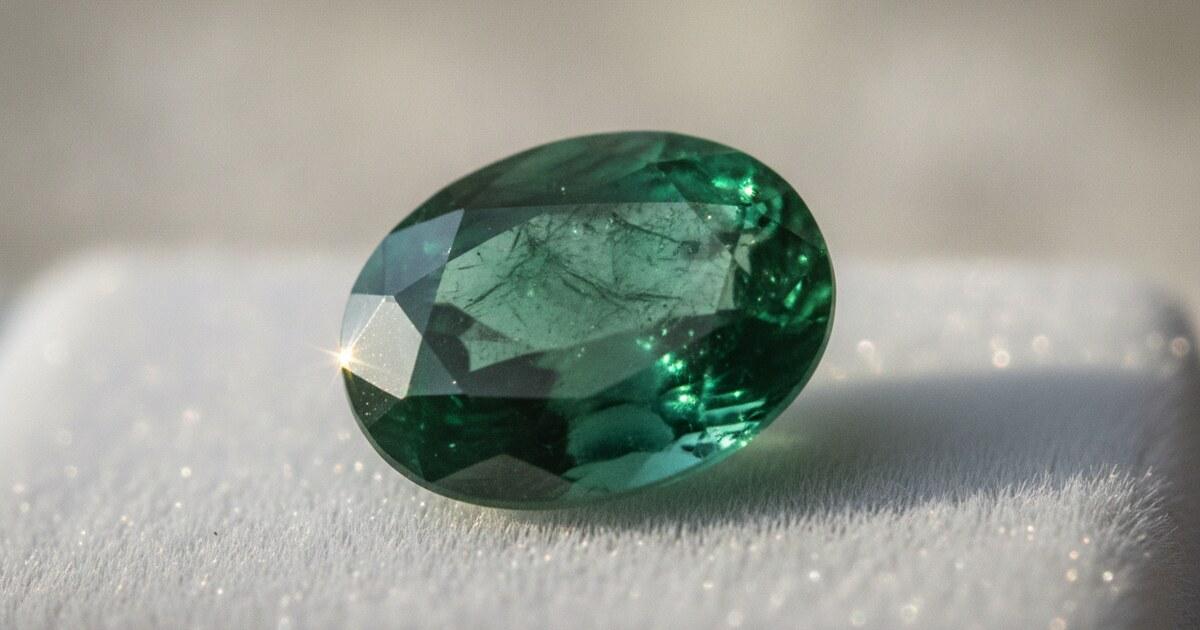
Emeralds have one of the widest price spreads of any precious gemstone. A heavily included commercial stone can sell for $20 per carat. A fine untreated Colombian emerald with top vivid green color can reach $20,000 per carat or more. Color quality and treatment status are the two variables that separate those numbers, and they work differently for emeralds than for any other gem.
Emerald price per carat in 2026 ranges from about $20 for commercial-grade material to over $20,000 for untreated Colombian stones with top vivid green color. Most emeralds in jewelry sell for $200 to $3,000 per carat. Treatment status and color quality are the two factors that move the number most, more than origin or carat weight alone.
If you have an emerald ring, pendant, or loose stone and want a quick value estimate, Jewelry Identifier analyzes photos and pulls comparable sold listings to estimate current market value. Your first appraisal is free.
What Drives Emerald Price Per Carat
Color matters more for emeralds than for almost any other gem, including diamonds. The trade target is vivid medium-dark green, sometimes called "Muzo green" after Colombia's historic mining region. Stones that tip toward yellow, too much blue, or muddy dark tones lose value quickly. A one-shade difference in saturation can drop a stone's per-carat price by 40 to 60 percent.
Clarity matters, but the standard is different from diamonds. Virtually every natural emerald has internal fractures and inclusions called jardin (French for "garden"), a network of characteristics that form during the stone's growth in the earth. The trade accepts this and prices it accordingly. What genuinely cuts value is cloudiness that blocks light transmission, fractures running across the entire stone, or chips reaching the surface.
Treatment status shapes price more than almost any other variable. Roughly 95 percent of commercial emeralds have been treated with oil or resin to fill fractures and improve transparency. The GIA grades this on a scale from none to prominent. The price gap between an untreated stone and a prominently treated one of the same color can be 5 to 10 times per carat.
Carat weight creates a scarcity premium at the fine quality tier. Rough large enough to cut a vivid, relatively clean stone above 2 carats is genuinely rare. Per-carat prices accelerate sharply with size for quality material. A 3-carat fine emerald doesn't cost 3 times what a 1-carat fine emerald costs: the per-carat rate itself climbs.
Origin adds its own premium at the top. Colombian emeralds from the Muzo, Chivor, and Coscuez mines benchmark the market. Zambian and Brazilian stones have different color signatures and trade at a discount to comparable Colombian material, though the gap has narrowed for Zambian fine-quality stones.
Emerald Price Per Carat by Quality and Size
The table below shows retail prices for natural emeralds across three quality tiers. Fracture-filled stones with prominent treatment are priced at the low end of commercial grade or below, because the treatment can degrade over time if the stone is cleaned incorrectly.
| Carat Weight | Commercial Grade | Fine Quality | Top / Colombian | |---|---|---|---| | Under 0.5 ct | $20–$150 | $300–$1,500 | $1,500–$5,000 | | 0.5–1 ct | $50–$300 | $500–$3,000 | $3,000–$10,000 | | 1–2 ct | $80–$600 | $800–$6,000 | $6,000–$20,000 | | 2–5 ct | $150–$1,500 | $3,000–$20,000 | $15,000–$80,000 | | Over 5 ct | $300–$3,000 | $8,000–$50,000 | $50,000–$200,000+ |
These are retail prices. Selling to a dealer returns 40 to 60 percent of these figures. For context, diamond price per carat follows the same non-linear structure, where fine material above 2 carats accelerates sharply in per-carat price, and ruby price per carat works the same way at the top tier.
How Oil Treatment Changes Emerald Price Per Carat
Emerald oil treatment has been practiced for centuries, and it fundamentally shapes how the market prices stones. Natural emeralds almost universally contain internal fractures called jardin, a network of inclusions that form during the stone's growth. Cedar oil, which has a refractive index close to emerald's, has traditionally been used to fill these fractures and improve transparency. Synthetic resins have largely replaced cedar oil in modern treatment. The Gemological Institute of America grades emerald treatment on a scale from none to prominent. Untreated stones represent perhaps 1 to 2 percent of natural emeralds at fine quality. A GIA-certified untreated 1-carat Colombian emerald with vivid color can sell for $8,000 to $20,000 per carat, while a comparable minor-treated stone sells for $1,500 to $5,000. The premium for untreated status widens with stone size and regularly reaches 3 to 5 times the treated price above 2 carats. Lab certification costs $150 to $400 per stone.
There's one thing about emerald treatment that sets it apart from other gems: it isn't always permanent. Oil and resin can dry out or leach from fractures if the stone goes through an ultrasonic cleaner, gets exposed to strong solvents, or sits under steam. Any prominently treated emerald should be re-oiled every few years by a qualified jeweler. If you're buying, avoid steam or ultrasonic cleaning entirely.
Prominent treatment can reduce value by 60 to 80 percent compared to minor treatment at the same color grade. Some buyers won't purchase prominently filled stones at all, because cleaning can reveal a heavily fractured stone underneath. The GIA disclosure in a lab report is the only reliable way to know treatment level before purchase.
Emerald Origin and Its Effect on Price
Origin carries real weight for fine-quality stones, though it matters little for commercial-grade material. Lab documentation is required to establish it. No visual test confirms origin reliably.
Colombia produces 50 to 60 percent of the world's highest-quality emerald material. Stones from the Muzo mine carry a warm, slightly yellowish-green hue sometimes described as "pure green" in the trade. Chivor material tends toward a cooler, slightly bluish green. Confirmed Colombian origin with top color commands a 20 to 50 percent premium over equivalent Zambian material at the fine tier.
Zambia is the second-largest source, contributing roughly 25 percent of global supply from the Kagem mine. Zambian emeralds often have better clarity than Colombian stones (less jardin) and a slightly deeper, bluer green. They've gained significant ground on Colombian material in buyer preference over the past 20 years, and top Zambian stones now trade close to Colombian prices.
Brazil supplies emeralds from the Itabira and Belmont mining regions. Brazilian stones tend toward lighter color and trade at a discount to Colombian and Zambian material. For commercial-grade buyers, origin adds little premium; color and treatment grade dominate the price.
For estate pieces without lab documentation, a report estimating origin from inclusion patterns and trace element chemistry can add 20 to 50 percent to the selling price on fine stones.
Natural vs Lab-Grown Emerald Prices
Lab-grown emeralds are chemically identical to natural ones: both are beryl colored by chromium and vanadium. The difference is formation time. Natural emeralds took millions of years; lab-grown stones grow in weeks via hydrothermal or flux methods.
A 1-carat lab-grown emerald retails for $50 to $300 depending on color quality and cut. A 1-carat natural emerald in commercial grade starts around $80 to $600, with fine-quality material running $800 and up. The gap widens considerably above 2 carats, where natural material becomes genuinely scarce.
The resale picture differs sharply. Natural emeralds hold secondary market value, particularly at fine quality with documentation. Lab-grown emeralds have essentially no resale market. If you're evaluating an inherited piece or buying with long-term value in mind, confirming natural vs lab-grown origin matters as much as knowing the treatment grade. The guide to how to tell if an emerald is real covers the at-home tests that distinguish natural from lab-grown and from simulants like green glass or synthetic spinel.
How to Find Out What Your Emerald Is Worth
For most emerald jewelry (commercial-grade rings, pendants, estate pieces with unclear treatment history), checking comparable eBay sold listings gives a solid baseline. Searching by stone description, approximate weight, and setting type shows what similar pieces have actually sold for in the last 90 days.
Open Jewelry Identifier, photograph the piece, and the tool runs your stone against current eBay sold comps automatically. It reads the metal stamps on the setting too, adding melt value from the gold or platinum to the total estimate. Your first appraisal is free and takes seconds.
For stones that might be fine quality (vivid saturated green, relatively clean, over 1 carat), a GIA lab report is worth the cost. At $200 to $400, it confirms treatment grade, can estimate origin, and can add thousands to the selling price. If you're ready to sell, where to sell jewelry covers the main venues ranked by payout, including options suited for fine colored stones.
Frequently Asked Questions
How much is a 1-carat emerald worth?
A 1-carat natural emerald ranges from $80 (heavily included commercial grade with prominent treatment) to $20,000 (top vivid green, Colombian, untreated). Most 1-carat emeralds in jewelry sell for $300 to $3,000. Color grade and treatment status are the two factors that move the number most within that range, more than carat weight or cut.
What is the most expensive type of emerald?
The highest-priced emeralds combine three qualities: confirmed Colombian origin (Muzo or Chivor mine), vivid pure green color with no yellow or blue overtone, and no oil or resin treatment as documented by GIA. Stones above 3 carats meeting all three criteria regularly reach $30,000 to $100,000 per carat at auction. The Rockefeller Emerald sold for $305,500 per carat at Christie's in 2017.
How big is a 1-carat emerald?
A standard oval-cut 1-carat emerald measures approximately 7 x 5 mm. Emeralds are slightly less dense than diamonds (specific gravity 2.67 vs 3.52), so a 1-carat emerald looks about 10 percent larger face-up than a 1-carat diamond of the same cut style. The emerald cut (rectangular step cut) is the most common shape for the stone and was designed specifically to protect the gem's corners from chipping.
Does oil treatment ruin an emerald's value?
Minor oil or resin treatment (the GIA grades "none," "insignificant," or "minor") is accepted by the trade and doesn't significantly harm value at the commercial and mid-quality tiers. The market expects some treatment. What creates a price penalty is prominent treatment, particularly heavy resin filling, which raises questions about the underlying stone quality and can't be undone. Untreated stones carry a 3 to 5 times premium over prominently treated equivalents of the same color.
Are emeralds worth more than diamonds?
Fine natural emeralds at the top tier often cost more per carat than comparable diamonds. A vivid, untreated 2-carat Colombian emerald can reach $15,000 to $50,000 per carat. A 2-carat natural diamond in VS1/G grades typically runs $10,000 to $15,000 per carat. At the auction market's top level, exceptional emeralds rival the most expensive diamonds. Commercial-grade emeralds are far cheaper than commercial-grade diamonds of similar size.
Knowing the emerald price per carat framework helps you read the market clearly, whether you're buying a new piece, insuring an heirloom, or figuring out what an inherited stone is worth. Try a free jewelry appraisal at Jewelry Identifier to get a current value estimate from real comparable sales, with metal weight and stone identification included.