 Jewelry Identifier
How Much Is 10K Gold Worth Per Gram in 2026?
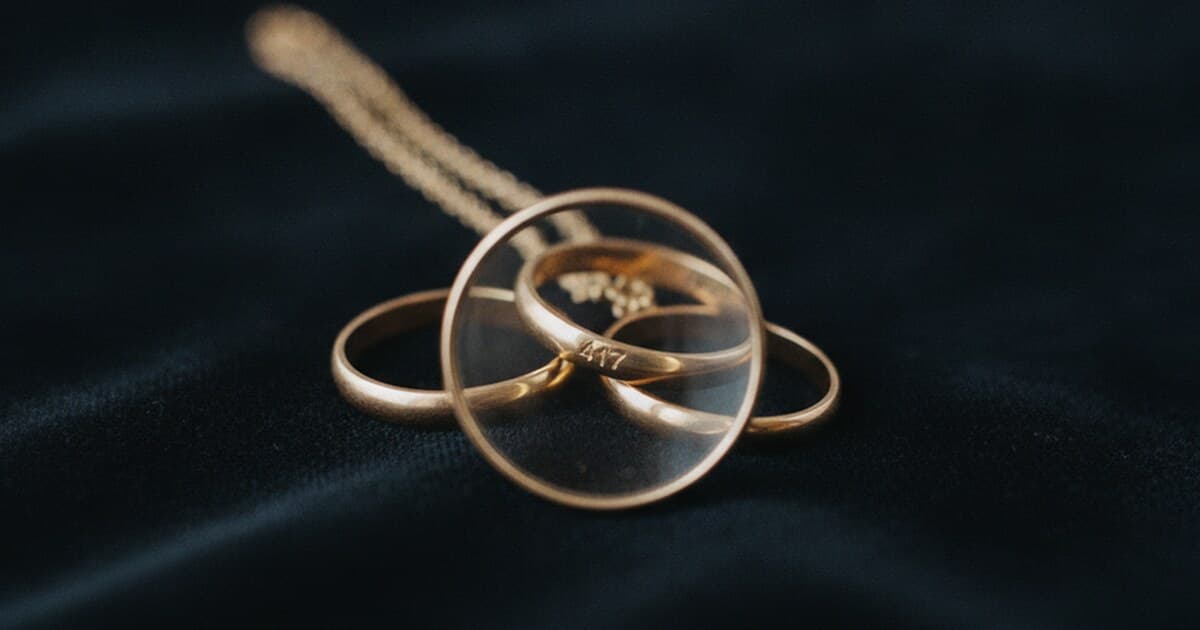
You pull a gold ring out of an old jewelry box, flip it over, and squint at the inside of the band. There's a small stamp: 10K. You know it's gold, but you have no idea what it's actually worth. The melt price? What a buyer would offer? Whether it's even worth selling?
This guide answers all of that.
10K gold is worth approximately $55 per gram at current spot prices (gold at ~$4,100 per troy ounce as of late 2026). A standard 10K ring weighing 3 to 4 grams has a melt value of $165 to $220. Buyers typically offer 60 to 85 percent of that melt value depending on where you sell.
What 10K Gold Actually Means
The "K" stands for karat, and it tells you what percentage of the metal is pure gold.
10K gold is 41.67% pure gold. The remaining 58.33% is alloy metals, usually copper, silver, zinc, or nickel. These alloys make the gold harder and more durable, which is why 10K is common in rings and bracelets that take daily wear.
In the US, 10K is the minimum purity that can legally be sold as "gold." In the UK and Europe, the minimum is 9K (37.5% pure), so 10K pieces from those countries are above the legal threshold everywhere.
The millesimal fineness stamp for 10K is 417, which represents 41.7% pure. You'll see it stamped as 10K, 10KT, or 417 inside rings, on bracelet clasps, or near necklace clasps.
Two stamps to watch out for: 10KGF (gold-filled) and 10KGP (gold-plated) are not solid gold. A 10KGF piece has a layer of 10K gold bonded to a base metal core. It looks the same, but the gold content is a small fraction of a solid 10K piece. No melt value worth pursuing.
How Much Is 10K Gold Worth Per Gram Right Now?
Gold is priced in troy ounces on the London Bullion Market Association (LBMA) spot market. The LBMA publishes two fix prices daily: morning (AM) and afternoon (PM). As of late October 2026, gold trades around $4,100 per troy ounce.
One troy ounce equals 31.1035 grams. That gives you the pure gold price per gram: $4,100 / 31.1035 = $131.82 per gram of 24K gold.
10K gold is 41.67% pure, so the 10K rate is $131.82 x 0.4167 = $54.95 per gram (roughly $55/gram).
Here's the full karat breakdown at $4,100/oz:
| Karat | Purity | Stamp | Per Gram | |-------|--------|-------|----------| | 24K | 99.9% | 999 | $131.82 | | 22K | 91.7% | 916 | $120.90 | | 18K | 75.0% | 750 | $98.87 | | 14K | 58.3% | 585 | $76.85 | | 10K | 41.7% | 417 | $54.95 | | 9K | 37.5% | 375 | $49.43 |
The LBMA spot price set the international gold benchmark beginning in 1919, with twice-daily fixes introduced in 1968. All dealer pricing, refinery payouts, and jeweler buyback offers trace back to the same LBMA fix. A 1 troy ounce coin, a 10K bracelet, and a gold bar all get valued the same way: weight × purity × spot price. The key variable for 10K gold is that 41.67% purity factor, roughly $55 per gram at current prices, compared to $99 per gram for 18K and $77 for 14K. For common 10K pieces, weight matters a lot: a class ring runs 8 to 12 grams (melt value $440 to $660); a thin stack ring runs 1 to 2 grams (melt value $55 to $110). Actual selling prices depend on buyer type and run from 60 to 92 percent of melt.
For a full karat-by-karat pricing table with today's live rates, see our gold price per gram guide.
How to Calculate Your 10K Gold's Melt Value
The formula is simple:
Melt value = weight (grams) × $54.95
Because 10K is always 41.67% pure and spot price is baked into the $54.95 per gram figure, you just need the weight.
A kitchen scale works, but a jeweler's gram scale (under $20 online) is more accurate. Weigh the piece in grams, multiply by $55, and you have the melt value.
Example: A 10K gold chain weighs 6.5 grams. 6.5 × $54.95 = $357.18 melt value.
If spot gold moves, the per-gram rate shifts proportionally. At $4,500/oz, 10K gold would be worth about $60.27/gram. At $3,800/oz, it drops to $50.90/gram.
Common 10K piece weights to help you estimate:
- Class rings: 8 to 12 grams (melt $440 to $660)
- Wedding bands: 3 to 6 grams (melt $165 to $330)
- Cuban link chains: 15 to 30 grams (melt $825 to $1,650)
- Thin chains and pendants: 1 to 3 grams (melt $55 to $165)
- Hoop earrings: 2 to 5 grams (melt $110 to $275)
One thing to keep in mind: the formula gives you the pure gold content value. It doesn't account for design, brand, gemstones, or collector appeal. A signed piece stamped 10K can sell for 3 to 10 times melt value on the secondary market. A plain 10K ring generally sells close to melt.
What Buyers Actually Pay for 10K Gold
Knowing melt value is the start. What you actually get depends on who you sell to.
Pawn shops: 40 to 60 percent of melt value
Pawn shops price in the widest margin because they carry inventory risk and overhead. On a $350 melt value piece, expect $140 to $210. Quick and convenient, but you leave money on the table. See how much pawn shops pay for gold for a full breakdown by piece type.
Local gold dealers and jewelers: 70 to 80 percent of melt value
Jewelers who buy estate pieces or scrap gold typically pay closer to melt. On that same $350 piece, expect $245 to $280. Worth getting two or three quotes, because offers vary by 20 to 30 percent between dealers.
Online gold buyers and refiners: 80 to 92 percent of melt value
Services like Cash for Gold USA, Express Gold Cash, and Kitco let you mail in pieces and get a wire transfer. Reputable ones pay 85 to 92 percent of melt. The trade-off is that you ship the piece before getting paid. Use a service with a free return policy if you reject the offer. For more on vetting online buyers, see our cash for gold guide.
eBay and resale platforms: potentially above melt
For pieces with brand names, unique designs, or antique appeal, eBay sold listings often show prices above melt. A 10K Tiffany piece, a signed designer bracelet, or a well-preserved class ring from a recognizable school can fetch a premium. The Jewelry Identifier app's eBay Price Checker pulls real sold data on comparable pieces so you know if yours has collector appeal before you sell.
Getting multiple quotes takes 30 to 60 minutes and can add 20 to 40 percent to your final payout. It's worth the time.
How to Identify 10K Gold Stamps
The stamp is your first confirmation. Here's what to look for:
- 10K or 10KT: The most common US marking. Stamped inside rings, on clasps, or near findings on necklaces and bracelets.
- 417: The millesimal fineness marking for 10K. Common on European pieces and in modern US hallmarking.
- 10K P: The "P" means "plumb," which means the gold content meets or exceeds the stated karat exactly. Used on some US pieces from the 1980s onward.
- 10K HGE or 10K GE: Electroplate. Not solid gold.
- 10KGF: Gold-filled. A layer of 10K gold over base metal, typically 1/20th of total weight.
To read the stamp, you need good light and a 10x loupe. Stamps can wear down on older pieces. If you can't read the stamp, the Jewelry Identifier app's hallmark reader can identify it from a photo, including worn or partial marks.
How Jewelry Identifier Helps
If you've found a piece and aren't sure what you have, start with identification before you decide to sell.
The Jewelry Identifier app (at jewelryappraisals.app) reads stamps and hallmarks from photos, identifies metal type and karat, and gives you an estimated value range using real eBay sold data. The free eBay Price Checker tool pulls comparable sold listings so you can see what similar 10K pieces actually sold for, not just what their melt value is.
Melt value is the floor. Resale value is often higher. Knowing both before you approach a buyer puts you in a much stronger position to negotiate. Your first appraisal is free.
Frequently Asked Questions
Is 10K gold real gold?
Yes. 10K gold is real gold. In the US, 10 karat (41.67% pure) is the legal minimum purity for jewelry to be marketed as gold. It's less pure than 14K or 18K, which affects melt value, but it's genuine gold with a 417 millesimal fineness stamp.
What does 417 mean on jewelry?
417 is the millesimal fineness stamp for 10K gold. It represents 41.7% pure gold content. You'll see this marking on European pieces and on US jewelry as an alternative to the "10K" stamp. Either marking means the same thing: the piece is 10 karat gold.
How much is a 10K gold ring worth?
A 10K gold ring typically weighs 2 to 5 grams, giving it a melt value of $110 to $275 at current spot prices ($55/gram). Plain bands sell close to melt. Rings with diamonds, designer marks, or vintage appeal can sell for significantly more; check eBay sold listings for comparable pieces before selling.
Is 10K gold worth selling right now?
With gold at roughly $4,100 per troy ounce in late 2026, 10K gold is worth about $55 per gram. That's a historically high price, with gold roughly doubling since 2022. If you have 10K pieces sitting in a drawer with no sentimental value, this is a strong market to sell into. Get quotes from at least two buyers before accepting an offer.
Can I use a magnet to test 10K gold?
A magnet test tells you what 10K gold is not, not what it is. Real gold doesn't stick to a magnet, so if your piece is strongly attracted, it contains ferrous metal and is probably not solid gold. But passing the magnet test doesn't confirm 10K gold, since many base metals like brass and copper also don't attract magnets. The stamp plus a professional assessment is more reliable.