 Jewelry Identifier
How to Sell Gold Jewelry for the Best Price in 2026
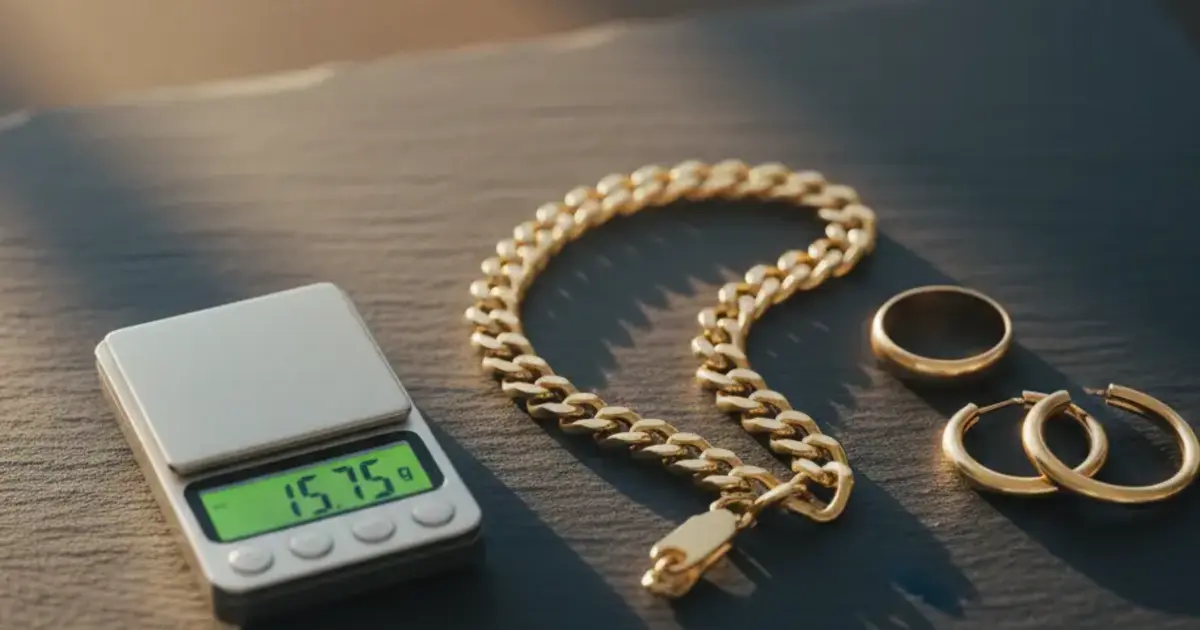
You've got gold jewelry sitting in a drawer. Maybe it's an old chain, a ring from a past relationship, or pieces you inherited and never wore. With gold prices above $3,000 per ounce in 2026, that drawer is holding real money. The question isn't whether to sell. It's how to sell without leaving hundreds (or thousands) on the table.
To sell gold jewelry for the best price, get your pieces tested for karat purity, calculate the melt value, and compare offers from at least 3 buyers. Online gold buyers and local jewelers typically pay 75-90% of melt value. Shopping around takes a few days but nets you 30-50% more than a rushed sale.
Know What Your Gold Is Worth Before You Sell
Most people who sell gold jewelry lose money because they don't know what they're holding. A 14K gold chain weighing 20 grams has about 11.7 grams of pure gold in it. At $3,000/oz gold, that's roughly $1,130 in melt value alone. But if you walk into a pawn shop without knowing that number, you might walk out with $400.
Here's how to figure out what your gold is actually worth:
Check the karat stamp. Look for markings like 10K, 14K, 18K, or 24K on your jewelry. You might also see numbers: 417 (10K), 585 (14K), 750 (18K), or 999 (24K). If you can't find a stamp, or it's worn off, you'll need a gold test. Our guide to testing gold at home walks through 8 methods that work.
Weigh it accurately. You need a scale that reads in grams, accurate to 0.1g. Kitchen scales aren't precise enough. Jewelry scales cost $10-15 online and make a real difference.
Calculate the melt value. Multiply the weight by the gold percentage (58.5% for 14K, 75% for 18K), then multiply by the current spot price per gram. For 14K gold at $3,000/oz, that's about $56.50 per gram of jewelry.
Factor in craftsmanship. Some pieces are worth more than melt value. Signed designer pieces (Tiffany, Cartier, David Yurman), antique jewelry, and items with quality gemstones can sell for 2-5x their gold weight. Don't melt a Cartier bracelet.
Knowing your melt value gives you a baseline. Any offer below 70% of melt value is too low. Good buyers pay 75-90%, depending on the buyer type and how much you're selling.
The gold jewelry resale market in 2026 favors sellers who do basic homework. With spot prices above $3,000 per ounce, even modest pieces carry meaningful value: a standard 14K gold wedding band weighing 6 grams holds roughly $340 in gold content, while an 18K chain at 30 grams tops $4,300 in melt value alone. The spread between the lowest and highest buyer offers on any given piece averages 30-40%, which means a seller who gets three quotes instead of one can recover hundreds of additional dollars. Online gold buyers currently pay the highest consistent percentages (75-90% of melt value) because they operate on volume with lower overhead. Local independent jewelers come close, especially for higher-karat or branded pieces where they can resell at retail. Pawn shops and "we buy gold" storefronts sit at the bottom, typically offering 40-70% of melt value. The single biggest factor in getting a good price isn't the buyer you choose; it's whether you know your piece's value before you walk in the door.
Where to Sell Gold Jewelry: Your Options Ranked
Not all buyers are equal. Here's how each option stacks up, ranked by typical payout. (For a deeper breakdown with more options, see our guide to selling jewelry.)
Online Gold Buyers (75-90% of melt value)
Companies like APMEX, Kitco, and regional online buyers typically pay the highest percentages. The process works like this: you request a kit, ship your gold (insured), get an offer within 1-3 days, and either accept or get your pieces back.
Pros: highest payouts, competitive offers, convenient. Cons: you're shipping valuable items, turnaround takes 3-7 days.
Local Jewelry Dealers and Gold Buyers (70-85% of melt value)
Independent jewelers and dedicated gold buyers in your area often pay well, especially if you're selling higher-karat or designer pieces. They have lower overhead than chain stores, and you can negotiate face to face.
Pros: instant payment, no shipping risk, negotiable. Cons: offers vary widely, need to visit multiple shops.
Pawn Shops (40-70% of melt value)
Pawn shops need wide margins because they resell to retail customers or wholesale to refiners. They're convenient but consistently pay the lowest prices. Our breakdown of pawn shop gold prices has the details on what to expect.
Pros: fast cash, no questions asked. Cons: lowest offers, little room to negotiate.
Selling Privately (80-100%+ of retail value)
Platforms like eBay, Facebook Marketplace, or Craigslist let you sell directly to buyers. You can sometimes get above melt value, especially for wearable pieces in good condition. But you're handling your own marketing, photography, shipping, and buyer trust.
Pros: potentially the highest return. Cons: slow, requires effort, scam risk with strangers.
Step-by-Step: How to Sell Gold Jewelry
Follow this process to get the most money for your gold.
1. Gather and sort your pieces. Separate by karat if possible. Group 10K with 10K, 14K with 14K. If you're not sure what karat something is, keep it separate until you can test it. Don't mix gold-plated pieces in with solid gold.
2. Get it appraised or tested. You don't need a formal appraisal for basic gold chains and rings. A karat test and accurate weight are enough. For designer or antique pieces, a professional appraisal helps you understand if the piece is worth more intact than melted. Snap a photo with an AI identification tool to get a quick read on what you have.
3. Calculate your melt value. Use the formula: weight in grams x gold purity percentage x spot price per gram. Write this number down. It's your floor price.
4. Get 3+ offers. Visit at least one local jewelry dealer, check one online buyer's quote, and (if you want the comparison) try a pawn shop. The spread between offers often surprises people. On a $1,000 melt value piece, you might see offers ranging from $500 to $850.
5. Negotiate. Most gold buyers expect to negotiate. If you've done your homework and know the melt value, say so. "I know this is 14K, it weighs 25 grams, and melt value is about $1,400. What can you offer?" Buyers respect informed sellers and tend to bump their offers up.
6. Verify payment before handing over the gold. For local sales, cash or a cashier's check. For online buyers, read their payment terms carefully. Reputable buyers pay within 24 hours of accepting the offer.
Mistakes That Cost Sellers Money
Selling gold jewelry should be straightforward, but common mistakes eat into your payout. Watch for these pitfalls.
Selling without knowing the karat. If you don't know what you have, you can't spot a lowball offer. A buyer who offers $300 for a 14K chain worth $800 in melt value is counting on your ignorance. Get your gold tested first, even if it's just a quick photo scan to confirm the metal type.
Accepting the first offer. The first buyer you visit has no competition. They know it. That's why the first offer is almost always the lowest. Shopping around takes an extra hour but routinely adds 20-40% to your final sale price.
Selling designer pieces for melt value. A Tiffany 18K gold link bracelet has brand value beyond the gold weight. Selling it to a gold refiner who only cares about melt value throws away that premium. Check if your piece has a brand name, maker's mark, or collector appeal before selling for scrap.
Ignoring gemstones. Gold buyers often quote for the metal only. If your ring has a diamond or gemstone, that stone has its own value. Get it assessed separately. Some buyers will factor stones in; others won't mention them at all.
How Jewelry Identifier Helps You Sell Smarter
Walking into a gold buyer's shop without knowing what you have puts you at a disadvantage. Jewelry Identifier strips away that guesswork before you sell.
Snap a photo of your gold piece, and the app identifies the metal type, reads any stamps or hallmarks, and gives you an estimated value. You'll see whether it's solid gold or plated, what karat it likely is, and a ballpark of what it's worth in today's market.
The web appraisal tool goes deeper. Upload a photo and get a detailed report with material breakdown, comparable sales data, and a PDF you can reference when negotiating with buyers. It's like having a cheat sheet at the dealer's counter.
For sellers with multiple pieces (an inherited collection, a jewelry box cleanout), the app saves hours of manual research. Scan each piece, sort by value, and decide which ones to sell and which to keep.
Frequently Asked Questions
What is the best way to sell gold jewelry?
Get your pieces tested for karat purity, weigh them accurately, and calculate the melt value yourself. Then get quotes from at least 3 buyers (mix of local dealers and online gold buyers). Online gold buyers typically pay 75-90% of melt value, which beats most local options except private sales.
How much should I expect to get for my gold jewelry?
Expect 70-90% of the melt value from reputable buyers. Melt value depends on weight and karat: a 20-gram 14K chain is worth about $1,130 in gold content at $3,000/oz spot price. Designer pieces and items with gemstones can sell for more than melt value to the right buyer.
How much can I sell my 14k gold jewelry for?
14K gold is 58.3% pure gold, so you're paid on that fraction of the weight. At a $3,000/oz spot price, one gram of 14K gold holds about $56 in gold content, and reputable buyers pay 70-90% of that — roughly $39-50 per gram. So a 15-gram 14K bracelet nets around $590-750 at melt. The best places to sell your 14K gold for the most money are reputable online gold buyers and private sales (see the ranked options above); pawn shops pay the least. Weigh the piece, confirm the karat stamp, and get at least three quotes before selling.
Should I sell gold jewelry to a pawn shop?
Pawn shops are convenient but typically pay 40-70% of melt value. That's the lowest of any buyer type. If you need cash today and can't wait, a pawn shop works. If you can spend a few days comparing offers, you'll almost always get more from a local jeweler or online gold buyer.
Is now a good time to sell gold jewelry?
Gold prices in 2026 are near record highs, above $3,000 per ounce. Historically, selling when prices are elevated means more money per gram. No one can predict the market perfectly, but current prices are well above the 10-year average.
Do I need a jewelry appraisal before selling gold?
For basic gold chains, rings, and bracelets, a karat test and accurate weight are enough to calculate value. You don't need a formal appraisal. For designer pieces, antiques, or items with significant gemstones, a professional appraisal (or at minimum a detailed AI scan) helps you understand the full value beyond just the metal weight.
Before you sell, find out what your gold is actually worth. Try it now, get your free jewelry appraisal in seconds.