 Jewelry Identifier
How to Spot a Fake Diamond: At-Home Tests That Work
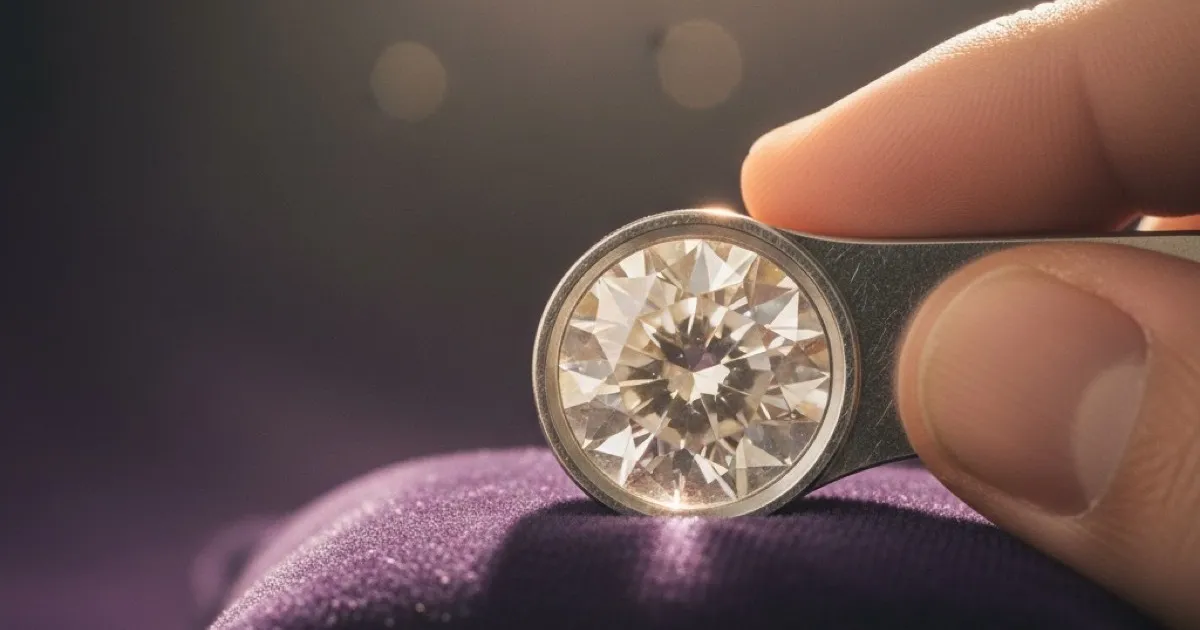
About 25% of diamonds sent to grading labs each year turn out to be simulants — cubic zirconia, moissanite, or glass. If you bought a diamond online, inherited one, or picked one up at an estate sale, there's a real chance it might not be what you think. Knowing how to spot fake diamonds saves you from overpaying, selling short, or insuring something that isn't worth the premium.
These tests work at home with basic tools. Some are quick visual checks; others need a magnifying glass or a cheap diamond tester. Here's what actually works.
Real Diamonds vs Common Fakes
Before testing, it helps to know what you're testing against. These are the most common diamond substitutes:
- Cubic zirconia (CZ) — Lab-made crystal that looks similar to diamond but weighs about 75% more, is softer, and has more colorful sparkle ("fire"). Most common fake in cheap jewelry
- Moissanite — Lab-grown silicon carbide with even more fire than diamond. Harder than CZ and very convincing. Used in engagement rings as a deliberate alternative, but also passed off as diamond
- White sapphire — Natural gemstone that looks glassy and lacks diamond's brilliance. Duller appearance under light
- Glass and crystal — Cheapest substitutes. Soft, scratch easily, feel warm to touch
- Lab-grown diamonds — These are real diamonds with identical chemical structure. They're not fake, but they cost 60-80% less than mined diamonds. Most tests can't distinguish them from natural
Our real vs fake jewelry guide covers broader authentication techniques beyond just diamonds.
Test 1: The Sparkle Test
Hold the stone under a light and watch how it handles light. This is the easiest first-pass test.
Real diamonds produce strong white light return (brilliance) combined with flashes of spectral color (fire). The sparkle pattern is a mix of white and colored light, with sharp contrasts between bright and dark areas.
CZ produces more colorful sparkle — almost rainbow-like — with less white light contrast. The fire is actually stronger than diamond, which sounds counterintuitive but is a giveaway.
Moissanite produces even more fire than CZ. Under light, moissanite creates a "disco ball" effect with intense rainbow flashes. If the stone looks like it's throwing rainbows across the room, it's probably moissanite.
White sapphire looks dull by comparison. Little sparkle, no fire, just a glassy sheen.
This test isn't definitive — dirty diamonds sparkle less, and well-cut CZ can fool casual observers. But extreme rainbow fire is a red flag.
Test 2: The Fog Test
Breathe on the stone like you're fogging a mirror. A real diamond disperses heat almost instantly — the fog should disappear within 1-2 seconds. Fake stones (CZ, glass, white sapphire) hold heat longer, and the fog lingers for 3-5 seconds or more.
This works because diamond has extremely high thermal conductivity — it moves heat away from the surface faster than almost any other material.
Two caveats: moissanite also conducts heat well and will pass this test. And the test is unreliable on very small stones (under 0.15 carats) because there isn't enough surface area to observe the difference.
Test 3: The Newspaper Test (Read-Through)
Place the stone flat-side down on a piece of printed text. If you can read the letters through the stone, it's not a diamond. Real diamonds refract light so strongly that the text becomes completely illegible — you won't see any letters or lines through the stone.
CZ and glass allow some text to show through. White sapphire also shows text more readily than diamond.
This test works best with loose stones. Mounted diamonds are harder to test this way because the setting blocks the bottom. It also only works for round brilliant cuts — other cuts (emerald, asscher) may show text even with real diamonds due to their different faceting geometry.
Test 4: The UV Light Test
About 25-35% of natural diamonds fluoresce blue under ultraviolet (black) light. If your stone glows blue under UV, that's a strong indicator it's a natural diamond. CZ typically doesn't fluoresce, or fluoresces a different color.
Get an inexpensive UV flashlight (available for $5-10) and test in a dark room. Hold the light directly over the stone.
- Blue glow — Likely natural diamond (but not all diamonds fluoresce, so no glow doesn't mean fake)
- Green or yellow glow — Likely moissanite or CZ
- No glow — Inconclusive. The diamond could be real but non-fluorescent
This test is a supporting indicator, not definitive. Use it alongside other tests.
Test 5: The Weight Test
CZ weighs about 75% more than a diamond of the same size. If you have a jeweler's scale or a precise kitchen scale, compare the weight against what a diamond of that size should weigh.
A 1-carat round brilliant diamond measures about 6.5mm in diameter and weighs 0.2 grams. A CZ that looks the same size (6.5mm) weighs about 0.35 grams. That's a measurable difference.
This test requires you to know the expected weight for the stone's dimensions, so it works best when you can measure the stone's diameter with calipers and compare against a diamond weight chart.
Moissanite weighs about 15% less than diamond, making it harder to catch by weight alone.
Test 6: The Loupe Inspection
Examine the stone under 10x magnification using a jeweler's loupe ($10-15 online).
Signs of a real diamond:
- Natural inclusions — tiny dark spots, feathers (internal fractures), clouds, or pinpoints
- Slightly imperfect. Nature doesn't produce flawless objects (except for very rare and expensive stones)
- Sharp, precise facet edges
Signs of a fake:
- Perfectly clean interior with zero inclusions (CZ is always flawless)
- Rounded facet edges (glass and CZ soften faster than diamond during cutting)
- Gas bubbles inside the stone (glass)
- Doubling of facet edges when viewed through the top — moissanite is "doubly refractive," meaning you'll see two of each facet line when looking through the stone at an angle
Our gemstone identification guide covers magnification techniques for testing all types of stones.
Test 7: The Electronic Diamond Tester
For $15-30, you can buy an electronic diamond tester that measures thermal conductivity. Touch the probe to the stone, and the device tells you if it conducts heat like a diamond.
These testers reliably distinguish diamond from CZ, glass, and white sapphire. But older models can't tell diamond from moissanite because both conduct heat well. Newer "multi-testers" that measure both thermal and electrical conductivity can catch moissanite too — moissanite conducts electricity, diamond doesn't.
For anyone regularly buying or evaluating diamonds, a multi-tester is worth the $50-80 investment. It's the closest thing to a definitive at-home test.
Test 8: Check the Setting and Stamp
The setting tells you a lot about the stone's likelihood of being real. Genuine diamonds are typically mounted in precious metals — 14K gold, 18K gold, or platinum.
Check the inside of the band for stamps:
- 14K, 18K, 750, 950, Pt — Precious metal. Jewelers don't set fake stones in expensive settings
- 10K — Common for lower-end real diamond jewelry
- 925 — Sterling silver. Possible but uncommon for diamonds. More likely CZ or moissanite
- CZ — Some honest manufacturers stamp this directly. If you see "CZ" on the setting, the stone is cubic zirconia
Our stamps and hallmarks guide covers all common jewelry marks. The gold plated vs solid gold guide helps identify plated settings that suggest costume stones.
What About Lab-Grown Diamonds?
Lab-grown diamonds are chemically, optically, and physically identical to mined diamonds. They pass every test listed above — thermal, sparkle, loupe, UV. Even trained gemologists can't tell them apart without specialized equipment.
The only reliable ways to distinguish lab from natural:
- GIA or IGI grading report — Lab diamonds are laser-inscribed on the girdle (edge) with a report number
- Advanced spectroscopy — Labs use photoluminescence and UV analysis to detect growth patterns unique to lab diamonds
- Price — A 1-carat lab diamond costs $500-1,500. The same quality natural diamond costs $3,000-8,000+
Lab diamonds aren't fake. They're real diamonds grown in controlled conditions rather than mined. The distinction matters for resale value (lab diamonds have lower resale) and for insurance purposes. Our diamond ring value guide covers pricing for both types.
How Jewelry Identifier Helps Spot Fakes
If you want a fast initial assessment, Jewelry Identifier can analyze a photo of your diamond jewelry. The AI examines the stone's visual properties, identifies the metal setting, reads any stamps, and provides an estimated value.
While no photo-based tool replaces a gemologist's hands-on examination for high-value stones, the app gives you a useful first read — especially for quickly checking whether a piece is set in precious metal (which correlates strongly with genuine stones) and reading stamps that might indicate CZ.
Two free identifications per day. Photograph the stone in good light with a clear view of the setting and any visible stamps.
Want to know for sure if your diamond is real? Upload a photo for a free appraisal and get an instant assessment of the stone, setting, and estimated value.
Frequently Asked Questions
Can a jeweler tell if a diamond is real just by looking?
An experienced jeweler can often spot obvious fakes (glass, low-quality CZ) by eye, but they'll use tools to confirm. A thermal tester takes seconds and is definitive for everything except moissanite. For moissanite, they use a multi-tester or check for double refraction under magnification. No reputable jeweler relies on visual inspection alone.
Do real diamonds scratch glass?
Yes, but so do moissanite, sapphire, and even some CZ. The scratch test only proves the stone is harder than glass (Mohs 5.5). Diamond is Mohs 10, but moissanite is 9.25 and sapphire is 9. The scratch test eliminates glass and soft plastics but doesn't confirm diamond.
Is there a free way to test diamonds at home?
The fog test, newspaper test, sparkle test, and loupe inspection are all free or near-free. Together, they catch most common fakes. For a definitive answer, a jeweler's thermal test costs $10-20, or you can buy your own tester for $15-30.
How can I tell if my diamond ring is real without removing the stone?
Use the fog test (breathe on the stone), the sparkle test (observe light return), and check the setting stamps. A 14K or 18K gold setting with a properly set stone is a strong indicator of a real diamond. If the stone shows excessive rainbow fire (more colorful than white sparkle), it might be moissanite or CZ.
Not sure if that diamond is the real thing? Jewelry Identifier checks the stone and setting from a photo, reads the stamps, and gives you an estimated value. Try it free with two daily identifications — a fast first step before visiting a jeweler for confirmation.