 Jewelry Identifier
How to Tell if Amethyst Is Real: 7 Simple Tests
How to Tell if Amethyst Is Real: 7 Simple Tests
Amethyst is one of the most popular gemstones in jewelry, and one of the most frequently faked. The market is full of purple glass, dyed quartz, and undisclosed lab-created stones. If you've inherited a piece, found something at an estate sale, or are just wondering what you actually own, a few simple checks can tell you a lot before you spend money on a professional appraisal.
The good news: most amethyst imitations are detectable at home. Some of these tests need nothing more than your hands.
Real amethyst is a purple quartz variety with a Mohs hardness of 7, a characteristic cool touch, and natural inclusions inside the crystal. Glass fakes warm faster when held, often have spherical bubbles visible under magnification, and scratch more easily. Lab-created synthetic amethyst is chemically identical to natural stone and requires professional testing to tell apart.
What Does Real Amethyst Look Like?
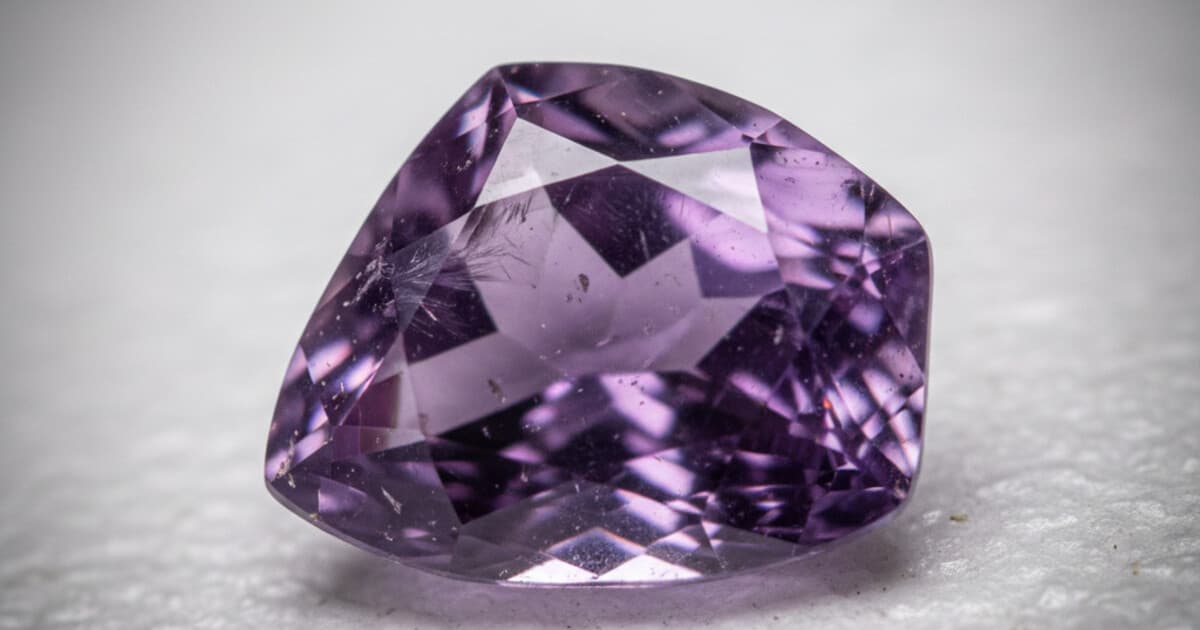
Natural amethyst ranges from pale lilac to deep violet-purple, with most jewelry-quality stones falling somewhere in the medium-to-rich range. Color is the first thing people notice, but it's also the easiest to fake, so don't rely on it alone.
The more useful visual cue is color zoning. Genuine amethyst typically shows subtle variations in color intensity: deeper purple concentrating in certain growth zones, lighter areas in others. This happens because crystals grow in layers over time, with varying trace elements (mainly iron) incorporated at each stage. Glass and synthetic stones have no internal growth structure, so their color is distributed evenly throughout.
Inclusions are the other key marker. Natural amethyst almost always has something going on inside: tiny fractures, mineral inclusions, growth striations, or liquid-filled cavities. Under a 10x loupe or a phone camera zoomed in close, these show up as faint lines, wisps, or irregular shadows. A completely flawless, glassy interior with zero internal features is a yellow flag, though lab-grown stones can also appear clean.
Most commercial amethyst sold today has been heat-treated to intensify its color or remove brownish tones. That's standard industry practice and doesn't change the stone's chemical composition. Heat-treated amethyst is still natural amethyst.
For a broader look at how to identify different gemstones by their optical and physical properties, the gemstone identification guide covers the core methods across stone types.
7 Tests to Tell if Amethyst Is Real
1. Temperature Test
Hold the stone in your closed fist for 30 seconds, then open your hand and pay attention.
Real amethyst (like all quartz varieties) has low thermal conductivity. It holds a cool temperature noticeably longer than glass after contact with warm skin. Glass has higher conductivity and warms to body temperature much faster.
This test works best at room temperature or above. If you have a suspected fake nearby, hold both at the same time and compare. The difference is often obvious within 30 seconds.
2. Bubble Check
Pick up a 10x jeweler's loupe, a phone macro lens, or even a strong magnifying glass and look inside the stone.
Spherical bubbles are a dead giveaway for glass. They form when liquid glass cools and traps air inside. Natural crystals don't create perfect spheres internally. Even one round bubble confirms glass.
Natural inclusions look different: irregular shapes, wispy fractures, needle-like growths, curved lines. They don't look manufactured.
3. Scratch Test
Amethyst sits at 7 on the Mohs hardness scale. A standard steel knife blade sits around 5.5 to 6.5.
Drag the blade firmly across a small, inconspicuous area (the base or girdle of the stone, not the top facet). Then look closely at the mark.
If the stone scratches cleanly, it's softer than steel. That rules out amethyst and points to glass, purple fluorite (Mohs 4), or dyed plastic. If the blade leaves only a metallic smear that wipes off, the stone is harder than steel, which is consistent with genuine amethyst.
One caution: some glass is tempered or has surface coatings that can resist the initial pass. Try a second attempt at a different spot if you're unsure.
4. Color Zoning Check
Take the stone to a window or hold it under a bright lamp. Rotate it slowly and look through the body of the stone at different angles.
Genuine amethyst often shows bands or patches of color that vary in intensity depending on the viewing angle and light source. The purple may concentrate near certain facets, fade toward the center, or shift slightly between violet and reddish-purple.
Even, saturated color that looks identical from every angle is more consistent with glass or synthetic stone.
5. Magnification for Inclusions
Back to the loupe. Beyond checking for bubbles, look for the natural "fingerprints" of real amethyst.
Growth striations appear as faint parallel lines inside the crystal, formed by successive growth layers. Rutile needles look like tiny metallic threads. Two-phase inclusions contain a bubble inside a liquid pocket. These features are common in natural quartz and nearly absent in glass.
If you see any of these internal structures, the stone is almost certainly natural. If the interior is perfectly clean and featureless, you're likely looking at glass or synthetic amethyst.
6. UV Light Test
Under a shortwave UV light (365nm), natural amethyst typically shows weak to no fluorescence, sometimes a faint white or bluish-white glow.
Lab-created amethyst often shows stronger, more uniform fluorescence. Glass responses vary by composition.
This test works best as a supporting clue alongside other results, not as a standalone determination. If the stone fluoresces vividly, that's worth noting, but it doesn't conclusively confirm or rule out any specific material.
7. Weight Check
Amethyst has a specific gravity of around 2.65. Most glass runs 2.4 to 3.0, depending on composition, so there's overlap. This makes weight alone unreliable as a solo test.
That said, if you're holding two stones that appear identical in size and one feels noticeably lighter, that difference is worth adding to your running evidence. A jeweler can run a precise specific gravity test in minutes if you want a definitive number.
The Hardest Fake: Synthetic Amethyst
Glass is easy. Purple fluorite is easy. Dyed quartz usually fails the color zoning test. The challenging one is lab-created amethyst.
Synthetic amethyst is grown in a lab but is chemically and structurally identical to natural amethyst. Same hardness, same crystal structure, same refractive index. It can even have inclusions that look natural. The temperature test, scratch test, and bubble check won't separate them.
What you can sometimes spot: synthetic amethyst often has very saturated, perfectly even color without the subtle zoning typical of natural stone. But this isn't reliable enough to be conclusive.
If the piece has real value (an estate sale find, a potential heirloom, something you're considering insuring or selling), take it to a certified gemologist. A proper identification report from a lab like GIA will confirm natural versus synthetic and document any treatments.
For a general overview of authentication across jewelry types, real vs fake jewelry covers the most practical methods across metals and stones.
How Jewelry Identifier Can Help
If you want a fast starting point before going to a professional, Jewelry Identifier can help. Take a photo of the piece and the AI will analyze the stone, identify the metal setting, and read any stamps or hallmarks present.
The web tool at jewelryappraisals.app goes further: it generates a detailed appraisal report that includes material identification, estimated value, and comparable sales data. Amethyst pieces, especially those set in sterling silver or gold, often carry hallmarks that help date the piece and confirm metal purity. The hallmark reader can surface information that's easy to miss with the naked eye.
Your first appraisal is free.
Frequently Asked Questions
Can you scratch real amethyst with a knife?
A steel knife blade (Mohs hardness ~5.5 to 6.5) won't scratch genuine amethyst, which sits at Mohs 7. If a knife scratches your stone cleanly, it's softer than steel and likely glass or purple fluorite. What you might see instead is a metallic smear from the blade itself, which wipes off. That's the stone resisting the scratch.
Is synthetic amethyst the same as fake amethyst?
Synthetic amethyst is lab-grown but chemically identical to natural amethyst. It's not fake in the way that glass or dyed plastic is fake, but it's worth a fraction of the price of natural stone. Most synthetic amethyst can't be detected with home tests; lab equipment is required for confirmation.
Does real amethyst stay cold?
Yes. Amethyst and other quartz varieties hold a cool temperature longer than glass when you hold them. Grip the stone in your fist for 30 seconds and then notice how quickly it warms. Real amethyst takes noticeably longer to reach body temperature than glass, which is a higher conductor of heat.
What are the most common amethyst imitations?
Purple glass is the most common and easiest to detect (bubbles, fast warming). Dyed quartz fails on color zoning. Purple fluorite is softer than a steel knife. Lab-created amethyst is the hardest to catch at home. Amethyst is also February's birthstone (more in the birthstone guide), which helps explain why it's so widely imitated.
Does amethyst fade over time?
Natural amethyst can lose color with prolonged direct sunlight exposure. UV radiation gradually bleaches the iron impurities responsible for the purple color. This can take months of consistent exposure to become noticeable. Glass doesn't fade this way. It's not a practical quick test, but it's worth knowing if you're storing a piece long-term.
Conclusion
Most amethyst fakes are detectable at home with basic checks. Glass fails the temperature test and often shows bubbles under magnification. Purple fluorite is softer than a knife blade. Dyed quartz shows color concentrated along fractures rather than in natural growth zones.
Synthetic amethyst is the one exception. At home, it's essentially indistinguishable from natural stone without lab equipment.
If the piece matters, financially or sentimentally, a professional gemologist is worth the visit. And if you want a fast estimate of what you're looking at before going that route, try a free jewelry appraisal at jewelryappraisals.app.