 Jewelry Identifier
How to Tell if Citrine Is Real: 6 Simple Tests
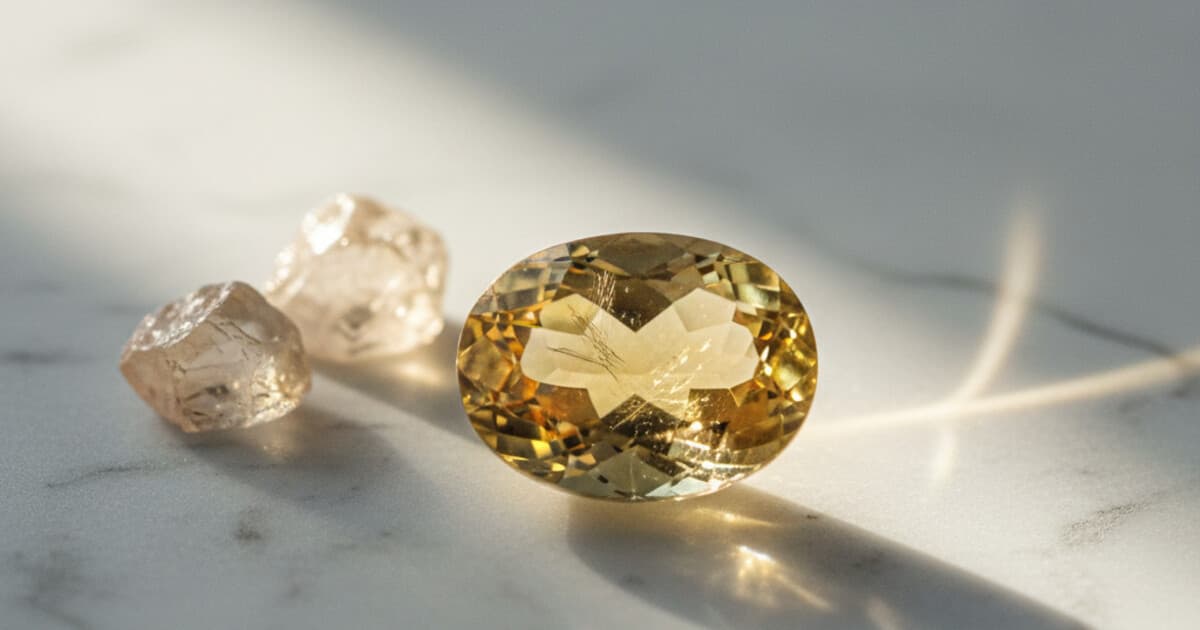
How to Tell if Citrine Is Real: 6 Simple Tests
You picked up a piece of yellow jewelry at an estate sale. The label says "natural citrine" and the price seems right. But is it actually citrine? Or is it heat-treated amethyst, smoky quartz, or glass dressed up to look the part?
Knowing how to tell if citrine is real saves you from overpaying for a stone that's worth a fraction of what you spent. Citrine fakes are everywhere, and some are convincing enough to fool casual buyers.
To tell if citrine is real, check the color distribution first. Genuine citrine has even yellow-to-gold tones throughout. Heat-treated amethyst, the most common fake, concentrates color at the tips with pale sections toward the middle. Real citrine also stays cool to the touch longer than glass and shows feather-like inclusions under magnification.
What Real Citrine Actually Is
Citrine is a yellow-to-orange variety of quartz, colored by iron impurities locked into the crystal structure during formation. It sits at 7 on the Mohs hardness scale, durable enough for everyday wear.
Most citrine sold in retail stores and online markets is heat-treated amethyst, not natural citrine. The two are chemically similar (both are quartz varieties), but they form through entirely different processes. Natural citrine gets its yellow color from iron impurities present during crystal formation in metamorphic and igneous rocks, primarily in Brazil, Madagascar, and Russia. Heat-treated amethyst starts as purple amethyst and is fired to between 470°C and 560°C until the iron impurities rearrange and produce yellow to orange tones. The distinction matters for value: a 2-carat natural citrine can sell for $20 to $60 at wholesale, while heat-treated material of the same size runs $5 to $10. Color distribution is the most reliable indicator: natural citrine shows even yellow tones throughout the crystal, while heat-treated stones typically concentrate orange-red color at the tips with lighter or near-colorless sections toward the base.
Natural citrine is genuinely rare. That scarcity is why the market fills the gap with:
- Heat-treated amethyst: Amethyst turns yellow or orange when heated to around 470 to 560°C. This accounts for the majority of commercial "citrine."
- Heat-treated smoky quartz: Same process, different starting material.
- Glass: Cheap citrine-colored glass sold in tourist shops and low-end jewelry.
- Synthetic citrine: Lab-grown quartz with the same chemical structure as natural, but without the natural formation history.
Treated stones aren't worthless. Many jewelry designers use heat-treated amethyst deliberately. The problem is when sellers pass it off as untreated natural citrine at natural citrine prices.
6 Tests to Tell if Citrine Is Real
These tests don't require a lab or professional equipment. Most you can do at home with items you already have.
1. Check the Color Distribution
This is the quickest giveaway. Hold the stone against a white background in good light.
Natural citrine: The color is distributed evenly throughout. Pale yellow to warm honey gold, consistent from center to edge.
Heat-treated amethyst: Look for color concentrated at the tips or base of the crystal, with whiter or near-colorless sections in the middle. The tones often shift toward orange or reddish-brown at the edges rather than staying pure yellow.
Glass: Usually very uniform, sometimes too uniform. May show a slight color shift under different lighting angles.
If the stone has a vivid orange-red color concentrated at the points of a crystal cluster, it's almost certainly heat-treated amethyst.
2. Temperature Test
Real quartz holds its coolness longer than glass. Hold the stone in your palm for about 10 seconds, then press it to your cheek or inner wrist.
Natural quartz will feel noticeably cool for longer before warming to body temperature. Glass heats up much faster.
This test alone won't confirm authenticity, but if the stone warms up almost immediately, that's a red flag worth following up on.
3. Air Bubble Check
Glass is made by melting silica and cooling it rapidly, which often traps tiny air bubbles in the process. Real citrine has none.
Use a 10x jeweler's loupe or your phone camera zoomed in as far as it'll go. Look through the interior of the stone under direct light.
Round air bubbles inside the stone mean glass. If you spot them, you're holding an imitation.
4. Inspect for Natural Inclusions
Natural citrine usually has internal characteristics: tiny feather-like fractures, needle-like inclusions, or "thumbprint" patterns left by the quartz growing around other minerals during formation.
A stone with absolutely zero inclusions and perfect optical clarity is suspicious, unless you're dealing with a well-documented high-end gem. Glass and synthetic citrine both tend to look perfectly clean inside.
Look for fine parallel lines or chevron patterns: these are growth zones common in natural quartz crystals. They're not visible to the naked eye, but a basic 10x jeweler's loupe (around $10) makes them easy to spot.
5. Scratch Test
Citrine has a Mohs hardness of 7. It scratches glass (Mohs 5 to 5.5) and most common metals. Glass can't scratch citrine.
Find a piece of regular glass (a glass plate, a spare mirror edge) and drag the corner or edge of your stone across it. A genuine citrine leaves a clear scratch mark on the glass.
Then reverse it: try scratching the stone with a piece of glass. If the stone scratches easily, it's not quartz.
Keep this test for loose stones or rough specimens. Don't drag a faceted gem across glass if it's already set in a piece you care about.
6. Consider the Price and Source
Natural, untreated citrine commands a real premium. A quality natural citrine gem runs $10 to $30 per carat wholesale; fine specimens with excellent color and clarity go higher.
If you're looking at a deeply saturated orange-red citrine crystal cluster for $5 to $15 in a gift shop, it's heat-treated amethyst. If a seller describes a stone as "natural" but can't provide any documentation or specific sourcing information, treat that claim as unverified.
Citrine is also one of November's birthstones, shared with topaz. Our birthstone guide covers the full birthstone calendar and what different citrine color ranges mean for that month.
The Biggest Citrine Fake: Heat-Treated Amethyst
Heat-treated amethyst deserves a closer look because it's so common and so often misrepresented.
When amethyst crystals are heated to between 470°C and 560°C, the iron impurities that give it purple color rearrange to produce yellow and orange shades. The result looks like citrine but started life as a completely different stone.
The clearest signs:
Color at the tips: Heat-treated amethyst almost always shows the deepest color at the points of the crystal, with lighter color toward the base. Natural citrine doesn't follow this pattern.
Orange-red tones: Vivid orange-red coloring is a strong heat-treatment indicator. Natural citrine tends toward lemon yellow to warm amber. The reddish-orange shades you see in many commercial crystals are a giveaway.
Crystal clusters at low prices: Large, colorful citrine clusters with deep orange saturation are almost always heat-treated amethyst. Natural citrine clusters of that quality at those prices don't exist.
Whether heat-treated amethyst counts as a "fake" depends on the context. In jewelry, it performs identically to natural citrine in terms of hardness and durability. The issue is transparency: a stone sold as "natural citrine" when it's actually treated amethyst is misrepresented, regardless of how attractive it looks.
For a deeper look at how quartz varieties differ at the mineral level, our gemstone identification guide covers the science behind these distinctions. We've also published separate guides on how to tell if topaz is real and how to tell if amethyst is real, since both are frequently mixed up with citrine in the market.
How Jewelry Identifier Helps with Citrine Authentication
At-home tests get you most of the way there. But some situations need a faster answer, especially when you're on the spot at an estate sale or antique market with no time to pull out a loupe.
The Jewelry Identifier app lets you photograph any gemstone or piece of jewelry and get an AI-powered identification in seconds. Point your camera at the stone, and it analyzes the visual characteristics against a comprehensive gemstone database that covers color ranges, typical inclusion patterns, and material identifiers.
The offline mode keeps the database accessible even without a signal, which is useful at estate sales, pawn shops, and antique fairs where you're often in basements or rural areas with spotty coverage.
The app won't replace a certified gemologist's lab report for a high-value purchase. But as a quick first filter at the point of purchase, it catches most obvious impostors. Your first appraisal is free on the web tool, which also pulls comparable sales data so you can check whether the asking price lines up with what similar pieces actually sell for.
Frequently Asked Questions
Is most citrine on the market actually real citrine?
Most commercial citrine is heat-treated amethyst or heat-treated smoky quartz. It's genuine quartz, just not naturally yellow. True natural, untreated citrine exists but is rarer and more expensive. When buying loose stones or crystals, ask specifically whether the piece is natural untreated citrine, and look for price and color distribution that backs up the claim.
Can heat-treated amethyst be legally sold as citrine?
In many markets, "citrine" can legally refer to heat-treated amethyst since both are quartz varieties with similar chemical composition. The important distinction is "natural" versus "treated." If a seller specifically claims "natural citrine," that should mean untreated, and they should be able to substantiate it. A very low price on a vividly orange stone is a reliable indicator of treatment.
Does real citrine fade in sunlight?
Natural citrine is stable under typical light exposure. Heat-treated amethyst can fade with prolonged exposure to strong sunlight, gradually reverting toward its original purple or becoming washed out. If a "citrine" piece loses its orange color near windows over time, that's a clear sign it was heat-treated amethyst, not natural citrine.
What's the difference between citrine and topaz?
Both come in yellow to orange colors and get mixed up regularly. Topaz is denser (specific gravity 3.4 to 3.6 vs. citrine's 2.65) and harder (Mohs 8 vs. 7). Under magnification, topaz often shows a distinctive cleavage plane that quartz doesn't have. They're chemically different minerals, though they can look nearly identical in finished jewelry.
How much should I pay for natural citrine?
Quality natural citrine in the 1 to 5 carat range runs roughly $10 to $30 per carat at wholesale. Retail prices vary by setting and seller, but a genuine untreated 2-carat stone in a simple setting shouldn't cost less than $60 to $100 from a reputable dealer. Anything dramatically cheaper should raise questions about origin and treatment status.
Citrine is one of the easier gemstones to test at home once you know what to look for. The color distribution check alone rules out most heat-treated fakes in under a minute. Combine that with the temperature test and a loupe inspection, and you've got enough to make an informed call.
When you want a faster answer before committing to a purchase, snap a photo with Jewelry Identifier and get an AI-powered gemstone identification in seconds. Try your first free appraisal at jewelryappraisals.app before your next estate sale or antique market trip.