 Jewelry Identifier
How to Tell if Tanzanite Is Real: 6 Tests That Work
How to Tell if Tanzanite Is Real: 6 Tests That Work
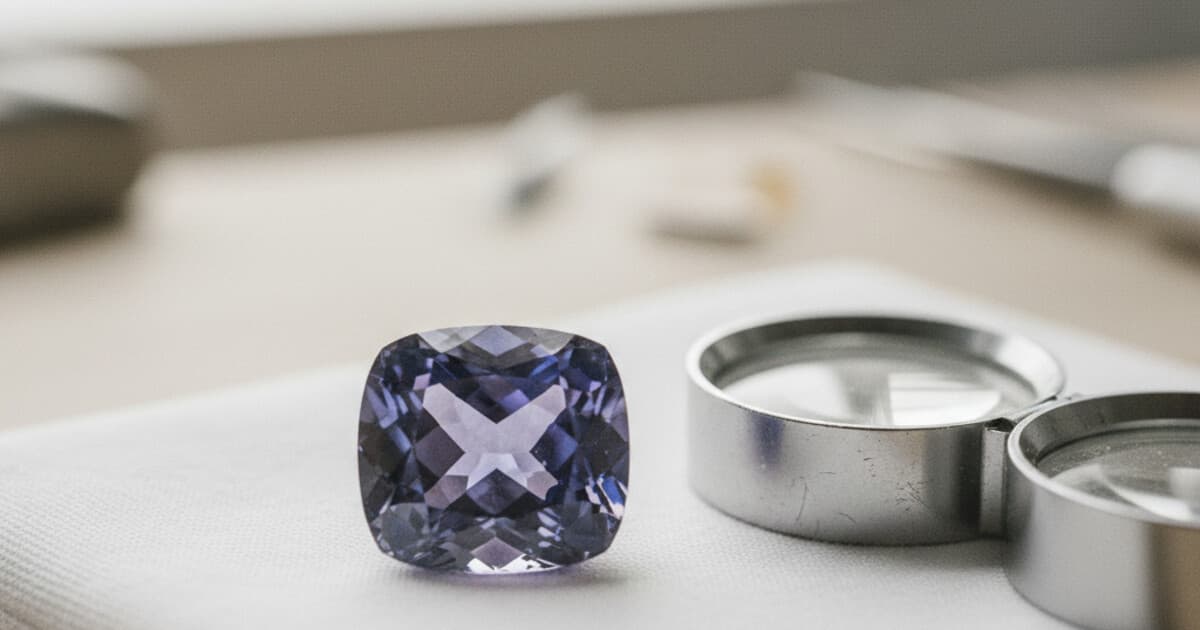
Tanzanite trades for anywhere from $200 to $1,200 per carat depending on color depth and clarity. That price range makes it a consistent target for fakes, glass simulants, and misidentified stones. Whether you inherited a blue-violet pendant, picked one up at an estate sale, or you're shopping for one now, knowing what you're holding matters.
This guide walks through 6 reliable tests, what real tanzanite looks and feels like, and when to stop testing at home and call a gemologist.
To tell if tanzanite is real, rotate the stone under light and watch for a three-way color shift: blue, violet, and reddish-brown from different angles. This trichroism is tanzanite's defining trait and something fakers can't replicate in glass or synthetic spinel. Real tanzanite also feels cool to the touch and often shows minor inclusions under a loupe.
What Real Tanzanite Looks Like
Tanzanite comes from one place on Earth: a narrow mining zone near Merelani Hills in Tanzania, close to Mount Kilimanjaro. That geographic exclusivity keeps supply limited and value high.
The stone is a variety of zoisite, and its crystal structure gives it something called trichroism. Viewed from 3 different crystal axes, the stone appears blue, violet, and reddish-brown. Most colored gemstones are dichroic (2 colors). Tanzanite has 3.
Tanzanite is a blue-violet variety of the mineral zoisite, found exclusively in a small mining region near Merelani Hills in northern Tanzania. What separates it from other blue gemstones is trichroism: viewed from 3 different crystal axes, the stone appears blue, violet, and reddish-brown. Nearly all commercial tanzanite is heat-treated at around 600°C to eliminate the brownish tones and intensify the blue-violet color that buyers expect. Untreated tanzanite typically shows a stronger brownish or greenish cast. The stone has a hardness of 6.5 to 7 on the Mohs scale, a refractive index between 1.691 and 1.700, and a specific gravity around 3.35. These properties allow gemologists to distinguish real tanzanite from common simulants like blue glass (SG 2.5), synthetic spinel (SG 3.63, RI 1.727), and blue topaz (SG 3.56) using a refractometer and hydrostatic weighing. The pleochroism test, however, remains the most useful at-home check.
Tanzanite also serves as December's birthstone, which is why it shows up frequently in estate pieces and holiday jewelry gifts.
Test 1: The Pleochroism Test
This is the most reliable at-home test, and it takes about 30 seconds.
Hold the stone under natural light or a white LED bulb. Rotate it slowly in different directions, both spinning it and tilting it.
Real tanzanite shifts between blue, violet, and reddish-brown as you change the angle. The color change can be subtle if the stone was cut to minimize the brown axis, but you should still see some shift between blue and violet at minimum.
Blue glass or synthetic spinel stays one color from every angle. If the stone looks identical no matter how you rotate it, that's a strong indicator it's not real tanzanite.
Test 2: The Temperature Test
Real gemstones feel cool to the touch and warm up slowly. Glass warms up almost immediately from body heat.
Hold the stone between your fingers for 5 seconds. If it warms up within those first few seconds, it's likely glass. Real tanzanite stays noticeably cool for longer.
This test alone won't confirm authenticity, but it's a useful first filter. Combine it with the pleochroism check for better confidence.
Test 3: Loupe Inspection for Inclusions
Natural tanzanite has internal characteristics: growth tubes, fracture patterns, and mineral crystals that formed during the stone's development deep underground.
Use a 10x loupe or jeweler's magnifier and look inside the stone. If it's flawless from every direction, be skeptical.
Glass fakes often show rounded air bubbles or swirling flow lines. Real tanzanite may have feather-like fractures, small dark crystals, or parallel growth tubes. A stone with no inclusions at all, priced affordably, warrants extra scrutiny.
Test 4: Color Depth Under Different Lighting
Real tanzanite looks noticeably different under incandescent light versus daylight.
Under an incandescent bulb, the violet in tanzanite gets amplified. Move it to daylight or a cool LED, and the blue dominates. This shift is subtle but visible, a product of the stone's actual crystal structure.
Blue glass tends to look flat and uniform under both light sources. The color depth doesn't change, and it lacks the layered quality you see in natural tanzanite.
Test 5: The C-Axis Test
This builds on the pleochroism test but targets a specific direction.
Orient the stone so you're looking through its length rather than through the flat top (the table facet). In that position, real tanzanite often shows a distinct reddish-brown or burgundy color. Gemologists call this the c-axis direction.
Simulants won't show this no matter how you orient them. If you can find even a hint of brown-red when looking through the stone's side, that's a meaningful indicator it's genuine.
Test 6: Weight Comparison
Tanzanite has a specific gravity of 3.35. Blue glass sits around 2.5, making glass roughly 25% lighter than tanzanite for the same volume.
Without lab equipment, do a rough hand comparison. Pick up the suspected tanzanite and compare it to a piece of glass jewelry you know is glass, roughly the same size. Real tanzanite should feel noticeably heavier.
This works best when you have two stones to compare side by side. Judging a single stone by weight alone is harder, but with practice you'll develop a feel for the difference.
Common Tanzanite Fakes to Know
These are the simulants you'll encounter most often:
Blue glass is the most obvious fake. No pleochroism, warms up quickly, and often shows small air bubbles under magnification. Weight is significantly lighter than real tanzanite.
Synthetic blue spinel is lab-made with a slightly different refractive index (1.727 vs. tanzanite's 1.691-1.700) and no trichroism. Often too perfectly clear. A refractometer separates them instantly.
Blue topaz is a natural stone but very different from tanzanite. Harder (Mohs 8), different refractive index (1.619-1.627), and no trichroism in the blue-violet-reddish-brown range. Honest sellers identify it correctly, but it does get misrepresented.
YAG (yttrium aluminum garnet) is lab-made with a specific gravity of 4.55, significantly denser than tanzanite. No trichroism. Heavier in the hand, not lighter.
Synthetic corundum gets colored to mimic sapphire or tanzanite. May show weak pleochroism, but won't produce the characteristic 3-color shift.
For a broader look at spotting fakes across gemstone types, see our gemstone identification guide and our overview of real vs. fake jewelry.
When to Call a Gemologist
At-home tests eliminate many obvious fakes. They can't give you certainty on high-value stones.
Get professional testing if:
- The stone is over 1 carat and you're buying or selling
- You inherited the piece and have no documentation
- The pleochroism is weak or ambiguous
- A loupe shows no inclusions but the stone is priced like natural tanzanite
A gemologist can run a refractometer to measure the stone's RI exactly, check specific gravity through hydrostatic weighing, and examine inclusions under higher magnification. Those 3 data points together are essentially definitive.
How Jewelry Identifier Can Help
Jewelry Identifier's AI can analyze a photo of your stone and return an identification within seconds. Take a clear photo in natural light (or use the live camera), upload it to the app or the web tool, and you'll get an ID along with an estimated value for the full piece.
For pieces you've picked up at estate sales or antique fairs, the mobile app works offline, which is useful when there's no signal. For pieces at home, the web tool at jewelryappraisals.app gives you a full appraisal report with comparable sales data, and your first appraisal is free.
Frequently Asked Questions
Is all tanzanite heat-treated? Almost all commercial tanzanite is heat-treated at around 600°C to eliminate brownish tones and intensify the blue-violet color. This is standard industry practice and doesn't decrease value. Untreated tanzanite is actually rarer, though it shows more brown, which most buyers don't prefer.
What are the most common tanzanite fakes? Blue glass, synthetic blue spinel, and blue topaz are the most common. Blue glass is easiest to spot: no pleochroism, lightweight, may have bubbles. Synthetic spinel and blue topaz require a refractometer to rule out definitively.
How do I know if my tanzanite is high quality? Quality comes down to color saturation, clarity, and size. AAA grade shows deep blue-violet with strong saturation in both colors. Lower grades appear pale or heavily violet. Stones above 5 carats are rare and command much higher prices per carat.
What's the difference between tanzanite and sapphire? Sapphire is corundum with a Mohs hardness of 9 and comes from many global sources. Tanzanite is zoisite with a hardness of 6.5 to 7, found only in Tanzania. Sapphires can look blue-violet but don't show the reddish-brown third axis that tanzanite does. Sapphires are also significantly more durable.
Can I test tanzanite without any equipment? Yes. The temperature test and color-depth check need no tools. Hold the stone briefly, then examine it under incandescent light versus daylight and watch for the color shift. A 10x loupe helps confirm inclusions, but the basic pleochroism check needs only natural light and steady rotation.
Wrapping Up
The pleochroism test catches most fakes: rotate the stone and watch for that 3-way color shift. If it stays one color, it's a simulant. If it shifts between blue and violet, and especially if you can find the reddish-brown c-axis, you're likely holding real tanzanite.
For anything high-value, confirm with a gemologist who has a refractometer and scale. At-home tests narrow the field. Professional testing closes it.
Want a fast AI identification before you visit a jeweler? Try your first jewelry appraisal free at jewelryappraisals.app.