 Jewelry Identifier
Jewelers' Trade Marks: What They Mean and How to Read Them
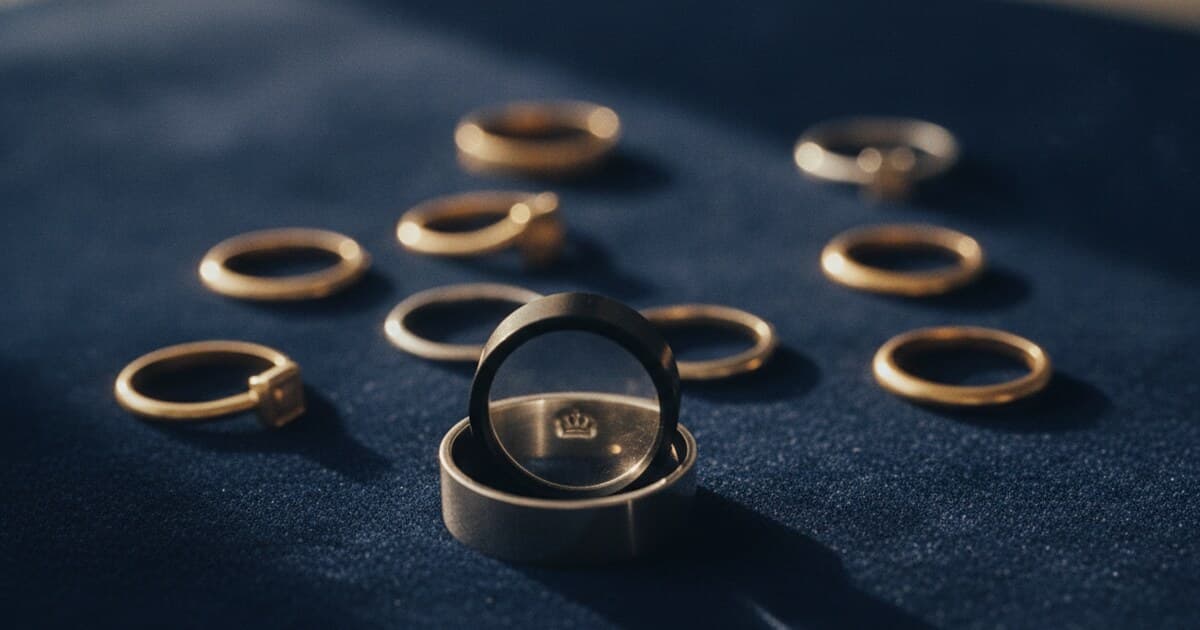
That tiny stamped mark inside your ring or on the clasp of a bracelet isn't decoration. Jewelers' trade marks are a centuries-old system for recording who made a piece, what it's made from, and sometimes where it was tested for purity. Most people see these stamps and assume they're random numbers or letters. They're not. Once you know the code, a three-digit number can tell you whether your gold chain is 18-karat or 10-karat, and a small symbol can place a piece in a specific city in Victorian England.
This guide breaks down what jewelers' trade marks mean, how to read them by metal and country, and how to find the mark on your piece in the first place.
Jewelers' trade marks are small stamps or engravings on jewelry that identify the maker, the metal purity, and sometimes the country of assay. Common marks include purity numbers like 750 (18K gold), 585 (14K gold), and 925 (sterling silver). Maker's marks are the jeweler's personal or company identifier, while hallmarks come from government-approved assay offices that test and certify metal content.
If you're trying to decode a specific mark right now: the Jewelry Identifier's Hallmark Reader reads stamps from a photo and tells you what they mean. Your first appraisal is free.
What Are Jewelers' Trade Marks?
When people use "jewelers' trade marks," they usually mean one of two things: maker's marks or hallmarks. Knowing the difference matters because they tell you different things.
A maker's mark is the jeweler's signature. It could be initials, a logo, or a symbol stamped into the metal. Large houses use their full name: Tiffany & Co. stamps "TIFFANY & CO." with a serial number, Cartier stamps "CARTIER" along with a reference code. Smaller craftspeople typically use two or three initials inside a shaped border called a cartouche. This mark tells you who made the piece, not what it's made of.
A hallmark is a separate thing. It comes from an official testing office called an assay office. The assay office tests a sample of the metal, confirms its purity, and stamps it with a mark that's legally recognized. In the UK, hallmarking for gold and silver has been required by law since the 14th century. France introduced compulsory marking for gold in the 13th century. The US took a different path: the National Gold and Silver Stamping Act of 1906 set federal standards for labeling karat content, but maker's marks remain voluntary and there's no government assay system.
Jewelers' trade marks fall into four main categories, each serving a different purpose. Maker's marks identify the jeweler or manufacturer, usually as initials or a logo inside a shaped frame. Hallmarks are stamps from government-approved assay offices confirming the metal's purity, mandatory in the UK since the 14th century and France since the 13th. Purity marks are numerical: 750 means 18-karat gold (75% pure), 585 means 14-karat (58.5% pure), 375 means 9-karat (37.5% pure), and 925 means sterling silver (92.5% pure). Date letters, used in British and Irish hallmarking, are a single letter in a shaped shield that cycles through the alphabet each year, letting collectors date a piece to a 12-month window. Country-of-origin marks, common on pieces made after the early 20th century, show where the jewelry was manufactured or imported from. Together, these categories form a complete record of a piece's origins and composition.
A single piece often carries both types: the maker's cartouche plus one or more hallmarks. On a British antique ring, you might see four separate stamps pressed side by side.
How to Read Common Jewelry Trade Mark Numbers
The numbers stamped on jewelry express the metal's purity as a parts-per-thousand figure. Here's what the most common marks mean.
Gold marks:
- 999: 24-karat, essentially pure gold. Very soft, so it's rarely used for wearable jewelry
- 750: 18-karat gold (75% gold)
- 585: 14-karat gold (58.5% gold), the most common karat in the US
- 417: 10-karat gold (41.7% gold, the legal minimum for gold labeling in the US)
- 375: 9-karat gold (37.5% gold, standard in the UK, Australia, and Ireland)
Silver marks:
- 999: Fine silver, almost pure
- 925: Sterling silver (92.5% silver), the most widely used standard
- 800: Common in European silver, particularly German and Italian pieces
Platinum marks:
- PT950 or 950: 95% platinum, the most common standard for platinum jewelry
- PT900 or 900: 90% platinum
- PT850 or 850: 85% platinum, used in some vintage pieces
In the US, a piece marked "14K" and a piece marked "585" should be identical in metal content. In Europe the numeric system dominates. In the UK you'll typically see both, often alongside the assay office and date letter.
One mark trips people up regularly: "14KP" doesn't mean platinum. The "P" stands for "plumb gold," meaning the piece is exactly at the stated karat rather than the small tolerance below it that US law used to allow. It's a precision claim, not a metal type. If you see "PT" or "PLAT" before a number, that's platinum.
Our jewelry stamps and markings guide covers the full reference chart for US and international marks, and our article on jewelry maker's marks goes deeper on how to look up specific maker's cartouches.
Jewelers' Trade Marks by Country
The marking requirements vary significantly from country to country. Knowing the system helps you figure out where and roughly when a piece was made.
United States: The FTC requires that any karat claim (like "14K") on jewelry sold in the US must be accurate, with a tolerance of 0.003 parts. Maker's marks aren't legally required at all. There's no government assay office, so the manufacturer is responsible for accuracy. This makes US-made vintage pieces trickier to date: without voluntary maker's marks or import stamps, there's often no official record.
United Kingdom: The UK runs the strictest hallmarking system in the world. Any gold, silver, platinum, or palladium item above a minimum weight threshold must be hallmarked by one of four assay offices before it can be sold as precious metal. The four offices each use a distinct symbol: London uses a leopard's head, Birmingham uses an anchor, Sheffield uses a Yorkshire rose, and Edinburgh uses a castle. A full British hallmark has four components pressed side by side: the maker's mark, the metal and purity mark, the assay office symbol, and the date letter. The date letter cycles through the alphabet in a specific font and shield shape each decade, so a collector familiar with the system can date a piece to within a year.
Italy: Italian gold jewelry carries a star plus a two-letter provincial code and the purity number (750 for 18K), issued by the Italian Ministry of Economic Development. Post-1968 pieces have a consistent format; older pieces vary by region.
France: France historically used animal heads as purity symbols. An eagle head indicates 18K gold on pieces made for the domestic market. An owl stamp indicates imported gold items that passed through French customs. On silver, a Minerva head marks 950 silver.
How to Find and Photograph the Mark on Your Piece
Knowing a mark exists is one thing. Finding it on a small, worn piece is another.
On rings, the mark is almost always on the inside of the band. On necklaces and bracelets, check the clasp. On pendants, look at the back near the bail (the loop that attaches to the chain). On earrings, check the post or the back of the stud. On brooches, look at the back near the pin stem or catch.
The marks are small, often under 2mm wide, and can be worn nearly smooth on old pieces. A 10x loupe (a small magnifier jewelers use) will reveal most stamps clearly. For a photo, a smartphone macro lens attachment works well: hold the piece under bright daylight or an LED lamp, stabilize it on a flat surface, and take several shots at slightly different angles. The angle that catches the light across the stamp rather than straight-on tends to show the impression best.
The Jewelry Identifier app can analyze a close-up photo of the stamp and cross-reference it against its database of hallmarks, maker's cartouches, assay office marks, and purity codes from the US, UK, Europe, and Asia. Upload a photo and it returns what the mark likely indicates along with a value estimate for the piece. Your first appraisal is free.
How Trade Marks Affect Value
A clear, readable maker's mark from a recognized house adds real value. A Tiffany stamp doesn't just identify the maker: it's part of the reason a piece commands a premium on resale. The same physical item without the stamp sells for significantly less. Collectors of Georgian, Victorian, and Edwardian jewelry use British date letters and assay office marks to confirm period and provenance, which can be the difference between an estate-sale price and an auction-house price.
Purity marks matter for intrinsic value too. A piece marked 750 has more gold per gram than one marked 375, which feeds directly into melt value calculations. For buyers and sellers, verifying the mark before pricing is basic due diligence.
Unmarked pieces aren't necessarily fake or worthless. American vintage jewelry from before 1906 often has no stamps at all, and pre-regulation European pieces can be unmarked too. But a confirmed hallmark from a recognized assay office is the closest thing jewelry has to a birth certificate.
Frequently Asked Questions
What is the difference between a maker's mark and a hallmark?
A maker's mark identifies the jeweler or manufacturer, typically as initials or a logo in a small frame. A hallmark comes from an independent assay office and certifies the metal's purity. Maker's marks are voluntary in the US. Hallmarks are legally required in the UK for gold, silver, platinum, and palladium above minimum weight thresholds. One piece can carry both.
What does 925 mean on jewelry?
925 means the piece is sterling silver, composed of 92.5% silver and 7.5% other metals, usually copper. The copper makes the silver harder and more durable for everyday wear. Fine silver (99.9% pure) is too soft for most jewelry. You'll also see "STERLING" or "STG" on US pieces instead of the number.
Can I look up jewelry maker's marks online?
Yes. Several resources catalog maker's marks by country and period, including the International Hallmarks on Silver Collectors website and national assay office databases. For photo-based identification, the Jewelry Identifier at jewelryappraisals.app cross-references your uploaded stamp image against a broad database. For obscure or unusual cartouches, a certified gemologist with antique jewelry experience is the most reliable option.
What does "14KP" mean on jewelry?
The "P" stands for "plumb gold," meaning the piece is exactly at the stated karat content. US federal law previously allowed a small tolerance below the stated karat. A "14KP" stamp means the jeweler chose to exceed that and stamp exactly 14K. It has nothing to do with platinum. Platinum stamps use "PT" or "PLAT" followed by a number.
Is a jewelry trade mark the same as a hallmark?
Not exactly. "Trade mark" in the jewelry context usually refers to the jeweler's maker's mark, their individual or company identifier. A hallmark is specifically a stamp from an official assay office certifying metal purity. The two terms are sometimes used interchangeably, but they mean different things and come from different sources.
If you've got a piece with a stamp you can't place, the Jewelry Identifier's free Hallmark Reader reads it from a photo and returns a breakdown of the metal type, purity, and what the maker's mark likely represents. No app install required.