 Jewelry Identifier
Jewelry Hallmarks: What Every Stamp Means
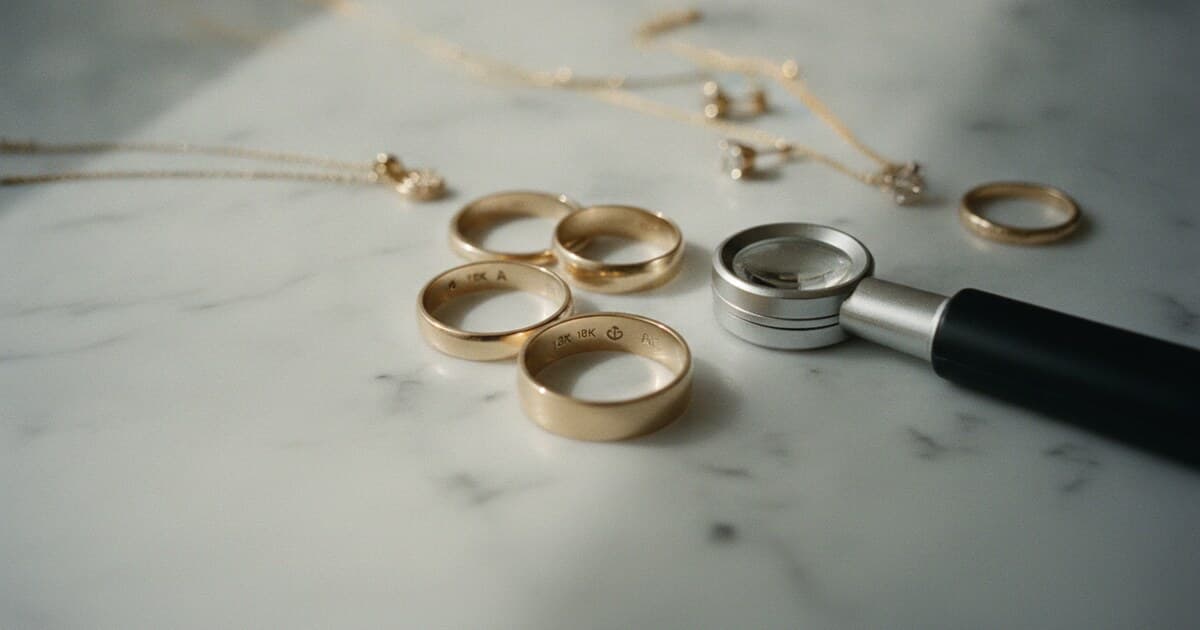
You flip a ring over and spot a tiny stamp inside the band. Maybe it says 585. Or 925. Or just GP. These small marks are jewelry hallmarks, a shorthand system that tells you exactly what a piece is made of and how pure the metal is.
Knowing how to read them can save you from paying gold prices for gold-plated brass, help you confirm a family heirloom is actually sterling silver, or figure out whether a flea market find is worth chasing. This guide covers the most common jewelry hallmarks across gold, silver, and platinum, plus the marks that signal plated or filled metals.
Jewelry hallmarks are stamps that identify metal purity and origin. On gold, they show karat (10K, 14K, 18K) or fineness (417, 585, 750). On silver, 925 means sterling silver. On platinum, PT950 means 95% pure. Marks like GP or GF indicate gold plating rather than solid gold.
If you have a stamp you can't read, the free Hallmark Reader on the Jewelry Identifier site reads it from a photo with no sign-up required.
Gold Jewelry Hallmarks: Karat Marks Explained
Gold hallmarks show purity in one of two systems: karat (K) or millesimal fineness. The karat system divides purity into 24 parts, so 18K means 18 parts out of 24 are pure gold (75%). The millesimal fineness system expresses purity as parts per thousand, so 750 means 750 out of 1,000 parts.
The most common gold hallmarks fall into these two parallel systems. Karat format (American) and fineness format (European/international) both appear regularly, and they describe the same alloys: 10K is also stamped 417 (41.7% gold), 14K is also stamped 585 (58.5% gold), 18K is also stamped 750 (75% gold), 22K is also stamped 916 or 917 (91.7% gold), and 24K is also stamped 999 or 999.9 (99.9% gold). In the UK and much of continental Europe, 9K (37.5% gold, stamped 375) is a recognized standard not widely used in the United States. Beyond solid gold, GP means gold plated (a thin electroplated layer, typically 0.5 microns or less), GF means gold filled (at least 5% gold by weight, mechanically bonded to a base metal core), HGE stands for heavy gold electroplate, RGP stands for rolled gold plate, and vermeil means sterling silver coated with at least 2.5 microns of gold. These all look like gold at a glance but contain a fraction of the metal value. A gold-filled piece carries roughly 100 times more gold than a gold-plated one, which is reflected in price.
The fraction stamp "1/20 14K GF" tells you even more: it means 1/20th of the total weight is 14K gold. That detail matters when you're trying to estimate scrap value or verify what a seller is representing.
Plating Marks at a Glance
| Stamp | What it means | |-------|---------------| | GP | Gold plated (thin electroplate) | | GF | Gold filled (5%+ gold by weight) | | GE | Gold electroplate | | HGE | Heavy gold electroplate | | RGP | Rolled gold plate | | Vermeil | Sterling silver base, 2.5+ micron gold layer |
None of these are solid gold. If value matters, karat marks (10K, 14K, 18K, or their numeric equivalents) are what you're looking for.
Silver Hallmarks: What 925 and Other Marks Mean
The 925 stamp is the most recognized silver hallmark worldwide. It means the piece contains 92.5% pure silver, the standard known as sterling silver. The remaining 7.5% is usually copper, added for durability (pure silver is too soft for most jewelry).
Other silver standards you'll encounter:
- 999 — fine silver (99.9% pure); rarely used for jewelry because it dents easily
- 950 — Britannia silver, a British standard slightly purer than sterling
- 800 — second standard (80% silver), common in antique continental European pieces from Germany, Eastern Europe, and Scandinavia
- Sterling (the word itself) — a valid stamp used mainly on US and older British pieces
British silver also carries assay office marks alongside the purity stamp. The lion passant (a walking lion) has indicated sterling silver in England since 1544. Pieces made in Edinburgh carry a thistle; pieces from Dublin carry a seated figure of Hibernia. These marks can help trace exactly where and when a piece was made, which matters for antique valuation.
If you've got a piece that's heavier than it looks, discolors slowly, and carries a 925 or lion passant mark, you're almost certainly holding sterling silver.
Platinum Hallmarks and What They Look Like
Platinum is denser and rarer than gold, so platinum jewelry tends to show high purity levels. The most common marks:
- PT950 or 950 Plat — 95% platinum (the standard for most fine jewelry)
- PT900 or 900 Plat — 90% platinum
- PT850 — 85% platinum, less common
- 950PD — palladium alloy at 95% purity (similar in appearance but lighter than platinum)
Platinum jewelry sometimes carries just the word "Plat" or "Platinum." Anything marked this way is typically the most valuable metal in a jewelry collection by weight.
Does All Gold Jewelry Have Hallmarks?
It depends on where it was made.
In the United States, there's no federal law requiring karat stamping. If a karat mark appears, it must be accurate under Federal Trade Commission guidelines, but adding one is voluntary. Most US-made gold jewelry is stamped, but older pieces, handmade items, and estate jewelry often aren't.
In the United Kingdom, the Hallmarking Act 1973 requires all gold, silver, and platinum items above a minimum weight to carry an approved hallmark before they can be sold commercially. For gold, that threshold is just 1 gram. Selling unmarked precious metal jewelry as gold, silver, or platinum in the UK is a criminal offense.
In France and much of continental Europe, hallmarking is mandatory with country-specific symbols. French gold carries an eagle's head mark; pieces imported into France receive an owl import stamp.
Vintage and antique pieces are a special case. Many predate modern hallmarking laws or came from regions with little enforcement. The absence of a stamp doesn't prove a piece isn't gold or silver. It means you need to verify through testing or identification tools rather than assuming either way.
Common Jewelry Stamps: Quick Reference
| Stamp | Metal | Purity | |-------|-------|--------| | 999 / 24K | Gold | 99.9% | | 750 / 18K | Gold | 75% | | 585 / 14K | Gold | 58.5% | | 417 / 10K | Gold | 41.7% | | 375 / 9K | Gold | 37.5% (UK/Europe) | | GP | Gold plated | Thin electroplate | | GF | Gold filled | Min. 5% gold by weight | | HGE / RGP | Gold plate (heavy/rolled) | Very thin | | 925 | Sterling silver | 92.5% | | 800 | Silver (European) | 80% | | 950 | Platinum or Britannia silver | 95% | | PT950 | Platinum | 95% pure |
How Jewelry Identifier Helps You Read Hallmarks
Finding the hallmark is one challenge. Reading it is another. Some stamps are under a millimeter tall, badly worn, or stamped in an awkward spot: inside a ring shank, along the edge of a pendant bail, or hidden under a clasp. A jeweler's loupe helps, but it won't tell you what an unfamiliar symbol means.
The free Hallmark Reader on Jewelry Identifier lets you photograph the stamp and get an interpretation instantly. It reads karat marks, purity stamps, assay symbols, and maker's marks, including older and international ones that don't appear in most printed charts.
When you want a full picture alongside the hallmark reading, the appraisal dashboard pulls metal value, gemstone assessment, and comparable sale prices into one report. Your first appraisal is free.
For a deeper look at identifying who made a piece, the guide to jewelry maker's marks identification covers how to trace a maker's mark to its manufacturer, country, and era.
Frequently Asked Questions
Does all gold jewellery have hallmarks?
No. In the United States, karat stamping isn't legally required, though any karat mark used must be accurate under FTC guidelines. In the UK, the Hallmarking Act 1973 requires hallmarks on gold items over 1 gram sold commercially. Many countries have their own rules. Older, handmade, or imported pieces often skip the stamp, so an unmarked piece can still be genuine gold.
What does 925y mean on jewelry?
The 925 identifies the piece as sterling silver (92.5% pure silver). The letter Y is typically a maker's mark or assay office suffix specific to the country of origin. The 925 portion is the important part for understanding metal content and value. The Y letter on its own doesn't change the metal composition.
What stamp means gold plated?
GP stands for gold plated, a thin electroplated layer of gold over a base metal (typically 0.5 microns or less). GF means gold filled, a much thicker bonded layer of at least 5% gold by weight. HGE and RGP indicate heavy gold electroplate and rolled gold plate, both very thin. All look like gold but contain far less than any karat-stamped piece.
What does MC mean on jewelry?
MC is most likely a maker's mark, the initials or logo of the manufacturer or goldsmith. Without knowing the country of origin and approximate era, it's difficult to attribute to one specific maker. The jewelry maker's marks guide explains how to narrow down a maker's mark using country, time period, and assay records.
Reading the Marks on What You Have
Jewelry hallmarks are the fastest way to understand what a piece is actually made of. A 585 stamp means solid 14K gold. A GP stamp means plated metal. A 925 means sterling silver. Once you can read the marks, you can verify authenticity, understand value, and avoid overpaying.
For a comprehensive breakdown of international marking systems, the jewelry stamps and hallmarks guide goes deeper on country-specific marks and historical standards. When you're ready to put a number on what you have, try the free jewelry appraisal dashboard — snap a photo and your first appraisal is free.