 Jewelry Identifier
Jewelry Resale Value: What You'll Actually Get
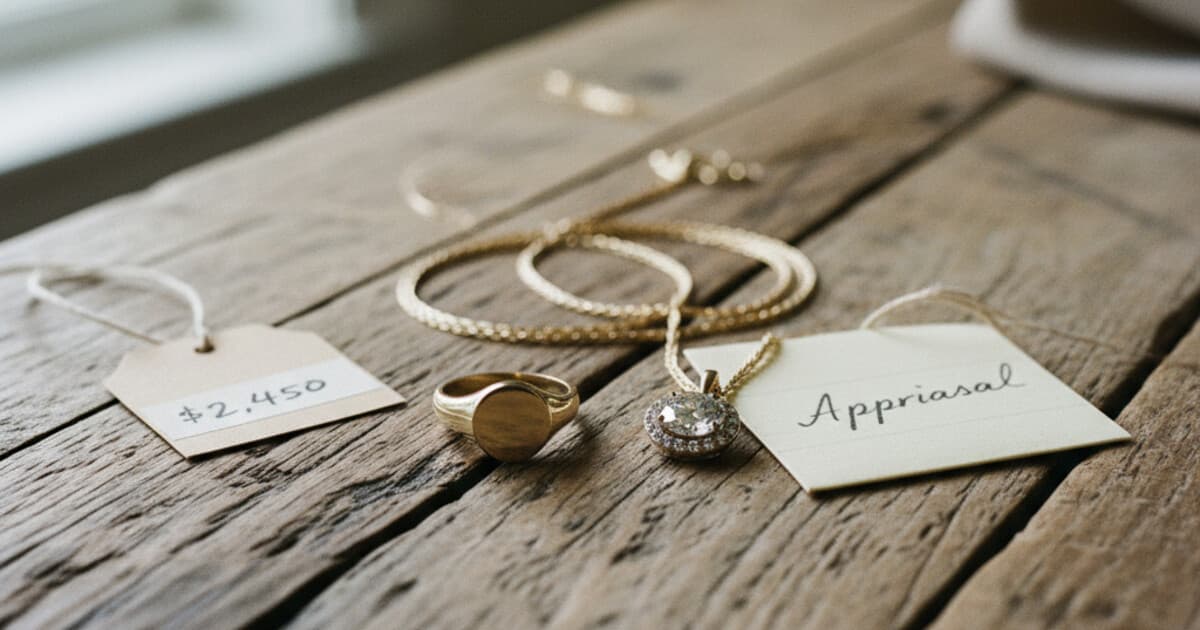
You paid $800 for that gold necklace a few years ago. The pawn shop just offered $150. If that sounds familiar, you're not being lowballed. That's just how jewelry resale works.
Jewelry resale value runs well below retail for most pieces. Understanding what drives it, and knowing which types hold up best, helps you set realistic expectations before you sell. It also means you won't walk away from money you could have captured with a bit of preparation.
This guide breaks down exactly what affects jewelry resale value, which pieces beat the typical range, and how to get the most out of whatever you're selling.
Jewelry resale value typically lands at 20-50% of retail price for most pieces. Fine jewelry with solid gold or platinum holds value through its metal content. Diamonds generally resell for 20-40% of purchase price unless they're GIA-certified and investment-grade. Fashion and costume jewelry has near-zero resale value regardless of what you originally paid.
Why Jewelry Loses Most of Its Value at Retail
A jewelry piece starts shedding resale value the moment it leaves the store. This isn't unique to jewelry, but the drop is steeper than most people expect.
When you buy retail, you're paying for the retailer's markup (often 100-300% above wholesale), labor, design, branding, and store overhead. A resale buyer strips all of that away and prices based on raw material value plus a modest premium for collectibility.
The metal spot price is the floor. A 14k gold ring weighing 5 grams contains about 2.9 grams of pure gold. With gold sitting around $4,000 per troy ounce in 2026, that's roughly $370 in metal content. A pawn shop will offer 50-70% of melt value, so around $185-$260, no matter what you paid at the counter.
Most jewelry resale value averages 20-50% of retail price because retail prices include manufacturer markup, retailer margin (often 100-300% above cost), labor, and branding. None of those factors transfer to resale. What buyers pay for is material worth plus market demand. Precious metals have a calculable floor: gold, silver, and platinum trade at spot prices that any buyer can reference directly. A 14k gold chain's minimum value is straightforward to calculate from its weight and current spot price, which sat around $4,000/oz in early 2026. Diamonds don't have a spot price index, so resale depends on certification status, stone quality, and buyer demand. That's why uncertified diamonds often sell for 20-30% of retail. Exceptions exist: Cartier, Tiffany, and Van Cleef pieces routinely sell at 60-100% or more of original retail at auction. For everyday jewelry without designer provenance, 20-50% of retail is the realistic range, and pawn shops typically land in the lower half of that.
The only pieces that consistently beat this math are signed vintage jewelry, investment-grade diamonds with GIA certificates, and estate pieces with genuine collector demand behind them.
The 5 Factors That Drive Resale Value
Whether your piece ends up at 20% of retail or 80% comes down to five things.
Metal type and purity. Gold, platinum, and silver have built-in commodity value. 18k gold holds more resale value than 10k because it contains more pure metal per gram. Gold-filled and gold-plated pieces have almost no metal value at resale. Sterling silver has some value, but the spot price gap between silver and gold means silver jewelry usually fetches far less.
Stone quality and certification. Diamonds with GIA grading certificates sell for significantly more than uncertified stones. Lab-grown diamonds resell 60-80% below natural diamonds of equivalent specs because supply is unlimited. Colored gemstones, including rubies, sapphires, and emeralds, can hold strong resale value if they're natural (not synthetic), visually clean, and over 1 carat. Below that threshold, most colored stones resell for very little.
Brand and designer provenance. A plain gold ring and a Cartier gold ring can have identical metal content. The Cartier sells for 3-5x more because collectors pay for the name. Tiffany, Van Cleef, Bulgari, Mikimoto, and David Yurman all carry real resale premiums. Generic jewelry carries none.
Condition. Scratches, missing stones, broken clasps, and worn prongs all cut resale value. Buyers factor in repair costs and subtract from the offer. A piece in excellent condition gets close to full material value. A damaged piece might get 40-60% of that.
Age and period. Victorian, Edwardian, Art Nouveau, and Art Deco pieces carry collector premiums when they're authentic and well-preserved. Mid-century estate jewelry from the 1940s through the 1970s has strong demand. Post-1980s fine jewelry mostly trades on material value alone unless it comes from a notable designer.
Jewelry Resale Value by Type
Different categories follow different patterns. Here's what to expect from the most common pieces.
Gold jewelry. Resale is closest to intrinsic value. A 14k or 18k piece in good condition will fetch 55-75% of melt value from a gold dealer, and more from a private buyer who actually appreciates the design. With gold above $4,000/oz, even modest pieces carry real metal value. Knowing how to sell gold jewelry helps you find buyers who pay above melt rate rather than just stripping your piece for scrap.
Diamond rings. Unless the center stone is GIA-certified, over 1 carat, and VS clarity or better, expect 20-35% of retail. A $5,000 diamond engagement ring from a chain store typically resells for $800-$1,500 on the private market. With a GIA certificate and a desirable stone, that range climbs to $1,500-$2,500. Diamond ring value goes deeper on what separates a sellable stone from one that barely covers its own listing fee.
Vintage and antique pieces. The ceiling is higher here. Authenticated Art Deco brooches, Georgian pieces, and Victorian mourning jewelry draw collector bids. A Georgian hair mourning brooch picked up for $200 at an estate sale can sell for $400-$600 to the right collector. The trick is finding that buyer, which usually means auction houses or specialty dealers rather than pawn shops.
Silver jewelry. Sterling silver has commodity value, but silver's spot price is a fraction of gold's, so payouts are modest. Most sterling jewelry resells for material value plus a small premium for condition. Exceptions: signed pieces from Georg Jensen or hallmarked Navajo silver jewelry can fetch 3-5x melt value from the right buyers.
Costume and fashion jewelry. For most pieces, resale value is close to zero from dealers. The exceptions: signed Bakelite from the 1930s-1940s, Miriam Haskell, Schiaparelli, and certain Monet or Napier pieces with collector followings. Without a known maker's mark, most vintage costume jewelry moves for $5-$20 at best.
How to Get More When You Sell
Where you sell matters almost as much as what you're selling.
Pawn shops pay the least. They need wide margins to flip for profit, and their offers on gold typically run 40-55% of melt value. On everything else, even less.
Gold dealers pay more for metal, usually 75-85% of spot. They don't care about design, though. If your piece has collector value beyond the metal, you'll lose that premium selling to a refiner.
Private buyers on eBay, Etsy, or Facebook Marketplace pay the most because they're buying to wear or collect, not to flip. The tradeoff is time. You might wait weeks or months for the right buyer. Where to sell jewelry breaks down each channel with realistic payout expectations and which pieces suit each option best.
Auction houses make sense for pieces over $1,000 retail, vintage signed pieces, and certified diamond jewelry. Sotheby's, Christie's, and Bonhams take 15-25% buyer's premiums, but seller's commission is usually 10-15%. For the right piece, auction nets more than any other channel.
Know your piece's actual value before you sit across from any buyer. How to determine jewelry value walks through the full appraisal process.
How Jewelry Identifier Helps You Know What You Have
Before you can negotiate a fair resale price, you need to know exactly what you're selling. That's harder than it sounds with inherited pieces or estate sale finds where no receipts or certificates exist.
Jewelry Identifier lets you take a photo of any piece and get an instant AI identification. It reads stamps and hallmarks (so you'll know the metal purity), identifies gemstones from the photo, and gives an estimated appraisal value. If you're at an estate sale or pawn shop and need a quick read on what something's worth, the app works offline.
For a full written appraisal with comparable sales data and a PDF export, the web tool at jewelryappraisals.app handles that from any browser. Your first appraisal is free.
Knowing what you have is what keeps you from underselling it.
Frequently Asked Questions
What percentage of retail value do you get when selling jewelry? Most jewelry sells for 20-50% of retail. Gold pieces with known purity can get 60-75% of melt value from dealers. Diamond rings typically sell for 25-40% of retail unless certified. Designer pieces from Cartier, Tiffany, or similar brands can approach or exceed original retail at auction.
Does old jewelry hold its value better? Age alone doesn't mean value. Jewelry needs to be from a recognized period (Victorian, Art Deco, etc.), in good condition, and ideally maker-signed to command a collector premium. Most pieces from the 1960s-1990s trade purely on material value.
Do diamonds hold their resale value? Generally, no. Most engagement ring diamonds lose 40-70% of purchase price at resale. GIA-certified stones, stones over 1 carat, and fancy-colored diamonds hold value better. Even so, the retail markup is steep enough that most sellers still see a significant loss.
Is it better to sell to a gold dealer or a pawn shop? Gold dealers typically pay more for metal content, around 75-85% of spot price, versus pawn shops at 40-55%. For pieces where the design doesn't add value (thin chains, plain bangles, broken jewelry), a gold dealer is the better choice. For pieces with collector value, seek private buyers or auction instead.
How do I find out what my jewelry is worth before selling? Start with a photo-based AI appraisal through Jewelry Identifier to get a baseline and identify your piece. For anything worth more than a few hundred dollars, follow up with a written appraisal from a GIA-certified gemologist before you negotiate.
Conclusion
Jewelry resale value is lower than most people expect, but it follows predictable patterns. Metal content, stone quality, designer provenance, condition, and where you sell all shape the final number. Walk into any negotiation knowing these factors and you'll be in a much stronger position.
If you want to know what your jewelry is actually worth before you sell, get your free jewelry appraisal at jewelryappraisals.app. You'll have an estimate in seconds, along with the information you need to decide whether to sell, hold, or find a better buyer.