 Jewelry Identifier
Larimar Gemstone: Color, Value, and Identification
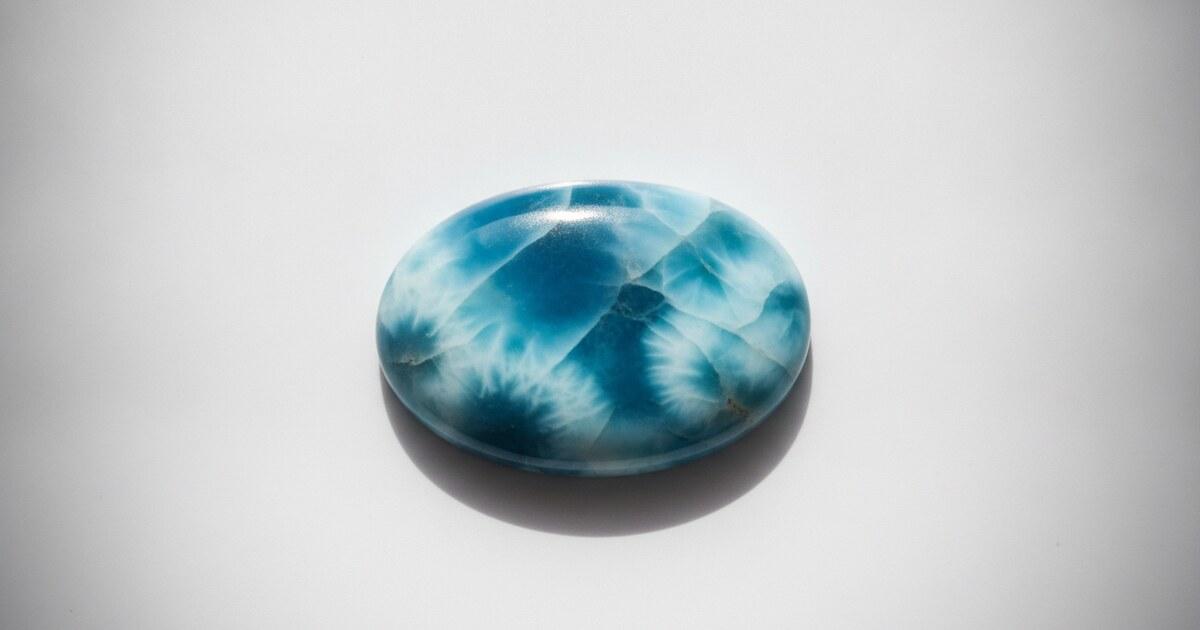
Larimar is found in one place on Earth. A single volcanic source in the Sierra de Baoruco mountains of the Dominican Republic produces all of it, every year, with no other commercially viable deposit discovered anywhere else on the planet. That singular origin, combined with its electric Caribbean-blue color, has made the larimar gemstone one of the most distinctive semi-precious stones in the market. Here's what you need to know about its geology, quality grades, pricing, and how to identify the real thing.
Larimar is a rare blue pectolite mineral found only in the Dominican Republic. Its color ranges from pale sky blue to deep "volcano blue," the most valuable grade. Cabochons start at $3–$20 per carat; top volcano-blue pieces reach $50–$150+. Real Larimar stays cold in your hand and shows organic swirling blue-and-white patterns that dyed fakes can't replicate.
What Makes Larimar Rare
Larimar is a blue variety of pectolite (NaCa₂Si₃O₈OH), a calcium sodium silicate formed when volcanic gases penetrate basalt through fissures in the earth. The color comes from trace copper substituting for calcium in the crystal structure, a geological combination found in only one place on Earth: the Los Chupaderos mine in Sierra de Baoruco, Barahona Province, Dominican Republic.
Local residents knew of the blue stones as early as 1916, but commercial exploitation didn't begin until Dominican artisan Miguel Méndez and Peace Corps volunteer Norman Rilling rediscovered the deposit in 1974 and started bringing it to market. Méndez coined the name "Larimar" by combining his daughter Larissa's name with "mar," Spanish for sea. Mining started in 1975 and has continued from that single source ever since.
The stone's physical properties: Mohs hardness 4.5–5, specific gravity 2.62–2.90, refractive index approximately 1.60. No other commercial deposit has been found anywhere on Earth, though non-gem pectolite is common worldwide in its white form.
Being pectolite makes Larimar brittle and acid-sensitive. Most stones are cut as cabochons rather than faceted gems, since the relatively soft surface scratches more easily than stones like sapphire (Mohs 9) or even amethyst (Mohs 7). For a full hardness comparison across popular jewelry stones, the semi-precious gemstones guide covers the range from soft to hard with practical wearability notes.
Larimar Colors and Quality Tiers
Color is the primary value driver. The industry uses four informal grades, though there's no standardized grading system the way GIA grades diamonds.
Volcano Blue is the rarest grade: deep, saturated blue with minimal white veining. Prices for top specimens run $50–$150+ per carat for loose stones. Finished designer pieces can exceed $200 per carat. The stone's Spanish nickname, "piedra del amor" (stone of love), typically refers to this grade.
Ocean Blue sits in the middle: medium blue with moderate white clouding and visible natural patterning. Most jewelry-grade Larimar falls here. Loose stone prices range from $20–$80 per carat.
Sky Blue is lighter, with more white patterning and greater cloudiness. Common in mass-market jewelry. Prices: $10–$30 per carat.
White/Light grade shows minimal blue coloring, mostly white or greenish. Lowest value. Cabochons typically run $3–$10 per carat.
Pattern matters alongside color. The "turtleback" pattern (concentric oval shapes resembling sea turtle shell) commands a premium over uniform coloring. Radiating "wave" or "cloud" patterns score similarly. A sky-blue stone with strong turtleback patterning can outprice a washed-out ocean-blue stone with no defined pattern.
Faceted Larimar (cut with flat angled facets rather than a rounded cabochon top) is rare and typically fetches $20–$30 per carat. The cutting reveals more of the stone's internal character but requires skilled work to protect the soft surface during the process.
How to Tell If Larimar Is Real
The PAA question "How to tell if it's real Larimar?" gets searched constantly. Dyed howlite and blue-dyed agate are the most common substitutes, since both are soft, blue-patterned stones that look convincing in photos.
Four tests that work at home:
Temperature test. Real Larimar stays cold in your hand because stone conducts heat away from your skin. Hold the piece for 30 seconds. If it reaches body temperature quickly, it's likely plastic or resin. Glass (also used as a fake) stays cool longer but eventually warms in a closed fist.
Pattern inspection. Genuine Larimar has organic, varied blue-and-white swirls that look like Caribbean water from above. The white areas have an irregular, almost marbled quality. Dyed stones tend to show uniform color, painted-looking patterns, or white areas that are too perfectly distributed.
Weight check. Larimar's specific gravity is 2.62–2.90, slightly heavier than glass (SG ~2.5). Resin and plastic fakes feel noticeably lighter for their size. If a large pendant feels almost weightless, skip it.
Scratch test (last resort). A steel nail (Mohs ~6.5) scratches Larimar easily. This confirms you have a soft stone rather than glass or harder synthetic material. It's destructive, so only use it on a spot hidden by the setting. The gemstone identification guide covers loupe inspection and other non-destructive techniques that work for most semi-precious stones.
The best purchase protection: buy from sellers who can document the stone's country of origin and mine source, or who include a certificate from a recognized gemological lab. Country-of-origin documentation (Dominican Republic) is a strong signal since no other legitimate commercial source exists.
What Larimar Is Worth
Larimar holds real market value, but it doesn't appreciate the way diamonds or rubies from limited mines do. The Los Chupaderos mine continues producing, so prices stay relatively stable year to year.
A finished ocean-blue silver pendant with a 5-carat center stone typically retails $80–$300 depending on setting quality. Volcano-blue pieces 10 carats or larger can reach $1,500–$3,000 as loose stones. Signed or designer Larimar jewelry adds a secondary-market premium over raw stone value, though the collector market for Larimar is niche compared to ruby or sapphire.
For sellers, Larimar jewelry typically returns 40–60% of original retail on resale. The stone's condition matters more than with harder gems, since surface scratching is common and hard to reverse without professional polishing.
How to Care for Larimar
Mohs 4.5–5 makes Larimar softer than most jewelry stones. A dinner knife scratches it. Quartz (Mohs 7) scratches it. Daily-wear rings are genuinely risky unless the setting protects the stone well, which is why bezel settings (metal wrapped around the stone's perimeter) are strongly preferred over prong settings for Larimar rings.
What to avoid:
- Ultrasonic and steam cleaners (vibration can fracture soft stones)
- Acids of any kind, including perfume, hand sanitizer, citrus, and household cleaners
- Storing alongside harder stones like diamonds, sapphires, or even amethyst (Mohs 7)
How to clean: warm water, mild dish soap, soft cloth or baby toothbrush. Rinse well, pat dry. Keep Larimar away from chlorine pools and saltwater. The peridot gemstone guide covers similar soft-stone care considerations if you own both; peridot's Mohs 6.5–7 means slightly more durability, but many of the same cautions apply.
Best jewelry uses: pendants, earrings, and brooches where impact risk is low. For rings, choose thick bezel settings and remove them before manual work, cleaning, or exercise.
Identifying Your Larimar Jewelry
If you've inherited or purchased Larimar jewelry and aren't sure of its quality or value, Jewelry Identifier's AI tool can analyze a photo of your piece, identify the gemstone, check for silver stamps (925 is standard for Larimar settings), and give you an estimated value in seconds.
Your first appraisal is free. Try it at Jewelry Identifier.
Frequently Asked Questions
Are Larimar stones valuable? Good-quality Larimar is genuinely valuable, though not in the investment-grade category of rare rubies or unheated Kashmir sapphires. Ocean-blue cabochons (the most common jewelry grade) run $20–$80 per carat. Volcano blue, the deepest and rarest color, reaches $50–$150+ per carat. A finished 5-carat pendant typically retails $80–$300. Prices have stayed relatively stable since commercial mining began in 1975, since the Los Chupaderos mine continues to produce.
How do you tell if Larimar is real? The two most reliable home tests are the temperature test (real Larimar stays cold in your hand; plastic warms quickly) and pattern inspection (genuine stones show organic, varied swirling blue-and-white patterns; dyed howlite or agate tends to look uniform or painted). Weight is the third check: Larimar is slightly heavier than glass or resin fakes for the same size. A steel nail will scratch real Larimar since its Mohs hardness is only 4.5–5.
What is the rarest color of Larimar? Deep "volcano blue," an intense saturated blue with minimal white veining, is the rarest and most valuable grade. It represents a small fraction of total production from the Los Chupaderos mine and commands a significant premium over ocean-blue and sky-blue pieces. Some sellers call top specimens "Stefilia's Stone," the original name proposed before Méndez renamed the material Larimar in 1974.
What is the significance of Larimar stone? Larimar is the Dominican Republic's national gemstone and the only gem-quality mineral produced there in commercial quantities. Its Spanish nickname "piedra del amor" (stone of love) reflects regional lore dating to its rediscovery in 1974. In crystal healing traditions, it's associated with the throat chakra and attributed with calming properties. That combination of geographic exclusivity, Caribbean imagery, and spiritual associations drives steady collector demand beyond pure aesthetics.
Is Larimar good for everyday wear? With a Mohs hardness of 4.5–5, Larimar scratches easily and isn't ideal for daily-wear rings. It works well in pendants, earrings, and brooches where impact is rare. If you wear Larimar rings, choose protective bezel settings, remove them before manual work or exercise, and store them separately from harder stones. Treat it like a soft stone, not a workhorse gem.
Ready to find out what your Larimar piece is worth? Get your first free appraisal at Jewelry Identifier. Upload a photo of your jewelry and get an estimated value based on stone type, metal content, and comparable sales data.