 Jewelry Identifier
Sapphire Price Per Carat: Tiers, Origins & 2026 Values
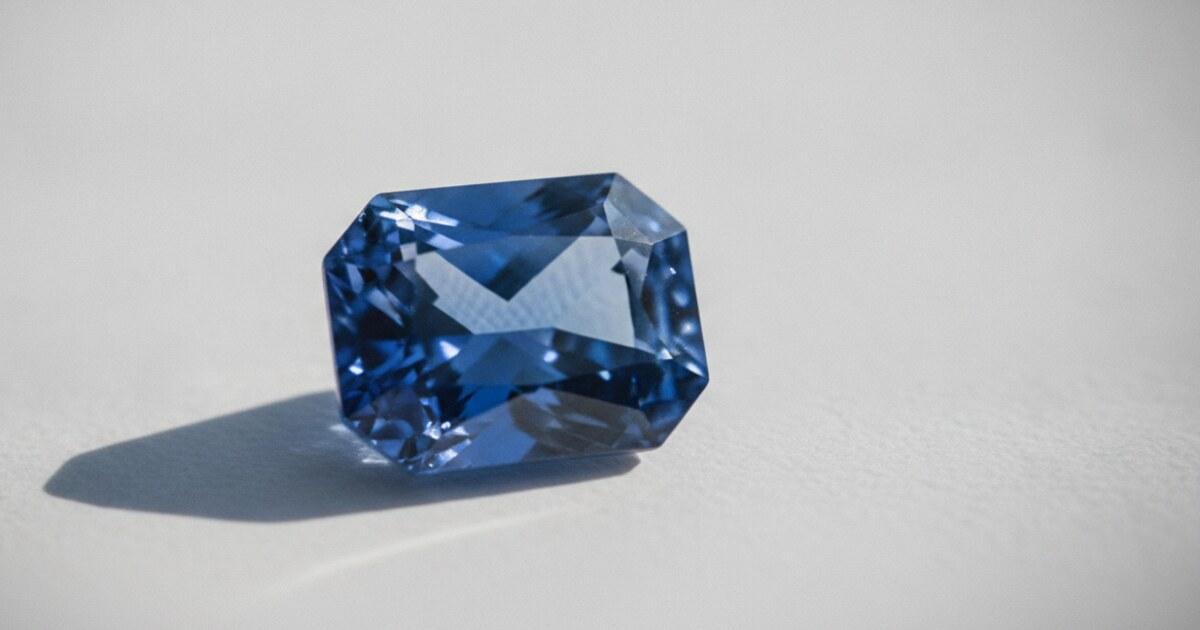
Sapphires have one of the widest price spreads of any gemstone. A blue sapphire can cost $50 per carat or $50,000 per carat, and both prices are legitimate; the difference comes down to a handful of factors that most sellers and buyers don't know to ask about. If you've got a sapphire and you're trying to figure out what it's worth, or you're buying one and want to know if the price is fair, this guide breaks down sapphire price per carat and what actually drives the difference.
Sapphire price per carat ranges from under $50 for commercial-grade heated stones to $200,000+ for top-quality unheated Kashmir sapphires over 5 carats. A fine 1-carat blue sapphire typically falls between $500 and $3,000. The main value drivers are color (roughly 50% of the total price), origin, treatment status, carat weight, clarity, and cut quality.
What Drives Sapphire Price Per Carat
Six factors determine where any sapphire lands on that enormous price range, and understanding them is the difference between paying fair market value and overpaying significantly.
Color does the heaviest lifting. Hue, tone, and saturation each play a role, but the most commercially valuable shade is a medium-dark, vivid blue (described in the trade as "royal blue" or "cornflower blue"). Stones that are too dark (inky, absorbing all light) or too pale lose value quickly. Color alone accounts for roughly 50% of a sapphire's price.
Origin functions as a multiplier applied on top of everything else. Sapphires from Kashmir, Burma, and Ceylon (Sri Lanka) command premiums not just for beauty but for certified rarity. Kashmir's mines in the Padar district of India's Zanskar range, at roughly 5,500 meters altitude, operated during a narrow window from 1881 to 1887, and modern output is negligible. A GIA- or GRS-certified Kashmir sapphire commands a 5-to-20x premium over a visually identical stone from Madagascar or Thailand; fine 1-carat Kashmir material trades at $10,000 to $50,000 per carat, while exceptional pieces above 3 carats have set auction records above $100,000 per carat. Burma's Mogok Valley produces sapphires with intense velvety blue color at $3,000 to $8,000 per carat for fine 1-carat stones. Ceylon sapphires from the Ratnapura district in Sri Lanka offer consistent quality at $800 to $3,000 per carat for fine unheated 1-carat material, representing the largest share of fine-grade supply worldwide. Madagascar and Montana's Yogo Gulch provide accessible price points under $500 per carat for most sizes.
Treatment status creates one of the sharpest divides in gemstone pricing. Heat treatment improves color and clarity in roughly 95% of commercial sapphires sold today. The process is legal, stable, and industry-standard: it improves color and clarity in stones that would otherwise be too pale or too included to sell. An unheated stone with identical visual quality commands a 2-to-5x premium over its heated counterpart, certified by a lab report from GIA, GRS, or Gübelin that confirms no heat evidence. For top-quality stones above 2 carats, that gap widens further.
Carat weight scales non-linearly. Price per carat jumps at the 1ct, 2ct, and 3ct thresholds, because supply narrows dramatically. A 2-carat fine sapphire costs significantly more per carat than two 1-carat stones of equivalent quality.
Clarity matters, but less than in diamonds. Eye-clean sapphires (no inclusions visible to the naked eye) are the standard. Needle-like rutile inclusions ("silk") are accepted and can even signal natural origin.
Cut quality affects the stone's ability to show color. Well-cut sapphires are oriented to display the strongest blue face-up. Poor cutting, done to preserve weight, visually darkens the stone.
Sapphire Quality Tiers and Price Ranges
The market segments naturally into three tiers, each with a wide spread depending on the factors above.
Commercial grade covers heated stones with acceptable color but no exceptional qualities. These are the stones you'll find in most jewelry store settings and online retailers. Per-carat prices: $50 to $500 for smaller stones (under 1 carat), scaling up to $1,000 to $5,000 per carat for commercial-grade stones between 2 and 5 carats. Blue sapphire starter rings often use commercial-grade stones in the $200-$600 total price range.
Fine grade means well-saturated blue color, eye-clean clarity, good cut, and usually a standard heat treatment. This is the range collectors and serious buyers target for statement pieces. Per-carat prices: $500 to $5,000 for 1-carat stones, $1,500 to $15,000 per carat for 2-to-3-carat stones. A fine 1-carat heated Ceylon blue sapphire with a GIA report typically sells for $800 to $2,500.
Top grade means exceptional color saturation, unheated status, certified fine origin, and large carat weight. This category includes Kashmir stones and the best Burmese and Ceylon material. Per-carat prices start around $3,000 for a 1-carat unheated Ceylon and reach $10,000 to $30,000 per carat for 3-to-5-carat top Burma material. Kashmir sapphires over 3 carats with strong certification routinely sell at auction for $20,000 to $200,000+ per carat.
Origin Premiums: Why Provenance Changes Everything
Of all sapphire origins, Kashmir stands alone as a category by itself. The mines produced for less than a decade in the 1880s, and surviving rough from that era is essentially the entire Kashmir supply the world will ever see. A 2-carat Kashmir sapphire with an unheated GRS report can trade at 10 to 15 times the price of a similar-looking Ceylon stone. Christie's and Sotheby's regularly see Kashmir sapphires set $50,000-per-carat records.
Burma (Mogok) sapphires sit in second place. The velvety quality of Burmese blue sapphires comes from fine silk inclusions that scatter light differently than heat-treated stones. Certified Burmese sapphires run 2-to-6x over Thailand and Madagascar equivalents.
Ceylon (Sri Lanka) is the workhorse of the fine sapphire market. The Ratnapura district produces consistently beautiful stones in a broad color range, including the famous "cornflower blue" associated with the late Princess Diana's engagement ring (now Kate Middleton's). Ceylon commands a modest 20-to-50% premium over Madagascar material but substantially less than Burma or Kashmir.
Madagascar emerged in the 1990s as a major source and now supplies a significant share of the market. Prices are accessible, and the quality range is wide.
Montana's Yogo Gulch produces distinctively small, pale blue sapphires prized by collectors of American stones. They're typically under $1,000 per carat but carry a "made in America" premium with domestic buyers.
Heated vs Unheated: The Treatment Gap
Roughly 95% of sapphires on the market have been heat-treated. A reputable jeweler will disclose treatment status; a lab report makes it verifiable.
For buyers who want untreated stones, the premium is real and growing. An unheated 1-carat fine blue sapphire with a GIA no-heat certificate trades at $1,500 to $5,000, while a heated equivalent in the same visual quality range sells for $500 to $1,500. For 3-carat stones, the gap often exceeds 4x.
Fracture-filling and beryllium diffusion treatment are more controversial and must also be disclosed. These treatments are considered less stable and can significantly devalue a stone if discovered later.
Color Varieties and Their Price Ranges
Sapphire comes in every color except red (which is ruby, the same mineral). Each variety has its own pricing dynamics.
Blue sapphire is the benchmark. Prices follow the tiers above.
Padparadscha sapphire is the rarest and most valuable non-blue variety. The name comes from the Sinhalese word for lotus blossom, and the color is a precise pinkish-orange or orangey-pink (not too red, not too yellow). Certified padparadscha from Ceylon sells for $5,000 to $30,000+ per carat depending on how well it hits the ideal hue. Defining the color is contentious even among gemologists; GRS certification matters significantly here.
Pink sapphire prices range from $200 to $3,000+ per carat for fine unheated material. The line between pink sapphire and ruby is debated (GIA uses color saturation as the determining factor), and the most saturated pink stones are priced accordingly.
Yellow sapphire is popular in South Asian jewelry markets and increasingly in Western engagement rings. Per-carat prices: $100 to $500 for commercial grade, $500 to $2,000+ for fine unheated material. Ceylon yellow sapphires with strong golden color sit at the top of the range.
Star sapphires command a premium when the asterism (the six-rayed star caused by oriented rutile needles) is sharp, centered, and vivid. Fine star sapphires from Burma trade for $1,000 to $10,000+ per carat. The Black Star of Queensland is the largest at 733 carats, but most commercial star sapphires are under 10 carats.
Lab-Created Sapphires: Price vs Natural
Lab-created sapphires are chemically identical to natural ones (Al₂O₃ with trace chromium or iron for color). They're produced via the Verneuil flame fusion process (since 1902) or more recently via the hydrothermal method. For a broader look at how to tell natural gemstones from synthetics, see our gemstone identification guide.
Prices are dramatically lower: $20 to $150 per carat for lab-created blue sapphires, regardless of size. A 2-carat lab sapphire might cost $40 total; a 2-carat fine natural Ceylon would start at $1,600 to $4,000.
The value difference is entirely about rarity and origin, not visual quality. Some lab stones look better than many natural stones. For jewelry you'll wear daily, lab sapphires are durable (Mohs 9, same as natural). For investment or heirloom value, only natural stones hold long-term worth.
The Seller's Perspective: What You'll Actually Get
If you're selling a sapphire, expect to receive considerably less than retail. The gap between retail price and resale value is wide for colored gemstones.
Pawn shops typically pay 40-to-60% of a stone's wholesale value, which is itself 40-to-60% of retail. That means a sapphire that retails for $2,000 might net $400 to $700 at a pawn shop. Online platforms like eBay bring better returns for well-documented stones with lab reports, but selling takes time and knowledge.
Estate jewelers and auction houses are the best route for fine sapphires with provenance or lab certification. Christie's and Sotheby's take fine colored stones regularly, and their buyer pools include international collectors who pay top dollar for exceptional material. Auction house commissions typically run 15-to-25% of hammer price. For a full breakdown of which selling venue pays the best payout for different jewelry types, see our guide on where to sell jewelry.
For stones without lab reports, getting one before selling is usually worth the $100-to-$200 cost. A GIA or GRS report confirming natural, unheated status can increase realized price by 2 to 4 times for fine material. The Jewelry Identifier app can help you assess a sapphire's visual quality and estimated value range before you commit to a formal appraisal.
Frequently Asked Questions
How much does a 1-carat sapphire cost?
A 1-carat blue sapphire ranges from $50 to $10,000+ depending on quality. Commercial-grade heated stones sell for $50 to $500. Fine heated Ceylon stones run $500 to $3,000. Top-quality unheated stones with strong origin certification start around $1,500 and reach $10,000 or more for exceptional color. Without a lab report specifying treatment and origin, it's difficult to price accurately above the commercial tier.
What color of sapphire is most expensive?
Kashmir blue sapphires are the most valuable by origin, and padparadscha is the rarest by color variety. Within blue sapphires, the most expensive color is a vivid, medium-dark blue with strong saturation (described as "royal blue" or "cornflower blue") (not so dark it appears black, and not pale). A padparadscha sapphire with ideal pinkish-orange color can exceed the per-carat price of a comparable blue sapphire, especially with Ceylon origin certification.
How much does a 3-carat sapphire cost?
A fine-quality 3-carat blue sapphire ranges from $3,000 to $30,000, depending on treatment status and origin. Heated Ceylon material in good color runs $1,500 to $4,000 per carat at the 3-carat size. An unheated 3-carat Burma sapphire starts around $5,000 per carat and can reach $20,000+ per carat for exceptional pieces. The price-per-carat jumps at the 3-carat threshold because clean, well-colored rough of that size is significantly rarer.
How much is a 1-carat sapphire ring worth?
A 1-carat sapphire ring spans $200 to $15,000+. The sapphire itself might be $100 to $5,000 depending on quality, plus the setting metal (sterling, 14K gold, 18K gold, platinum) adds $100 to $3,000+. Many commercial blue sapphire rings sold online in the $300 to $800 range use heated stones under 1 carat or small stones in cluster designs. If the ring is estate or vintage, have both the stone and the metal appraised separately.
Are sapphires a good investment?
Fine unheated sapphires from Kashmir, Burma, and Ceylon have appreciated consistently over the past 20 years, with Kashmir stones seeing the strongest gains due to fixed supply. Commercial-grade and treated stones don't hold investment value the same way. If you're buying for investment, you need a GIA or GRS lab report confirming no heat treatment, strong origin, and ideally a size above 2 carats where supply tightens considerably. Consult a certified gemologist before treating sapphires as a financial asset.
Sapphires are one piece of a broader colored-stone picture. For comparison, see how pricing works for ruby price per carat and emerald price per carat.
If you have a sapphire and want to know what it's actually worth, get your free jewelry appraisal at Jewelry Identifier. The AI reads your photo, identifies the stone, and gives you an estimated value range in seconds; your first appraisal is free.