 Jewelry Identifier
How to Sell a Diamond Ring: Where to Go and What to Get
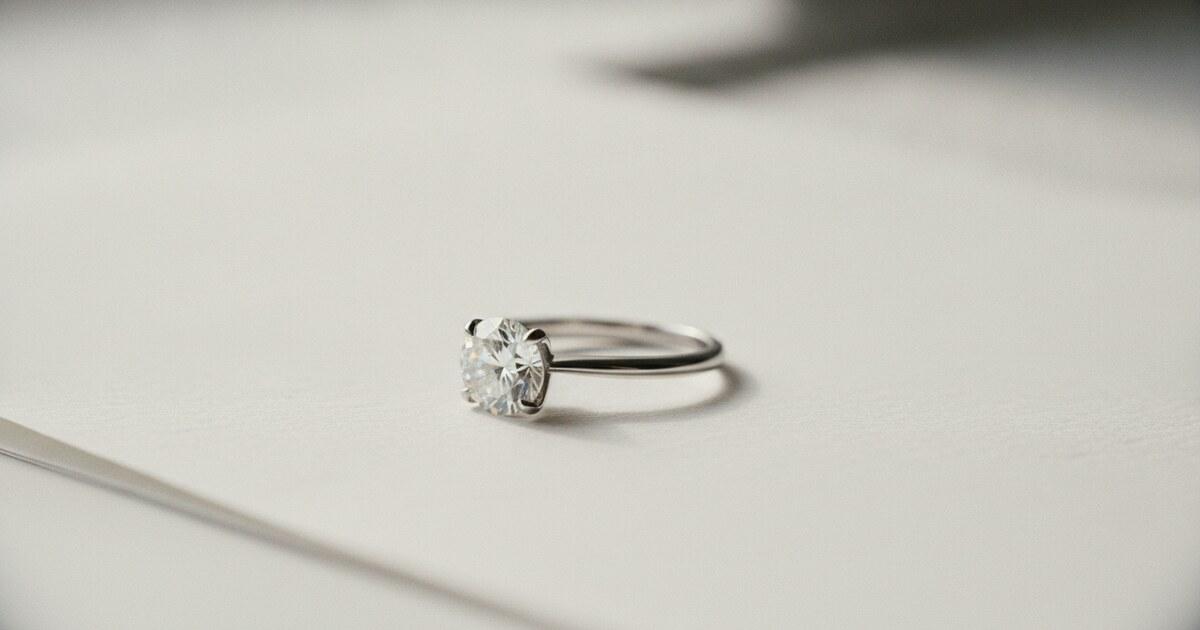
Most people expect to sell a diamond ring and get a decent chunk of their money back. That usually doesn't happen. Diamonds lose 20-50% of their retail value the moment they leave the store, sometimes more. The good news is that knowing this upfront changes your approach entirely. You can sell a diamond ring and still get a fair price, as long as you understand what drives value, compare the right buyers, and avoid a few common mistakes. This guide covers all of it: what your ring is worth, where to sell it, and what the process looks like from start to finish.
To sell a diamond ring, get a value estimate first, then compare offers from at least 3 buyer types: an online diamond reseller (Worthy, myGemma), a local estate jeweler, and a direct-sale platform like eBay. Diamond rings typically resell at 20-50% of retail. GIA-certified stones in 1-carat or larger sizes earn the best offers.
What Determines the Value of a Diamond Ring
Before approaching any buyer, you need to understand what your ring is actually worth. The value comes from two separate components: the diamond itself and the metal setting. Buyers evaluate them independently and combine the numbers at the end.
The diamond's price is shaped by the 4 Cs: carat (weight), cut (how well the stone reflects light), color (graded D through Z, colorless to light yellow), and clarity (number of inclusions visible under 10x magnification). Of the four, cut has the biggest impact on resale. A well-cut stone in modest color and clarity grades will almost always outperform a poorly cut stone with better grades on paper.
A GIA or AGS laboratory report adds 10-15% to resale value. It removes uncertainty about the grades, which lets buyers skip the cost of an independent assessment. Without a certificate, buyers build that cost into a lower offer.
Diamond resale prices in 2026 reflect both the stone's grades and the buyer market you're selling into. For a certified round brilliant, retail runs $4,500 to $8,000 for a 1-carat stone graded G-H color, VS2-SI1 clarity. At resale, the same stone fetches $1,500 to $3,000 depending on the buyer. A 0.5-carat stone retails for $1,200 to $2,000 and resells for $300 to $700. The 1-carat mark matters: stones below 1 carat see steeper resale discounts because wholesale buyers face thinner demand for them. Fancy shapes (princess, cushion, oval) can resell 10-25% below comparable rounds because buyers price them harder without a GIA report. Lab-grown diamonds, now roughly 40-50% of new engagement ring sales, have almost no secondary market. Expect 10-20% of retail if you find a buyer at all. The metal portion is separate: 14K gold at $4,100 per ounce provides about $75 per gram in melt value, so a typical 4-gram gold setting contributes roughly $300 toward the total offer.
The setting metal adds separately to the offer. At roughly $4,100 per ounce for gold, a 5-gram 14K setting is worth about $385 in melt value. Platinum runs heavier and carries its own spot price. Most buyers focus their primary number on the diamond and treat the metal as a secondary addition.
Why Diamond Rings Lose Value at Resale
The retail price of a diamond ring covers far more than the stone. Jewelry store margins average 40-60%. Sales staff, store rent, marketing, and brand positioning are all folded in. None of those costs transfer to a private buyer or a wholesale reseller.
The diamond itself, at wholesale, was probably 25-40% of what you paid at the counter. Add back the 10-18% commission a resale platform charges, and the math closes fast on what a good offer actually looks like.
Lab-grown diamonds face an even steeper drop. After lab-grown prices fell 60-70% between 2022 and 2025, secondhand buyers for lab stones dried up almost entirely. Most resellers won't quote them at meaningful prices. If you have a lab-grown stone, your best channel is likely a private sale on eBay, where a buyer can still get the look at a fraction of the cost of a natural diamond.
Certifications help but don't close the gap. A GIA report shifts buyers from skeptical to willing, and that moves the offer up. But their wholesale math doesn't change, so the ceiling on what they'll pay stays anchored to what they can resell it for.
Where to Sell a Diamond Ring
Different buyers have different priorities. Picking the right one for your situation can mean thousands of dollars in difference. Here's how the main options compare.
Online diamond resellers
Platforms built for diamond ring resale, like Worthy, myGemma, and I Do Now I Don't, give the best payouts for certified stones 1 carat and above. Worthy auctions your ring to vetted wholesale buyers; myGemma and similar platforms provide upfront quotes. Payouts for a GIA-certified 1-carat round in solid grades typically land at 50-70% of retail, minus the platform's commission (which varies; check their site for current rates before committing). The process runs 7-21 days from submission to payment.
eBay and direct-sale platforms
For rings under $2,000 retail, smaller diamonds, or stones without GIA paperwork, direct sale often beats specialized resellers. eBay's "Sold Listings" filter shows real recent prices for comparable rings. You keep the full amount with no commission, but you handle photography, shipping, and buyer questions yourself. Facebook Marketplace and Poshmark work well for lower-end or fashion rings where local buyers are a better fit than wholesale.
Local jewelers and estate dealers
A local jeweler buying outright will offer 30-50% of wholesale value because they need margin to resell. The tradeoff is simplicity: fast, cash, no shipping risk. Consignment with a reputable estate jeweler can return 50-60% of the final sale price, but inventory moves slowly and you won't see payment for weeks or months.
Pawn shops
Pawn shops pay 20-35% of retail. They need wide margins to cover unsold inventory risk. They're the fastest option by far, with payment on the spot, which is exactly why they offer less. For detail on how pawn shops calculate their numbers, the pawn shop gold guide walks through the math.
Auction houses
Major auction houses (Sotheby's, Christie's, Bonham's) are worth contacting only for stones above 2 carats, pieces from signed makers like Cartier, Tiffany, or Van Cleef, or rings with documented provenance. Commission runs 15-25% of the hammer price. For a standard engagement ring, the added time and fees rarely improve the net result over a diamond reseller.
For a broader comparison of all selling options across jewelry types, the where to sell jewelry guide covers payout comparisons by buyer category.
How to Sell a Diamond Ring: Step by Step
Step 1: Find your documentation. Look for the original GIA or AGS certificate. If you don't have one, budget $75-$150 to regraded the stone, especially for anything 1 carat or larger where the grade affects the offer by hundreds or thousands.
Step 2: Get a baseline value. Use the free eBay Price Checker at jewelryappraisals.app to see what comparable rings have actually sold for recently. This gives you a floor before you approach any buyer.
Step 3: Get at least 3 quotes. Contact an online reseller, visit a local estate jeweler, and check eBay Sold Listings for a direct-sale comparison. The spread between offers is often wider than expected. Don't take the first number.
Step 4: Compare net payouts, not gross. A $3,000 platform sale at 15% commission nets $2,550. A local jeweler's offer of $2,400 nets $2,400 today. The best gross price isn't always the best net.
Step 5: Ship safely. Use insured, registered mail or a prepaid shipping kit if the reseller provides one. Photograph the ring from multiple angles before it leaves your hands and save the tracking number.
Step 6: Accept payment. Most online platforms pay within 3-5 business days by check or wire transfer. Local buyers typically pay on the spot.
Realistic Sale Prices by Ring Type
Here's a quick reference based on 2026 market data:
| Ring type | Retail price | Realistic resale range | |---|---|---| | 0.25ct round, 14K, no cert | $500-$900 | $80-$220 | | 0.5ct GIA G/VS2 round, 14K | $1,500-$2,500 | $400-$850 | | 1ct GIA H/SI1 round, 14K | $4,000-$7,000 | $1,200-$2,800 | | 1ct GIA D/VVS1 round, platinum | $10,000-$18,000 | $3,000-$7,000 | | 1.5ct GIA fancy shape, 14K | $5,000-$9,000 | $1,500-$3,500 | | Lab-grown 1ct, GIA | $1,500-$3,000 | $150-$500 |
For a detailed breakdown of how carat weight and grades affect diamond pricing, see the diamond price per carat guide. The price ranges above assume the stone is in good condition and the seller has identified the grades before approaching buyers.
Frequently Asked Questions
Can you sell a diamond ring?
Yes. Diamond rings sell through pawn shops, local jewelers, online resellers like Worthy and myGemma, and direct-sale platforms like eBay. The venue determines how much you'll get. Online diamond resellers typically pay the most (50-70% of retail for certified stones); pawn shops pay the least (20-35%). Most sales close within days to a few weeks depending on the channel.
How much is a 14K diamond ring worth to sell?
The resale value splits into two parts: gold and diamond, valued separately. At current prices (roughly $4,100 per ounce for gold), 5 grams of 14K gold is worth about $385 in melt value. The diamond's value depends on carat, cut, color, and clarity. A certified 1-carat H/VS2 round might resell for $1,500 to $3,000 depending on the buyer type.
How much is a 0.25-carat diamond worth?
A 0.25-carat diamond retails for roughly $400 to $800. At resale, expect $80 to $250 depending on cut, color, and clarity. A GIA certificate helps at any size, but most buyers at 0.25 carat price on weight alone. eBay or an online reseller usually yields more than a pawn shop for small stones.
Where is the best place to sell a diamond ring online?
Worthy and I Do Now I Don't specialize in diamond ring resale and typically return 50-70% of retail for GIA-certified stones. eBay works better for smaller or non-certified diamonds where you set your own price and keep the full amount. For fashion rings or stones under 0.5 carat, Facebook Marketplace can be faster.
How long does it take to sell a diamond ring?
Online diamond resellers typically close in 7-14 days. Consignment with a jeweler takes weeks to months depending on buyer demand. Selling on eBay yourself ranges from a few days to several weeks. Pawn shops pay instantly, which explains why their offers are lower.
Before you take your ring anywhere, get a free value estimate at Jewelry Identifier. Your first appraisal is free, and knowing your number before you walk into any buyer's shop is the simplest way to sell a diamond ring on your terms.