 Jewelry Identifier
Alexandrite Gemstone: Color, Value, and Identification
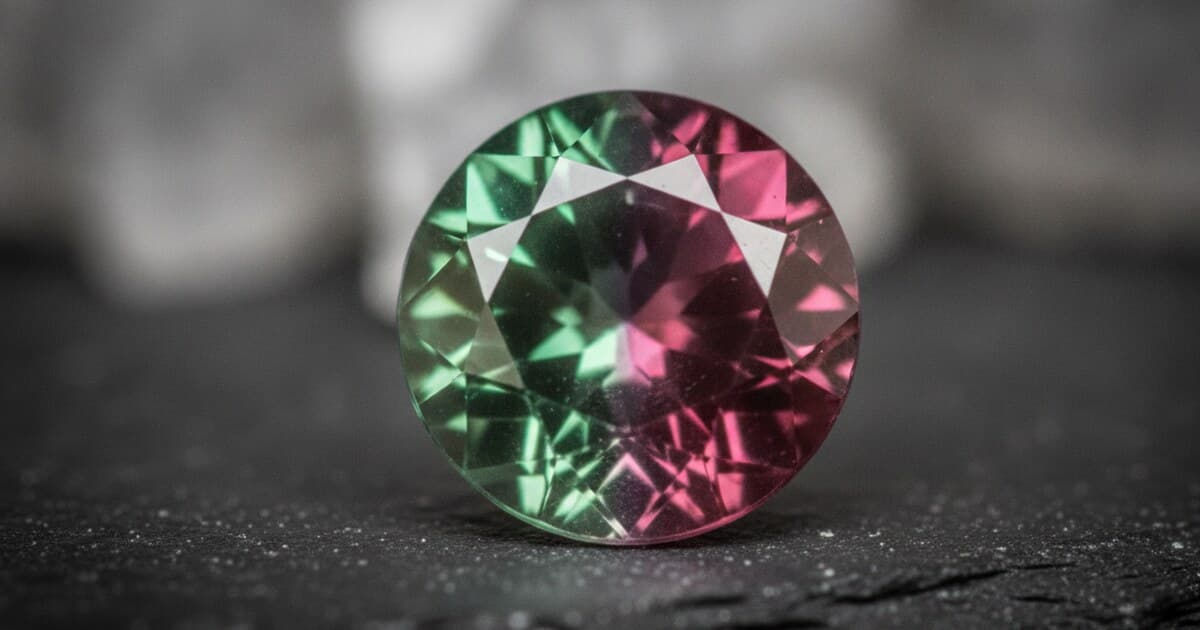
Finding an alexandrite gemstone in an estate sale box or an old piece of family jewelry is genuinely exciting. Under daylight, it glows a cool bluish-green. Hold it under a lamp, and it shifts to a deep raspberry red. That color change isn't a trick of the eye. It's chemistry, and it's one of the rarest phenomena in the gem world. Alexandrite is expensive, scarce, and widely imitated. Most pieces labeled "alexandrite" in vintage jewelry are synthetic stones or simulants with no connection to the real mineral. Knowing what sets the genuine article apart, where it comes from, and what drives its value helps you assess any piece you encounter.
Alexandrite is a chrysoberyl variety that changes color depending on the light source. Under daylight or fluorescent light, it appears green to blue-green. Under incandescent light, it shifts to red or purplish-red. This is caused by chromium in the crystal structure. Fine natural alexandrite ranks among the rarest gemstones in the world, with top stones fetching more per carat than fine rubies and sapphires.
What Causes the Color Change
Alexandrite belongs to the chrysoberyl mineral family. Its chemical formula is BeAl₂O₄. What separates it from ordinary chrysoberyl is chromium. Small amounts of chromium replace aluminum in the crystal lattice, and chromium absorbs wavelengths in both the green-yellow and deep red parts of the light spectrum.
Sunlight and fluorescent light are rich in blue-green wavelengths, so your eye reads the stone as green. Incandescent light tilts toward red, and the stone reads red. The crystal doesn't change. The light does.
That elegance is why jewelers have described alexandrite as "emerald by day, ruby by night" for nearly two centuries.
Alexandrite is a chromium-bearing variety of chrysoberyl (BeAl₂O₄) with a Mohs hardness of 8.5 and a specific gravity of 3.73. The color change mechanism works because chromium's absorption band sits nearly perfectly balanced between the green-yellow and red portions of the visible spectrum. In blue-rich daylight, the stone transmits green. In red-rich incandescent light, it transmits red-purple. The strength of the color change depends on chromium concentration and crystal orientation. Gemologists grade color change on a scale: strong shifts (roughly 75-100% transition from green to red) are the most valuable, moderate shifts (50-74%) are common in commercial-grade material, and weak shifts (under 50%) command much lower prices. The refractive index runs 1.746 to 1.755. Most natural alexandrite in the market comes from Brazil, Sri Lanka, and East Africa, with Russian Ural material being the rarest and most prized. Very few cut stones exceed 1 carat.
Where Alexandrite Comes From
Alexandrite was first identified in Russia's Ural Mountains in the early 1830s, reportedly along the Tokovaya River in what is now the Sverdlovsk Oblast. According to trade history, the stone was named in honor of the future Tsar Alexander II, whose coming-of-age birthday fell around the time the gem was formally presented to Russian authorities. The story may be partly apocryphal, but the Russian connection is real. Ural alexandrite remains the benchmark other deposits are judged against.
Russia's original supply effectively ran out by the early 20th century. Today the main sources are:
- Brazil (Minas Gerais): produces larger stones, but the color change is often less saturated and more brownish
- Sri Lanka: colors lean toward brownish-green to pinkish-red, generally a softer change than Russian material
- East Africa (Zimbabwe, Tanzania, Madagascar): occasionally shows stronger, cleaner color change; significant commercial production since the 1980s
- India: occasional discoveries, variable quality
Russian Ural alexandrite with certified provenance commands a 20-40% premium over comparable stones from other sources. Unverified claims of Russian origin are common in the market, so demand documentation if origin is part of the price.
Natural vs Lab-Created Alexandrite
Most alexandrite in commercial jewelry today is lab-created. Flux-grown and hydrothermal synthetic alexandrite has the same chemical composition (BeAl₂O₄) and the same color-change mechanism as natural stones. The difference is origin, rarity, and price.
Lab-created alexandrite typically costs $50-$500 per carat depending on quality and size. Natural alexandrite with strong color change runs $1,000-$15,000 per carat for Brazilian or East African material. Top Russian stones or pieces with exceptional color change can reach $50,000 per carat or more.
Alexandrite simulants are a different matter entirely. Synthetic corundum (lab-grown sapphire or ruby with vanadium substitution) and color-change glass are sometimes labeled "alexandrite" in older jewelry or less reputable markets. These have no chemical relationship to chrysoberyl. A simulant can shift color under different lights, but so can vanadium-doped corundum or purple glass. The specific gravity test separates them: alexandrite sits at 3.73, while synthetic corundum sits at 3.99. A refractometer test is definitive.
One practical note: vintage rings from the 1940s through 1970s labeled "alexandrite" are almost always synthetic corundum. Natural alexandrite wasn't widely available in mass-market jewelry during that period.
What Makes Alexandrite Valuable
Three things drive alexandrite value: how dramatically the color changes, how saturated the colors are, and where the stone came from.
Color change strength. A stone that shifts from pure emerald green under daylight to deep raspberry red under incandescent light is worth multiples of one that goes from grayish-green to brownish-purple. Strong, clean color change at both ends is rare. Most commercial stones show a 50-70% shift.
Color saturation. Washed-out or brownish hues cut value sharply. The ideal stone is vivid green under daylight and vivid red under incandescent light, neither muted nor brownish in either state.
Carat weight. Most cut alexandrite weighs under 1 carat. Stones above 2 carats with strong color change are genuinely scarce. Price per carat jumps steeply above the 1-carat mark.
Clarity. Alexandrite commonly contains fine needles (silk) and growth tubes. Eye-clean or near-eye-clean material commands premiums. Heavily included stones are far more common.
Origin. Russian Ural alexandrite, documented and certified, commands 20-40% above comparable material from other sources.
For comparison, a 1-carat Brazilian alexandrite with moderate color change might sell for $3,000-$8,000. A 1-carat Russian stone with strong change could fetch $30,000-$75,000. Lab-created stones give you the same visual experience for a few hundred dollars.
Alexandrite in Jewelry and Identification
Alexandrite is the modern June birthstone (alongside pearl and moonstone) and the 55th wedding anniversary stone. The June connection was formalized by the American Gem Society in 1952. At Mohs 8.5, alexandrite is durable enough for daily wear, harder than most gems, though softer than corundum (ruby, sapphire at Mohs 9) and diamond (Mohs 10). Facets on an alexandrite ring can show slight wear over decades of hard use; bezels or half-bezels offer better protection than prongs for an everyday piece.
The color-change effect reads best in mixed lighting conditions. Natural window light or outdoor diffused light shows the green. A table lamp or candlelight reveals the red. Earrings and rings tend to display the effect most dramatically because you see them from multiple angles throughout the day.
If you've come across a piece labeled alexandrite and want to verify it, the color change alone isn't enough. Synthetic corundum and some glass simulants also change color. The tell is the specific gravity (3.73 for alexandrite vs 3.99 for synthetic corundum) and the refractive index. At home, you can use a water displacement test to estimate specific gravity, though a loupe examination of the inclusions (alexandrite shows growth tubes and silk; synthetic corundum shows curved striae and gas bubbles) is more accessible for most people. See our full guide to how to tell if alexandrite is real for at-home tests that work without lab equipment.
Alexandrite fits into the broader gemstones in jewelry category as one of the few truly rare collector stones — alongside fine Burma ruby, Kashmir sapphire, and Colombian emerald. Demand for top-quality stones consistently outpaces supply regardless of market cycles.
If you have a stone you think might be alexandrite, an AI photo appraisal is a fast first step. Try a free appraisal at Jewelry Identifier — upload a photo and get a gemstone identification and estimated value. Your first appraisal is free.
Frequently Asked Questions
Is alexandrite an expensive gem?
Natural alexandrite with strong color change is among the most expensive gemstones per carat, often exceeding fine sapphires and rubies. Stones above 1 carat with a vivid green-to-red shift can cost $10,000-$75,000 per carat. Lab-created alexandrite with identical chemistry runs $50-$500 per carat and is widely available.
What's so special about alexandrite?
The color change is the defining property. Alexandrite shifts from green to red depending on the light source, a phenomenon driven by chromium in the crystal structure that's nearly unique among gemstones. Combined with its rarity, historical association with 19th-century Russian gem culture, and solid Mohs 8.5 hardness, it's considered a top-tier collector stone alongside fine ruby and emerald.
Who should not wear alexandrite?
There are no scientific or medical reasons anyone should avoid wearing alexandrite. Some Vedic astrology traditions associate specific gemstones with astrological periods, but these have no scientific basis. Anyone who appreciates the stone can wear it safely.
What is the rarest color of alexandrite?
The rarest and most prized combination is a vivid, pure emerald green under daylight shifting to a deep, pure raspberry red under incandescent light, with no brownish or grayish cast in either state. A 100% color shift is exceptionally rare. Russian Ural stones historically come closest to this ideal, which is why they command such steep premiums.