 Jewelry Identifier
Antique Ring Value: What Your Ring Is Actually Worth
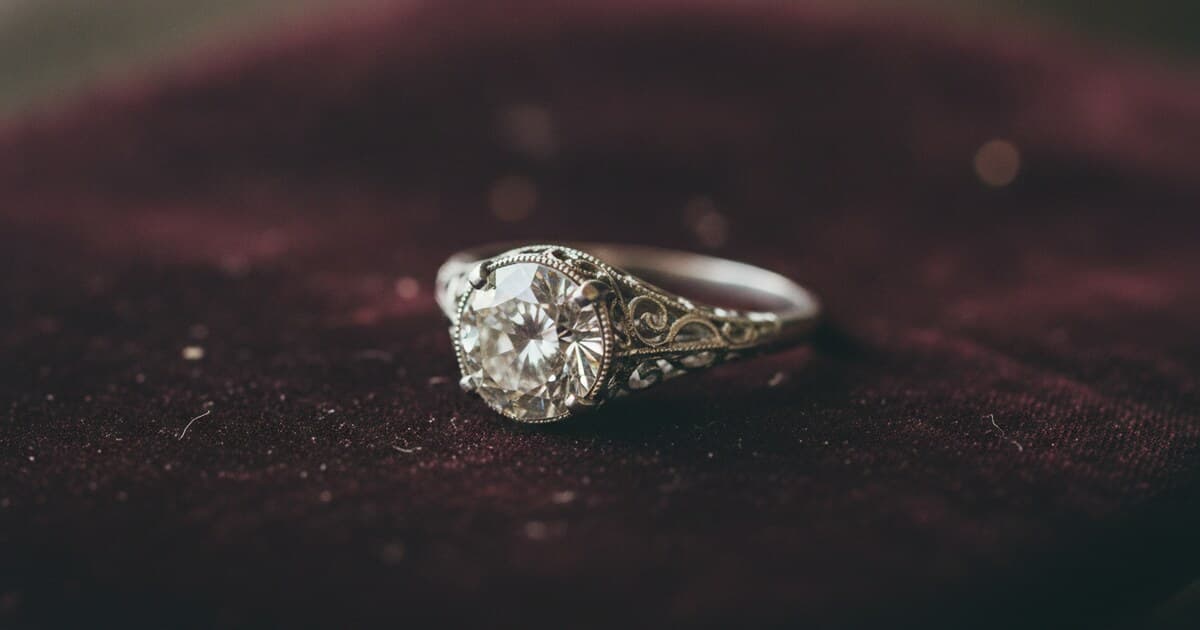
An old ring in a velvet box rarely comes with a price tag. Whether you've inherited a grandmother's engagement ring or picked something up at an estate sale, knowing what you have takes more than a quick look at the stone.
Antique ring value works differently from modern jewelry valuation. The metal content gives you a floor, not a ceiling. A Victorian gold band with an original garnet can be worth three to five times its scrap value once the right factors are assessed. A signed Georgian piece in excellent condition can be worth ten times more. Knowing which factors matter is how you avoid selling for melt price when an auction house would have paid far better.
An antique ring's value depends on six factors: metal purity and weight, gemstone quality, readable hallmarks, historical period, physical condition, and any maker provenance. Most antique rings trade at 2-5 times their scrap metal value. Signed pieces in sought-after eras like Art Deco or Georgian can exceed that by a wide margin.
What Makes a Ring "Antique" (and Why the Label Affects Price)
A ring qualifies as antique when it's at least 100 years old. The cutoff in 2026 is pre-1926 manufacture. That's the standard used by U.S. Customs, reputable auction houses, and certified appraisers.
Pieces from 20 to 99 years old are classified as vintage, not antique. The distinction affects pricing. Antique pieces carry rarity premiums that vintage pieces don't always earn. Georgian rings (pre-1830) are the most dramatic example: so many were melted down over the past two centuries that surviving examples in good structural condition are genuinely scarce.
Four eras attract the most consistent collector demand at auction:
- Georgian (1714-1830): rarest surviving pieces, highest rarity premium per condition point
- Edwardian (1901-1910): platinum filigree and pearl combinations hold value reliably
- Art Nouveau (1890-1910): signed pieces by known makers command 5-10x unsigned equivalents
- Art Deco (1920-1935): geometric platinum designs with colored stones are the most actively traded antique ring category today
Victorian pieces (1837-1901) survive in larger numbers, which keeps typical examples in a lower range. But unusual Victorian pieces, especially signed examples or rings with rare stone combinations, still command significant premiums.
If a seller is describing a 1980s ring with Victorian-inspired styling as "antique," that's a misrepresentation. Design period and manufacture date are different things.
The 6 Factors That Determine Antique Ring Value
How do you get from a $377 piece of scrap metal to a $3,000 specialist sale? These six factors do the work:
1. Metal purity and weight. Gold rings are marked 10K (41.7% pure), 14K (58.3%), 18K (75%), or 22K (91.7%). Millesimal equivalents stamp as 417, 585, 750, and 916. Platinum reads as PT950 or PLAT. Weigh the ring on a jeweler's scale and multiply by purity and current spot price to get your melt floor.
2. Gemstone quality. Antique stones were cut by hand before modern GIA grading existed. Old mine and old European cut diamonds are assessed for color and clarity, not cut. Quality still matters: a 1-carat old European cut in a 1910 platinum setting commands considerably more than the stone's modern replacement cost because of the period provenance.
3. Hallmarks. The stamps inside the band are the fastest authentication route. British pieces can be dated to the exact year of manufacture. French, American, and German rings each use distinct marking systems a loupe can decode.
4. Era and period. Each historical period carries different collector demand and different price floors. Art Deco platinum pieces with calibre-cut sapphires hold consistent auction prices. Georgian rings are scarce enough that even plain examples fetch premiums.
5. Condition. Original stones in original settings beat replaced stones every time. A replacement diamond or a reshanked band (where metal was removed rather than stretched during resizing) cuts into the collector premium by 20-40%. Missing prongs, cracks, and altered settings all knock value down.
6. Provenance. A ring tied to a named maker, Cartier, Van Cleef, Tiffany, or even a well-documented regional goldsmith, sells for multiples of an unsigned equivalent. Signatures live inside the band and require a loupe to find.
An antique ring's value is rarely the sum of its parts. With gold at $4,030 per troy ounce in August 2026, a 5-gram 14K ring holds roughly $377 in metal value. That same ring as a Georgian piece with a foil-backed garnet in an original closed collet setting might sell for $1,200-$3,000 at a specialist dealer.
The factors compound rather than add. Readable hallmarks speed authentication and justify a higher asking price. Original stones in their original settings carry a collector premium over rings where a replacement diamond, even a technically superior one, has been fitted.
Signed pieces, where a maker's mark traces to a known workshop, typically trade at 3-10 times the price of unsigned equivalents from the same period. The most valuable antique rings combine a sought-after era, verifiable provenance, intact original stones, and structural condition that doesn't require restoration.
How to Read Antique Ring Hallmarks
The hallmarks on a ring sit inside the shank, on the inner surface of the band. A 10x loupe is the standard tool; smartphone portrait mode works in good light but misses faint stamps.
American rings show a karat mark: 10K, 14K, 18K, or the millesimal equivalents (585 for 14K, 750 for 18K). Platinum reads as PT950 or PLAT. American pieces were never required to carry maker's marks or assay office stamps, so you often get the metal mark and nothing else.
British rings use one of the most precise dating systems in existence. A full British hallmark has four to five stamps: a maker's mark (workshop initials), a fineness mark (lion passant for sterling or a fineness number for gold), an assay office symbol (anchor for Birmingham, leopard's head for London, rose for Sheffield), and a date letter. The date letter's font and shield shape change each year, which means a hallmarked British ring can be dated to the exact year of manufacture using a reference guide.
French rings made for domestic sale after 1838 carry an eagle head mark for 18K gold. Imported pieces entering France from 1893 onward carry an owl mark, making them identifiable as foreign-made even without other stamps.
A missing hallmark doesn't automatically rule out value. Georgian pieces often predate systematic hallmarking in many countries, and some quality American pieces were never stamped. The absence of marks does make authentication harder, which generally reduces the sale price relative to a comparable hallmarked piece.
Antique Ring Value by Era
These ranges reflect realistic market prices for typical examples in good condition. Designer pieces and exceptional stones push past the high end. Damaged or heavily altered rings often fall below the low end.
Georgian (1714-1830): $800-$12,000+ for fine examples. Foil-backed stones, closed collet settings, rose gold, and hair lockets are the era's signatures. Georgian rings are rarely hallmarked in ways that allow precise year-dating, which complicates authentication. Even simple surviving examples in good structural condition carry rarity premiums that later eras can't match.
Victorian (1837-1901): $200-$5,000 for typical pieces. The era divides into early (romantic/sentimental), mid (naturalistic and archaeological revival), and late (Aesthetic period, diamond-forward). Acrostic rings, where the first letters of each stone spell a word like "dearest" or "regard," attract specialist collectors. Mourning rings set with jet or black enamel run $150-$800.
Edwardian (1901-1910): $500-$8,000. Knife-wire platinum settings and milgrain edges define this period. Diamond and pearl engagement rings hold consistent collector demand. The delicate settings are prone to damage, so condition matters more here than in sturdier eras.
Art Nouveau (1890-1910): $400-$6,000 for unsigned pieces. Signed examples by makers like Lalique or Fouquet reach $15,000-$50,000 and beyond. Enamel work and flowing natural motifs dominate. Enamel chips easily, so condition variation markedly affects price.
Art Deco (1920-1935): $500-$40,000+. Geometric platinum designs with calibre-cut rubies, sapphires, or emeralds are the most actively traded antique ring category at major auction. An exceptional signed Art Deco solitaire can exceed these ranges significantly.
If a ring looks like it might fall toward the high end of any of these ranges, a formal appraisal makes sense before selling or insuring it. Our estate jewelry appraisal guide explains what certified appraisers look for and what to budget for the process.
To see which jewelry categories beyond rings command the strongest collector premiums, the guide to old jewelry worth money covers the broader landscape.
How Old Diamond Cuts Affect Antique Ring Value
The cut of the center stone separates collectors from resellers, and most general guides don't cover it.
Before 1900, diamonds were shaped by hand into the old mine cut: a cushion-shaped outline with a small table, a high crown, and a visible culet (the flat facet at the base of the stone). From roughly 1890 to 1930, cutters transitioned to the old European cut, which is round, with a circular outline and the same visible culet, the direct precursor to today's round brilliant.
The GIA doesn't assign a cut grade to either style. These stones weren't designed to meet modern proportional standards. That doesn't diminish their value. Old European cut diamonds in original platinum settings regularly trade at parity with, or slightly above, modern brilliants of the same carat weight, because collectors pay for the period character. Old mine cuts typically carry a small discount in the loose diamond market, but inside a Georgian or early Victorian ring, the combined sale price often exceeds what a modern equivalent would fetch.
When examining your ring, photograph the stone from above and in profile. The table size, culet visibility, and facet arrangement help date the cut, which in turn helps date the ring. A loupe pressed against a phone camera lens in good daylight gets a usable image for identification.
How Jewelry Identifier Helps You Check Antique Ring Value
Checking an antique ring's value starts with three things: reading the metal stamps, identifying the stone cut, and placing the setting construction within a historical period. Jewelry Identifier's AI shortens that process considerably.
Photograph the inside of the band clearly (portrait mode or macro works well in good light) and upload it to the free appraisal dashboard. The AI reads hallmarks, karat marks, and maker's stamps, then returns an estimated value range and pulls comparable sold listings through the eBay Price Checker. Those sold comparables are real completed transactions, not retail asking prices, which gives you a realistic market anchor.
For a ring that looks potentially significant, use the AI estimate as a starting point. Then take it to a certified appraiser for formal documentation. The AI won't replace a GIA-certified gemologist for a $5,000 ring, but it will tell you whether the ring warrants that appointment. Your first appraisal is free.
If you've inherited a collection and are working through multiple pieces, the heirloom jewelry guide covers the full identification and documentation process for family pieces.
Frequently Asked Questions
How much is an antique ring worth?
Typical antique rings sell between $200 and $5,000 depending on era, metal, stones, and condition. A Victorian gold band without stones might fetch $200-$600. An Edwardian diamond and platinum solitaire in excellent condition runs $1,500-$6,000. Art Deco geometric pieces with calibre-cut colored stones regularly exceed $5,000 at auction. The metal's melt value sets the floor; the era, provenance, and original condition determine how far above that floor the ring actually trades.
How do I find out what my antique ring is worth?
Start by reading the hallmarks inside the band with a 10x loupe. Note the metal type, karat mark, and any maker's initials. Photograph the ring and upload it to a tool like Jewelry Identifier to get an AI-based estimate and real eBay sold price comparables. For any ring with an estimated value over $500, follow up with a certified appraiser. A formal appraisal runs $50-$150 and takes about an hour.
Do antique rings hold value better than modern rings?
Generally yes. Modern mass-produced gold rings lose 30-50% of retail value at resale because you're paying for brand margin and retail markup, not intrinsic value. Antique rings don't carry that problem since they were never priced for a retail showroom. The tradeoff: antique ring values move with collector trends and can sit unsold in thin markets. A well-preserved Art Deco or Edwardian ring tends to hold purchasing power over a decade better than a modern equivalent of the same metal weight.
What makes an antique ring significantly more valuable?
Three factors move the needle most: original stones in their original settings, a readable maker's attribution or signature inside the band, and a design from a high-demand era like Georgian or Art Deco. A ring that hits all three can sell for 5-10 times its scrap value. Condition damage, replaced stones, or a resized shank where metal was cut and removed all knock into that premium substantially.
Photograph the inside of your ring's band and upload it at jewelryappraisals.app/sign-up to read the hallmarks and get a free estimated antique ring value. If the result points to something significant, you'll have the details you need to approach a certified appraiser with confidence.