 Jewelry Identifier
Old Jewelry Worth Money: What Types Actually Have Value
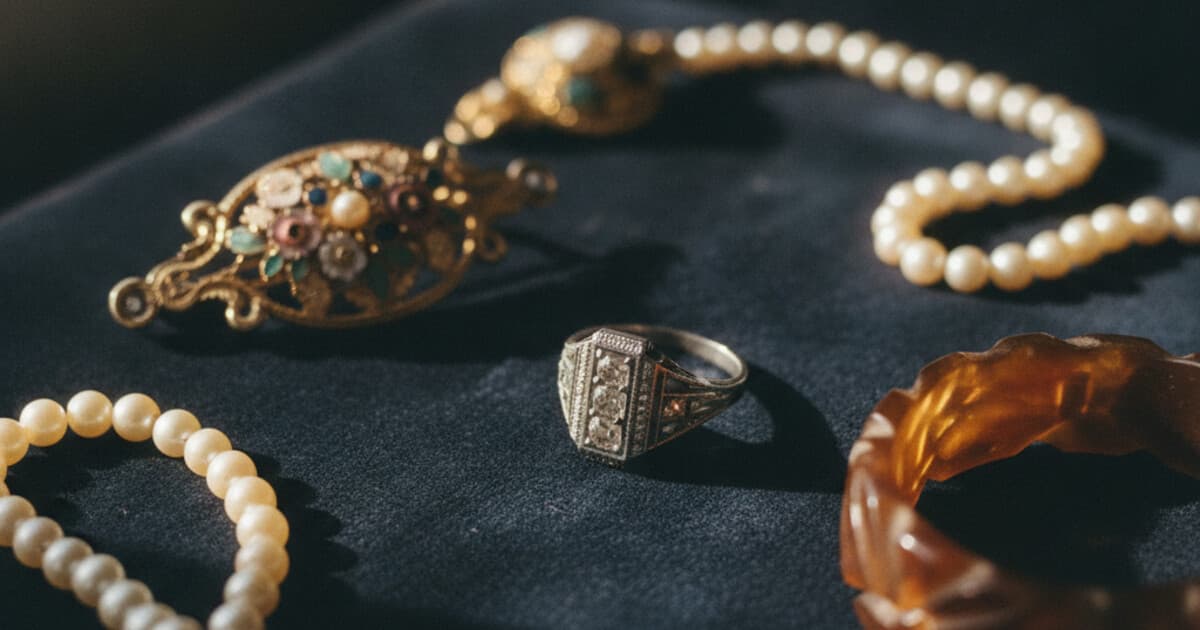
You've probably come across a box of old jewelry at some point: from a grandparent's estate, a thrift store haul, or a garage sale find. Some of those pieces are worth a few dollars. Others could be worth hundreds or thousands. The problem is that old jewelry worth money looks almost identical to old jewelry that's worth nothing. This guide walks through exactly what to look for.
Old jewelry is worth money when it carries material value in the metal (gold, silver, platinum), features genuine gemstones, has a recognizable designer signature, or comes from a collectible period like Victorian, Art Deco, or Art Nouveau. Unsigned costume jewelry is worth money only for a handful of specific brands. Age alone doesn't determine value.
What Makes Old Jewelry Worth Money
Not every old piece has value. A Victorian brooch in sterling silver with enamel detail could sell for $300. A Victorian-era base metal brooch with glass stones might fetch $8. The difference comes down to four things: metal content, gemstone quality, maker's mark, and condition.
Gold, silver, and platinum hold intrinsic value tied to spot prices. As of mid-2026, gold trades around $3,200 per troy ounce, silver around $32 per troy ounce, and platinum around $1,050 per troy ounce. A 14-karat gold ring weighing 5 grams contains roughly 2.9 grams of pure gold, worth about $335 in melt value alone. The finished piece typically sells above melt value because of craftsmanship, design, and collector demand. Gemstones add value when they're natural (not synthetic or glass): a 1-carat natural ruby in fine condition can add $500 to $5,000 to a piece depending on origin and quality. Designer marks from houses like Tiffany, Cartier, or Van Cleef & Arpels can multiply a piece's value by 3 to 10 times over an unsigned equivalent. Condition matters throughout: chips, broken clasps, and missing stones all cut into resale price, and the impact is sharper for costume pieces than for fine jewelry.
Old Gold and Silver Jewelry Worth Money
Gold and silver pieces are the clearest cases of old jewelry worth money, because the metal itself has a floor value.
Gold jewelry carries a karat stamp. Common ones: 10K (41.7% pure gold), 14K (58.3% pure), 18K (75% pure), and 22K (91.7% pure). European pieces often use numbers instead: 375 for 9K, 585 for 14K, 750 for 18K. You can weigh a stamped piece and calculate its approximate melt value in a few minutes using the current spot price.
Sterling silver stamps to look for: 925 or STERLING (92.5% silver), 800 (common in European and Middle Eastern antiques), and COIN or PURE for older American pieces. A heavy Victorian sterling cuff can bring $300 to $500 at auction. Plain plated pieces have minimal metal value but may still sell as collectibles if signed.
Platinum is rarer in old jewelry but worth looking for. Stamps include PT950, PT900, or PLAT. Platinum was heavily used in Edwardian and early Art Deco jewelry (roughly 1900 to 1930). A lacy, intricate piece from that period with a platinum stamp deserves a proper appraisal.
Gold-filled pieces (marked GF or 1/20 12KGF) have very little metal value, but signed examples still sell to collectors.
Signed and Designer Old Jewelry Worth the Most
A maker's mark changes the conversation entirely. Signed pieces consistently outperform unsigned equivalents at auction, sometimes by a factor of 10.
Fine jewelry houses set the ceiling. A simple Tiffany & Co. sterling silver cuff from the 1980s sells for $150 to $400; an unsigned equivalent goes for $30. Cartier, Van Cleef & Arpels, Bulgari, and Boucheron all show similar premiums.
These signatures are stamped inside rings, on clasps, or on the reverse of pendants. Always check those spots before writing a piece off.
American vintage designers have real collector markets too. Miriam Haskell (hand-wired beadwork in Russian gold) typically sells signed pieces for $200 to $800; unsigned lookalikes go for $20 to $80. Joseff of Hollywood (Russian gold-tone pieces worn in classic films) and Schiaparelli (1940s to 1950s aurora borealis stones) both command strong collector interest.
Period style matters even without a signature. Art Deco jewelry (1920s to 1930s) with geometric patterns and calibré-cut stones stays consistently collectible. Art Nouveau pieces (1890 to 1910) with flowing natural motifs and plique-à-jour enamel regularly reach $1,000 to $10,000 or more.
Victorian mourning jewelry (jet, hairwork, black enamel) has a niche but active buyer base.
If you want to date an unsigned piece, clasp style helps: C-clasps (no rollover safety) indicate pre-1910, fold-over clasps emerged post-1920, and box clasps with a figure-8 safety became common in the 1940s. The heirloom jewelry guide covers construction dating methods in more detail, including gemstone cut epochs by period.
Old Costume Jewelry That's Worth Money
Most old costume jewelry isn't worth much. A specific subset is genuinely collectible, though, and the price gap between categories is large.
Brands worth looking for: Chanel (CC logo or CHANEL stamp, especially 1980s to 1990s pieces), Christian Dior (stamped pieces from the 1950s to 1970s), Weiss (rhinestone pieces with exceptional clarity), Coro and Corocraft (particularly Duettes, which are two-part brooches from the 1930s to 1950s), and Bakelite (a phenolic plastic used from roughly 1907 to the 1940s).
Bakelite deserves special attention. Real Bakelite tests positive with a hot pin: it smells like phenol, not burning plastic. Rubbing the piece vigorously with a fingernail produces a faint yellow residue from the friction heat.
A carved Bakelite bangle in good condition sells for $50 to $400. A reverse-carved pin with original paint can fetch $200 to $800.
Condition cuts deeper into costume jewelry prices than fine jewelry. A perfect unsigned rhinestone brooch from the 1950s might sell for $15. The same piece with a Weiss signature and all original stones: $75 to $250. Missing stones, repainted surfaces, and broken clasps all pull prices down fast.
The valuable costume jewelry guide breaks down which brands and features drive value by era if you're sorting through a larger collection.
How to Check If Old Jewelry Is Worth Money
A basic check takes about 10 minutes and tells you whether a piece deserves more attention.
Step 1: Find the stamps. Look inside rings, on the reverse of pendants, on clasps, and inside bracelet links. Use a loupe or magnifying glass. Gold karat stamps, silver purity marks, and maker's signatures all live here. A 10x loupe costs about $12 and is worth having on hand for any serious sorting session.
Step 2: Check the weight. Pick the piece up. Genuine gold and silver feel heavier than they look. Light, tinny pieces that rattle when shaken are usually base metal.
Step 3: Assess the stones. Scratch a stone lightly on the back with a pin. Glass scratches easily. Real gemstones and diamonds don't. Look for air bubbles inside stones under magnification: bubbles indicate glass, not genuine gems.
Step 4: Research the maker. If you find a signature, look it up. Auction results from the past 12 months give you real market data, not retail estimates that rarely reflect what pieces actually sell for.
Step 5: Get a second opinion on anything promising. If a piece checks several boxes (stamped metal, signed, genuine stones), photograph it and run it through an appraisal tool or take it to a dealer. The estate jewelry appraisal guide covers how to get a fair valuation without overpaying for the appraisal itself.
How Jewelry Identifier Helps
If you've got a box of old jewelry and don't know where to start, Jewelry Identifier handles the first pass quickly.
Upload a photo or scan the piece with your camera. The app identifies the metal type, reads stamps and hallmarks, recognizes the gemstone type if it's visible in the photo, and gives you an estimated appraisal range based on AI analysis. You can run 2 identifications free per day on mobile, or use the web appraisal tool at jewelryappraisals.app for a full report with PDF export and comparable sales data.
It won't replace a certified appraisal for insurance purposes. But it tells you quickly whether a piece deserves further attention. That distinction matters when you're sorting through 30 items from an estate sale and trying to figure out where to spend your time.
Frequently Asked Questions
How do I know if my old jewelry is valuable?
Check metal stamps first: 10k, 14k, 18k, 925, or PT950 indicate precious metals with real melt value. Then look for maker's marks near clasps or on pendant backs. A piece with solid precious metal and a recognizable designer mark warrants a formal appraisal. Pieces with no stamps, GF marks, or EPNS markings have minimal material value regardless of age or how ornate they look.
What does it mean if my jewelry has no stamps or markings?
It depends on the age. Pieces made before 1900, especially American jewelry, often lack karat stamps because marking requirements came later. Some European pieces from the early 20th century carry only a maker's mark, not a metal stamp. Missing stamps are more concerning on modern pieces, where the absence can indicate plated metal that the manufacturer deliberately left unmarked.
What makes jewelry essentially worthless?
Gold-plated brass or steel (stamped GP or unmarked), unsigned plastic costume jewelry made after 1980, and heavily damaged pieces with missing stones rarely exceed $5-$20 in resale value. There's no collector market for most mass-market unsigned pieces, and scrap buyers pay only for precious metal content.
What's the difference between old jewelry, vintage jewelry, and antique jewelry?
"Old jewelry" is informal and describes previously owned pieces from any era. "Vintage" refers to pieces 25-99 years old. "Antique" means 100 or more years old, which in 2026 means pre-1926. All three can have collector value, but antique pieces in original condition carry the highest age premiums at auction.
What do the numbers stamped on old jewelry mean?
Karat stamps on gold: 10k (41.7% gold), 14k (58.5%), 18k (75%). European fineness marks express the same thing as decimals: 417 = 10k, 585 = 14k, 750 = 18k. On silver, 925 or "sterling" means 92.5% pure silver. Platinum appears as PT950, PT900, or PLAT. Marks like GF, RGP, or EPNS mean gold-filled or plated over base metal.
Is old jewelry always worth more than new jewelry?
Old jewelry carries a premium only when it combines quality metal, genuine gemstones, a recognizable maker's mark, or collectible period style. Age alone adds nothing: a plain gold piece sells by weight whether it's 10 years old or 100. The metal content is the floor, and everything above that depends on what else the piece has going for it.
What's the most valuable type of old jewelry?
Signed fine jewelry from Tiffany, Cartier, or Van Cleef & Arpels consistently commands the highest prices. Among unsigned pieces, natural gem-set 18K or platinum jewelry from the Edwardian and Art Deco periods (1900 to 1930) typically ranks highest. In the collectibles market, carved Bakelite, signed Miriam Haskell, and vintage Chanel pieces are the top performers.
How do I know if old jewelry has real gold or just plating?
Look for a karat stamp: 10K, 14K, 18K, or 22K (or European equivalents 375, 585, 750, 916). Gold-filled pieces are marked GF or 1/20 12KGF. Gold-plated pieces carry GEP or GP. If there's no stamp at all, a jeweler can test the metal with acid or an electronic tester in a few minutes.
Can old costume jewelry be worth money?
Yes, but only specific pieces. Signed Chanel, Dior, Weiss, Coro Duettes, and Bakelite items have genuine collector demand. Condition is critical: original finish, all stones intact, and working clasps drive prices up significantly. Most unsigned mid-20th-century costume jewelry tops out at $10 to $40 regardless of how attractive it looks.
Where's the best place to sell old jewelry once I know its value?
eBay sold listings show real market prices before you commit to a buyer. For fine jewelry and signed pieces, estate jewelry dealers and auction houses typically return more than pawn shops do. Pawn shops tend to pay 30 to 50 cents on the dollar compared to retail appraisal value, which makes them a last resort unless you need cash quickly.
Sorting through old jewelry doesn't have to be a guessing game. Check the stamps, test the weight, and look up any signatures you find. For anything that looks promising, try it now: get your free jewelry appraisal at Jewelry Identifier and see what the AI turns up in seconds.