 Jewelry Identifier
Emerald Gemstone: Properties, Value, and How to Identify It
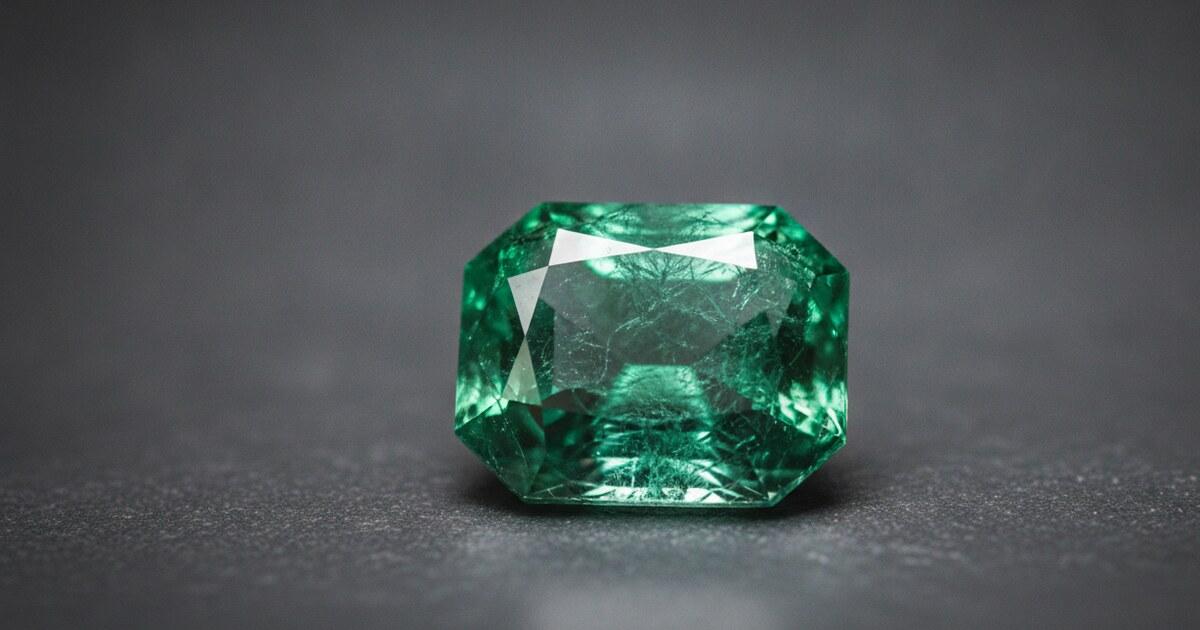
Emerald is one of the four classic precious gemstones, alongside diamond, ruby, and sapphire, and the emerald gemstone has been prized for over 4,000 years. Cleopatra's mines in Upper Egypt were active by 1500 BC. The Colombian valleys that now supply most of the world's finest material weren't tapped by European traders until the 16th century. The challenge with emerald today is that it's also one of the most heavily treated gems in the trade, and knowing what you're looking at changes how you assess every piece. Whether you've inherited a ring, found a stone at an estate sale, or are shopping for a May birthday gift, here's what actually matters.
Emerald is a green variety of the mineral beryl (Be₃Al₂Si₆O₁₈), colored by traces of chromium and vanadium. It ranks 7.5 to 8 on the Mohs hardness scale. Colombia supplies 50 to 70 percent of the world's gem-quality production. Most natural specimens are treated with oil or resin to minimize the appearance of surface-reaching fractures.
What Is Emerald? Mineral Family and Physical Properties
Emerald belongs to the beryl mineral family, sharing its crystal structure with aquamarine (blue beryl), morganite (pink beryl), and heliodor (yellow beryl). What sets emerald apart is its trace chemistry: chromium is the primary colorant, with vanadium contributing in many specimens, particularly from Zambia and Brazil. Iron can shift the tone toward blue-green.
The physical properties define what makes emerald both desirable and tricky to work with. Its Mohs hardness of 7.5 to 8 provides reasonable scratch resistance for daily wear. The refractive index runs 1.577 to 1.583, the specific gravity sits at 2.72, and the vitreous luster gives faceted stones a bright, lively appearance even under modest lighting.
The defining characteristic of emerald is its inclusions. Nearly every natural specimen contains visible fractures, crystals, or fluid-filled cavities. The trade calls this the jardin (French for "garden"). Unlike other gemstones where inclusions significantly reduce value, in emerald they're expected, accepted, and in some cases treated as a marker of natural origin. A truly eye-clean emerald of significant size is genuinely exceptional.
Emerald has been mined continuously for over four millennia. The oldest known mines, located near Aswan in Egypt, were worked as early as 1500 BC and remained active through the Greek and Roman periods. The word "emerald" derives from the Greek smaragdos via the Latin smaragdus, both meaning simply "green gem." Spanish conquistadors encountered Colombian emeralds in the 16th century and carried them back to Europe, displacing Egyptian and Indian material as the global standard. Today, Colombian emeralds from the Muzo and Chivor mining districts remain the benchmark against which all other specimens are measured. The Muzo deposit produces stones with an intensely saturated green, sometimes carrying a slight warm modifier the trade calls "Muzo green," commanding significant premiums. Zambia's Kagem mine (the world's largest emerald mine by volume) produces stones with a deeper, slightly bluish character. These two origins are distinct; gemologists can often separate them under magnification by their inclusion types and spectral signatures alone.
Emerald Color and What Makes a Quality Stone
Color is the dominant value factor for emerald, far outweighing clarity in the trade's weighting. The ideal is a vivid, medium to medium-dark pure green, sometimes described as "slightly bluish green" in GIA terminology. Heavily saturated stones without brown or gray modifiers sit at the top of the market.
Color grades in practice:
- Light green: Common, often used in mass-market jewelry. Lower cost per carat.
- Medium green: The commercial sweet spot. Good saturation at accessible prices.
- Vivid green (saturated, no modifier): The benchmark for fine emerald. Rarer and commands significant premiums.
- Bluish-green: Typical of Zambian material. Attractive, but generally valued lower than pure green.
- Yellowish-green: Occurs in lower-grade Colombian material and some other origins.
Clarity comes second, but the standard is set differently here. Because jardin is expected, graders assess the degree to which inclusions affect transparency and structural integrity, not their mere presence. Fractures that break through to the surface are more problematic than internal features because they hold oil and can reopen with cleaning or heat.
Cut matters more for emerald than for many other gems. The classic "emerald cut" (rectangular step cut with cropped corners) was developed specifically for this stone: the cropped corners reduce stress on the most fracture-prone points, and the step facets showcase depth of color rather than brilliance.
Where Do Emeralds Come From?
Colombia remains the dominant source, supplying an estimated 50 to 70 percent of the world's gem-quality production. The Muzo mine, active for over 500 years, is famous for its warm, vivid green. The Chivor mine, also in Colombia's Boyacá Department, produces stones with a slightly cooler, more bluish-green character.
Zambia is the second-largest source. The Kagem mine in the Copperbelt region is the world's largest operating emerald mine by volume and produces intensely saturated stones with a distinctive bluish hue. Zambian emeralds have risen significantly in market esteem over the past two decades.
Brazil contributes through the Belmont mine in Minas Gerais. Brazilian material tends to be lighter in tone than Colombian or Zambian stones, though fine specimens exist. Zimbabwe's Sandawana deposit produces small-sized stones (typically under 1 carat) with vivid, intense color. Ethiopia, Afghanistan, and Pakistan round out global supply with smaller but sometimes fine-quality production.
Emerald Gemstone Value: Price Per Carat
Emerald prices span a wider band than almost any other gemstone, from a few dollars per carat for pale rough to tens of thousands for exceptional Colombian material.
Commercial grade (light color, heavy jardin, smaller sizes):
- $20 to $100 per carat
Fine quality (medium-to-vivid green, minor inclusions, eye-transparent):
- 1 to 3 carats: $200 to $800 per carat
- 3 to 5 carats: $500 to $2,000 per carat
- 5 to 10 carats: $1,000 to $5,000 per carat
Top Colombian (vivid green, minor treatment, Muzo or Chivor origin, GIA-certified):
- $3,000 to $10,000+ per carat
- Exceptional specimens: $20,000 to $100,000+ per carat
For reference: the Rockefeller Emerald (18.04 carats, Colombian, minor oil) sold at Christie's in 2017 for $5,511,500, or approximately $305,500 per carat.
Treatment status is priced into every transaction. A GIA "no oil" or "minor oil" designation carries substantial premiums over "significant oil" or "resin-filled" specimens of the same visual quality. When shopping or selling, that treatment disclosure isn't a footnote. It's a primary value driver.
Top-quality emerald can exceed diamond in price per carat. A 5-carat vivid-green, minor-oil Colombian emerald with GIA certification regularly fetches more per carat than a D-color VS2 diamond of the same weight. The rarity of truly fine emerald (heavy inclusions being the rule, not the exception) is what sustains that price premium.
How to Identify Real Emerald
The most common simulants are glass, synthetic emerald (Chatham, Gilson), and green tourmaline. Lab instruments give certainty; at-home tests narrow the field. For a broader grounding in gemstone authentication, the gemstone identification guide covers the general principles.
1. Loupe inspection for jardin: Under a 10x loupe, natural emerald almost always shows inclusions: multi-phase fluid inclusions, crystite (tiny crystal inclusions), or growth planes. Completely clean material is almost always synthetic or glass. Synthetic emeralds do have inclusions, but of different types (curved growth lines, nail-head spicules). An "emerald" with zero inclusions at 10x deserves skepticism.
2. Temperature test: Natural emerald stays cool longer than glass when held against the skin. Glass warms within seconds. Not definitive on its own, but useful as a first filter.
3. Oil detection: Many natural emeralds have surface-reaching fractures filled with oil or resin. Hold the stone under a bright light and look for fractures that look suspiciously "filled" or cleaner than expected given the stone's other characteristics.
4. Heft test: Emerald has a specific gravity of 2.72. Green glass is typically lighter (around 2.5 for soda-lime glass). Two similarly-sized stones, one noticeably lighter, points toward glass.
5. Color distribution: Natural emerald color is often uneven, with patches of stronger green near inclusions or crystal faces. Glass and synthetic material tend to show more uniform, "paint-like" color throughout.
For stones of significant value, a GIA, AGL, or Gübelin laboratory report is the only reliable authentication. These reports disclose treatment type and intensity, country of origin (when determinable), and whether the stone is natural, synthetic, or treated.
Emerald Meaning, Birthstone, and Care
Emerald is the birthstone for May, one of the oldest birthstone associations, documented across ancient Hindu, Jewish, and Christian traditions. It's also the traditional gift for 20th and 35th wedding anniversaries. Across cultures, emerald carries consistent symbolic associations: renewal, hope, truth, and fertility. The Egyptians buried emeralds with their dead as symbols of eternal youth. Medieval Europeans believed emerald could reveal the truth or falsehood of an oath.
Contemporary crystal traditions associate emerald with the heart chakra, compassion, and emotional clarity. These are traditional beliefs, not medical claims. For birthstone context and comparisons across all twelve months, the birthstone guide covers the full calendar.
For care, the most important rule is to keep emeralds away from ultrasonic cleaners and steam. Both can remove or redistribute the oils and resins used in most natural stones, changing their appearance. Warm water, mild soap, and a soft brush are the right approach. Store emerald pieces separately to prevent contact with harder stones. Avoid exposing the gem to harsh solvents like acetone or alcohol, particularly in antique pieces that may carry heavier treatments.
For insurance purposes, have significant emerald pieces evaluated by a GIA-trained appraiser. The appraisal process for insurance coverage requires documentation of origin, treatment status, and current replacement value: all of which directly affect your coverage.
Frequently Asked Questions
Is emerald rarer than ruby?
Fine-quality emerald is generally considered rarer than fine-quality ruby. The Muzo and Chivor mines in Colombia produce gem-quality material in limited quantities, and truly vivid, eye-clean specimens are genuinely scarce. Ruby deposits are more geographically distributed (Southeast Asia, East Africa, Mozambique), but top Burmese and Mozambican rubies command similar auction prices to top Colombian emeralds, reflecting comparable rarity at the highest grades.
What color is a real emerald stone?
Natural emerald ranges from light yellowish-green to dark bluish-green. The ideal is a vivid, slightly bluish-green to pure green with strong saturation and no gray or brown modifiers. Colombian stones tend toward a warmer pure green (the trade calls it "Muzo green"), while Zambian stones are typically deeper with a bluish character. Pale, washed-out green can still be natural emerald; it's just lower-grade material worth less per carat.
Is emerald good for Capricorn?
In Vedic astrology, emerald (panna) is associated with Mercury (Budh) and is traditionally recommended for Gemini and Virgo ascendants, not Capricorn. Capricorn's ruling planet in Vedic tradition is Saturn, and blue sapphire is the conventional recommendation. Some Western astrological traditions differ in their gemstone assignments. These are traditional beliefs with no scientific basis. If you're following Vedic practice, consulting a qualified Jyotishi is the right step before buying based on astrological criteria.
Who should not wear emerald stones?
According to Vedic gemstone tradition, emerald is considered unsuitable for people with Mars or Saturn as their primary planet (some interpretations include Aries, Scorpio, Capricorn, and Aquarius ascendants). There's no gemological or medical reason to avoid wearing emerald; the stone is chemically inert and non-reactive in jewelry form. The main practical consideration is structural: some heavily included specimens are fragile, so people who do physical work with their hands may prefer to wear an emerald ring occasionally rather than daily.
If you've got an emerald piece you're trying to value, the Jewelry Identifier web appraisal tool can help. Upload a photo and get an AI-powered estimate based on the visible characteristics of the stone and setting. Try your first appraisal free.