 Jewelry Identifier
Vintage Hat Pins: How to Identify and Value Them
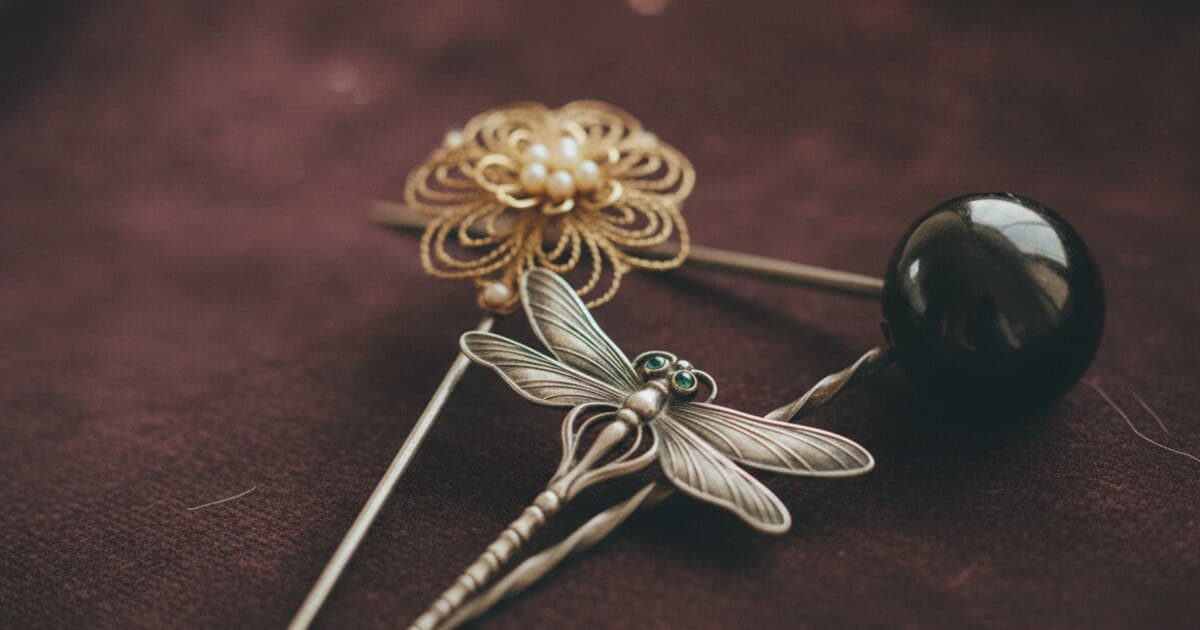
Vintage hat pins have a remarkable backstory. Between 1908 and 1911, at least 20 American cities passed ordinances restricting their length after women used them to fend off harassers on streetcars and city sidewalks. A tool of fashion that doubled as self-defense.
Today they show up in estate jewelry boxes, antique market bins, and thrift store trays. Most people don't know what they have. Common examples sell for $25-$75, but rare Art Nouveau gold pieces reach $750 or more at auction.
This guide covers how to identify vintage hat pins by era, what materials signal value, how to read the construction details that separate genuine antiques from reproductions, and what your piece might realistically be worth.
Vintage hat pins are long decorative pins, typically 6-12 inches, used to secure women's hats from around 1850 to 1920. Identify them by length, head style (Victorian, Art Nouveau, Edwardian, or Art Deco), and materials. Common examples sell for $25-$75; rare gold or Art Nouveau pieces can reach $700+.
What Are Vintage Hat Pins?
Hat pins are long, straight pins with a decorative head on one end and a sharp steel point on the other. Women threaded them through a hat's brim and into their pinned-up hair to hold everything in place. The decorative head, often the size of a large marble or bigger, was where the craftsmanship showed.
The golden age of hat pins ran from roughly 1850 to 1920. Their use peaked between 1900 and 1915, when wide-brimmed hats were fashionable and a single hat might need two or three long pins to stay put. The first pin-making machine in America appeared in 1832, which brought costs down and made hat pins accessible beyond wealthy households.
By the 1920s, the bobbed hairstyle and the cloche hat put hat pins out of business. Cloches sat low on the head and needed no pinning. Women cut their hair short, removing the anchor, and the hat pin's practical life was over in roughly 70 years.
Identifying Vintage Hat Pins by Era
The length of a hat pin is one of the most reliable dating tools. Early Victorian examples from the 1850s through the 1880s typically ran 6-8 inches. As hats grew wider in the 1890s, pins lengthened. The peak years, roughly 1900 to 1915, produced the longest pins, commonly 10-12 inches. Several US cities passed ordinances in 1908-1909 restricting pin length to 9 inches after women used them defensively against street harassers. The UK followed with restrictions in Worcestershire in 1909. After World War I, hats shrank and pin lengths dropped back to 3-6 inches. Victorian pins favored black jet, tortoiseshell, and gold, reflecting mourning culture. Art Nouveau pins (1890-1910) used silver with flowing nature motifs: dragonflies, lily pads, women in profile. Edwardian pins featured delicate filigree, seed pearls, and platinum-look silver. Art Deco pins, the rarest of the group, carried geometric patterns in white metals and appeared as cloche hats replaced wide brims.
Beyond length, the decorative style tells you the era at a glance.
Victorian (1850s-1880s): Black jet (fossilized coal from Whitby, England), tortoiseshell, dark amethyst, and 15-karat gold. Mourning culture shaped design for decades after Prince Albert's death in 1861, so darker, heavier materials dominated. Heads tend to be smaller and more restrained than later eras.
Art Nouveau (1890-1910): The most collectible era for hat pins. Flowing, organic forms carved in silver or gold, with motifs including dragonflies, poppies, women's faces framed by flowing hair, and lily pads. French examples by identified makers are the most sought-after at auction. For more on Art Nouveau design markers across jewelry types, see the Art Deco jewelry identification guide, which covers the preceding and following periods in detail.
Edwardian (1901-1910): Delicate silver-look platinum, filigree work, seed pearls, and pastel stones like aquamarine and pale amethyst. The overall effect is light and lacy compared to Victorian weight.
Art Deco (1920s-1930s): Geometric, angular, minimal. White metal, marcasite, onyx, and coral appear in this era. A genuine Art Deco hat pin in good condition is rare enough to command a premium precisely because so few were made as hat fashion collapsed.
Materials and Construction: What to Examine
The shaft material is the first thing to check. Genuine antique hat pins have carbon steel or iron shafts. Stainless steel wasn't common until the 1920s and wasn't widely used in hat pins, so a shaft showing no rust, pitting, or age-related darkening is a red flag. Authentic old shafts often show slight bending or surface oxidation from decades of use.
The head-to-shaft joint matters. On genuine pieces, the head connects to the shaft through a findings piece: a small metal component that wraps around the base of the decorative head and joins it to the shaft. This joint should look period-appropriate, with no modern solder marks or adhesive. A head that appears glued on almost certainly isn't original.
Stone settings reveal age reliably. Rhinestones in antique hat pins were prong-set or bezel-set, never glued. Paste stones, which are lead glass cut to simulate gemstones, have a warm, slightly yellowed quality under the surface that modern glass lacks. Real gemstones like turquoise, amethyst, and coral appear on higher-end pieces.
Weight and balance tell a story too. Hold the pin at the shaft midpoint. A quality antique pin feels balanced, with the head's weight counterbalancing the shaft. Cheap reproductions often feel hollow or top-heavy because the metal is thinner.
Check for maker's marks and hallmarks. British hat pins from the Victorian and Edwardian periods often carry assay marks on the shaft collar or on the metal head itself. Common British makers include Charles Horner (Halifax, working from the 1880s through the 1910s), Charles Iles, and Pearce & Thompson. French Art Nouveau pins sometimes carry import marks, especially pieces that crossed into the English market. American hat pins rarely carry maker's marks, which is why British-marked examples command a consistent premium.
Spotting Fakes and Married Pieces
The hat pin collector market has a known problem with "married" pieces: a decorative head from one pin joined to the shaft of another. Married pieces are worth considerably less because the parts aren't historically matched. Check the joint closely. If the head wobbles, if the shaft diameter doesn't match the findings, or if the solder color doesn't match the surrounding metal, the piece is likely married.
Outright reproductions also circulate. Many new hat pins are sold as decorative items and some appear in antique markets mislabeled. Signs of a reproduction:
- Stainless steel shaft (look for uniform sheen and no pitting)
- Glued stones rather than prong or bezel settings
- Head designs that look cast rather than hand-worked, with machine-even edges
- No surface wear on the shaft despite the claimed age
The same construction checks apply when evaluating vintage brooches and other period accessories. Period jewelry shares construction cues across types: dating by clasp, joint, and material applies whether the piece pins a hat or a lapel.
If you're unsure, photograph the joint closely and run the image through an AI identification tool. Hallmark stamps, construction details, and material texture all show up in a good macro photo in ways they don't under casual inspection.
What Are Vintage Hat Pins Worth?
Value breaks down by era, materials, maker, and condition. Here's a realistic range by category.
Common glass and paste examples (mass-produced, no maker's mark): $15-$40. These are the pins most often found at estate sales and antique markets. Attractive and collectible, but not rare.
Victorian jet and tortoiseshell: $40-$120 depending on condition. Genuine Whitby jet is heavier and warmer to the touch than French jet, which is actually black glass. A piece that feels cool and glass-like is French jet and worth considerably less than the real thing.
Edwardian filigree and seed pearl: $60-$200. Condition drives value here sharply. Bent filigree or missing pearls cut the price by 40-60%.
Branded Art Nouveau pieces (Charles Horner, marked French makers): $120-$400. Hallmarked and identifiable pieces carry the biggest premiums. Charles Horner pieces carry the Chester assay mark, a date letter, and his distinctive maker's cartouche. Once confirmed, these sell significantly above similar unmarked examples.
High-karat gold with genuine stones or enamel: $300-$800+. The highest recent auction prices for Art Nouveau gold pins with enamel or hidden compartments run $750-$800.
For a realistic current price, search eBay's sold listings for your pin's style and materials. Sold prices show what buyers actually paid, not what sellers hope for. You can also use the free eBay Price Checker at Jewelry Identifier to pull recent comparable sales without digging through listings manually.
Condition affects value sharply. A pin with shaft rust that has eaten into the metal, a damaged or replaced head, or missing stone settings will sell for 30-60% less than a comparable piece in good original condition.
How Jewelry Identifier Can Help
If you've found a hat pin and you're unsure what you have, a clear photo tells you more than squinting at it under a lamp. Upload a shot of the decorative head and a separate close-up of the shaft near the head joint. The Jewelry Identifier AI reads hallmarks, identifies metal types, recognizes period design styles, and gives you an estimated value range to start from.
It's particularly useful for reading tiny British assay marks on the shaft collar, where a few letters and symbols can confirm whether a piece is genuinely Victorian or Edwardian. Upload your photo at jewelryappraisals.app and your first appraisal is free.
For rare examples, a specialist is still the right call. For sorting the $30 mass-produced pins from the $300 hallmarked ones, it's the fastest first step.
Frequently Asked Questions
How do I tell if a hat pin is antique or a reproduction?
Check the shaft material first. Authentic antique pins have carbon steel or iron shafts that show some oxidation or age-related darkening. Stainless steel indicates a modern piece. Also examine stone settings; genuine antique pins use prong or bezel settings, not glue. A perfectly bright, unaged shaft on a supposedly Victorian piece is the clearest warning sign.
What is the most valuable type of vintage hat pin?
Art Nouveau gold pins with enamel or identified maker's marks tend to sell for the highest prices. Pieces traceable to Charles Horner (Chester) or major French makers, with clear hallmarks, have sold for $400-$800 at auction. Condition and original intact construction are non-negotiable at the top of the market.
What does a Charles Horner mark on a hat pin mean?
Charles Horner was a Halifax-based silversmith who produced hat pins from the 1880s through the early 1900s. His pieces carry the Chester assay office mark, a date letter, and his maker's cartouche. A confirmed Charles Horner pin in good condition typically sells for $120-$300, considerably more than unmarked examples from the same period.
What is a "married" hat pin?
A married pin has a decorative head and a shaft that came from two different original pins, combined by a later seller or owner. Married pieces sell for much less because they aren't historically cohesive. Inconsistent solder color, a wobbling head, or a shaft diameter that doesn't cleanly fit the findings are the main tells.
Where can I find vintage hat pins to buy?
Estate sales, antique markets, and eBay are the most consistent sources. Online lots sold as "mixed hat pins" still produce unexpected finds. Before buying, a quick photo check through Jewelry Identifier's vintage identification tools can save you from overpaying for a reproduction. Invaluable.com and Heritage Auctions run estate jewelry sales that include hat pins at the higher end of the market.