 Jewelry Identifier
How to Appraise Estate Jewelry: 5 Steps to an Accurate Value
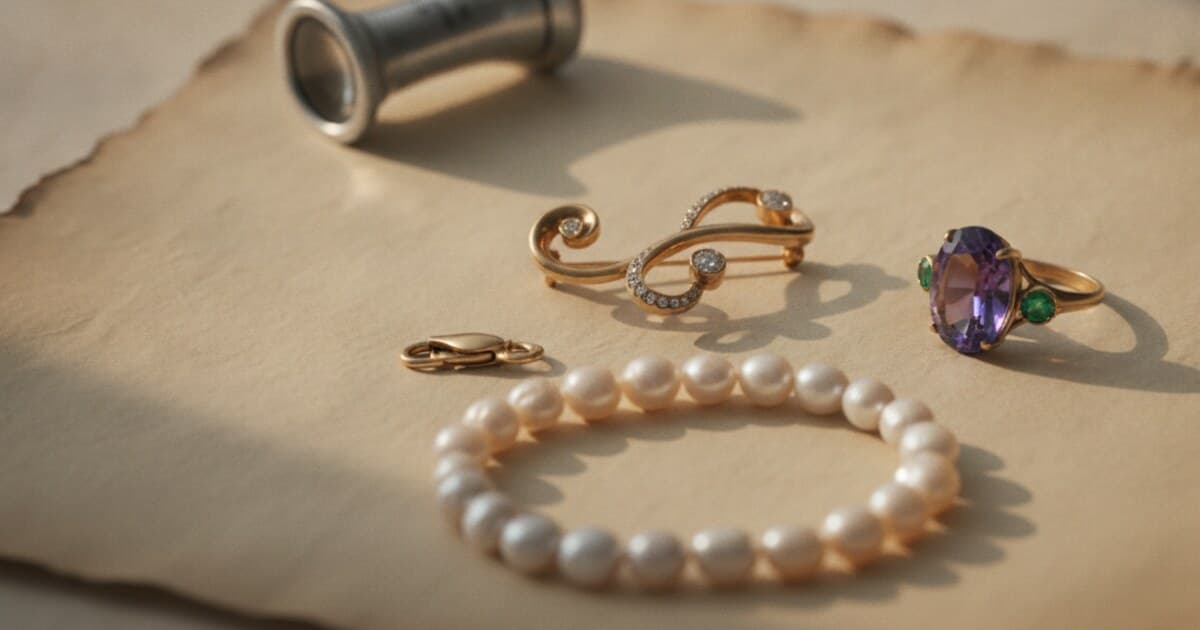
Inherited a box of jewelry with no receipts, no paperwork, and no idea what it's worth? Estate jewelry appraisal sounds complicated, but the process has a clear sequence. You start with what you can check yourself, confirm the metal and stones, then bring in a certified professional for any piece worth formally valuing. Here's how to appraise estate jewelry from start to finish, without guesswork or wasted fees.
To appraise estate jewelry, start with a photo assessment to confirm metal markings and stone type. Get a certified appraiser for any piece potentially worth $500 or more. Know which appraisal type you need: insurance replacement values run 1.5 to 2 times higher than what you'd actually receive if you sold the same piece.
Step 1: Do a Quick Assessment Before You Hire Anyone
Before booking an appraiser, spend 20 minutes going through each piece. You want to know roughly what you're dealing with so you can prioritize which pieces warrant professional fees.
Photograph each piece against a plain white surface, then zoom in on any internal markings. Check inside the ring shank, along necklace and bracelet clasps, and on the back of pendants.
Gold stamps to recognize: "10K," "14K," "18K," "417," "585," "750." Silver stamps: "925," "Sterling," "800," "EPNS" (silver-plated, no melt value). Platinum: "PT950," "PT900," "Plat," "950." If there's no stamp at all, the piece is gold-filled, plated, or costume metal.
Estate jewelry values depend on three overlapping factors: metal content, stone quality, and collector or period premium. A 5-gram 14K gold piece holds a melt value of about $378 at current gold prices (14K is 58.3% pure; 5g × 0.583 × $129.50/gram). That same piece could fetch $800 from an estate dealer who recognizes the setting style, or $1,500 at auction if the maker's mark reads Cartier or Van Cleef. The gap between melt value and collector value is widest for signed pieces, Art Deco platinum jewelry from the 1920s to 1935 period, and anything with original box or documentation. Unsigned gold and silver jewelry typically sells for 70 to 85 percent of melt through a reputable dealer, while signed fine jewelry can achieve 5 to 15 times melt. Knowing roughly where each piece falls before you call an appraiser tells you which items are worth the professional fee and which you can handle yourself.
An AI-powered scan is a useful first step. Jewelry Identifier reads hallmarks from photos, identifies gemstone types, and estimates value based on current comparable sales. Your first appraisal is free at jewelryappraisals.app/sign-up. Use those results to triage your collection before committing to professional fees.
Step 2: Understand Which Type of Appraisal You Need
The word "appraisal" covers different things, and each type produces a different number for the same piece. Booking the wrong type wastes both money and time.
Insurance replacement appraisal assigns the cost to replace the piece with a comparable item from a retail jeweler today. These values typically run 1.5 to 2 times higher than what you'd receive selling the piece. Insurance companies require this type for riders or floaters on a homeowner's policy.
Fair market value appraisal assigns the price a willing buyer would pay a willing seller, neither under pressure. This is the figure used for estate tax filings, charitable donation documentation, and equitable division among heirs.
Liquidation value is what you'd get in a quick sale, typically within 30 to 60 days. Pawn shops and gold buyers pay liquidation value, usually 50 to 70 percent of fair market.
For most people inheriting estate jewelry, the choice is between an insurance appraisal (to add pieces to a homeowner's policy) and a fair market value appraisal (for estate settlement or IRS filing). Our estate jewelry appraisal guide covers how these three values interact and what each type of document looks like.
Step 3: Find a Qualified Appraiser for Estate Jewelry
Not every jeweler is trained to appraise antique and estate pieces. For jewelry that may have significant period or collector value, credentials matter more than proximity.
Look for one of these designations:
- ASA Accredited Senior Appraiser: American Society of Appraisers; covers fine jewelry and antiques, strong for period and estate work
- GIA Graduate Gemologist (GG): trained in gemstone identification and grading; excellent for pieces with significant stones
- AAA Certified Appraiser: American Appraisers Association; recognized for estate and probate contexts
- AGS Certified Gemologist Appraiser: American Gem Society designation with appraisal component
For older estate pieces, the ASA credential is particularly strong because appraisers are trained on period identification, hallmarks by country and era, and historical context that affects collector value. A GIA gemologist is the right call when a piece has a potentially significant stone, but may undervalue an unsigned Art Deco brooch that carries a collector premium beyond melt.
Avoid having valuable estate pieces appraised by a general retail jeweler unless they hold one of these credentials. A verbal opinion from an uncredentialed jeweler carries no weight for insurance, probate, or IRS purposes.
Step 4: What Happens During an Estate Jewelry Appraisal
Bring everything you have to the appointment: original boxes, prior appraisals, family notes about origin or purchase date. Even unverified provenance helps the appraiser contextualize period and style.
The appraiser photographs each piece, weighs the metal, tests for purity (typically with XRF fluorescence for non-destructive analysis), grades any gemstones under magnification, and dates the piece based on construction details: clasp type, hallmark format, stone cut style, and setting technique. Expect 30 to 60 minutes per piece for antique or estate items with multiple factors to document.
For pieces with diamonds, rubies, sapphires, or emeralds, expect a refractometer and spectroscope in play. If a stone appears significant, the appraiser may recommend sending it to a lab for an independent certificate. GIA grading reports for diamonds run $100 to $200 depending on size; for colored stones with potential value above $1,000, that cost is usually justified.
Step 5: Read Your Appraisal Report and Decide What to Do Next
A proper written estate jewelry appraisal includes: the appraiser's name, credentials, and signature; the appraisal date; the value standard used (insurance replacement, fair market, or liquidation); a complete item description with metal, stones, weight, measurements, and condition; and comparable sales references.
Check that the value standard is labeled clearly. Some appraisers issue a single "appraised value" without specifying which standard applies, which makes the document difficult to use for insurance riders or estate filings. If the document doesn't specify the standard, ask the appraiser to clarify in writing before you use it for anything official.
If you're planning to sell, cross-reference the fair market appraisal against recent eBay sold prices for comparable pieces. eBay completed listings often reflect real liquidation prices better than any formal appraisal for common estate jewelry. For what to do with pieces after you know their value, our inherited jewelry guide walks through the four main options: keep and insure, sell, repurpose, or donate.
How Much Does Estate Jewelry Appraisal Cost?
Most certified appraisers charge $50 to $150 per piece for standard jewelry. Estate and antique pieces requiring period identification typically run $100 to $300 each. Appraisers billing hourly charge $75 to $175 per hour; a small collection of 5 to 10 pieces usually takes 2 to 3 hours for a thorough written report.
Expect higher fees for:
- Pieces with potentially significant stones requiring gemological testing
- Victorian-era or earlier jewelry needing detailed period authentication
- Appraisals for probate or IRS filing where the appraiser must certify qualifications
Avoid any appraiser who charges a percentage of the assessed value. That fee structure gives them a financial incentive to inflate the number. A flat fee or hourly rate is the standard for credentialed appraisers. For a complete breakdown by appraisal type, see our jewelry appraisal cost guide.
Frequently Asked Questions
Who pays the most for estate jewelry?
Specialized estate jewelry dealers and auction houses typically pay the most, well above pawn shops or generic gold buyers. Auction houses like Doyle or Heritage Auctions can achieve 2 to 4 times gold-buyer prices for signed or period pieces. For unsigned gold and silver, a reputable estate dealer pays 70 to 85 percent of melt, compared to 40 to 60 percent at a pawn shop.
What is the 2:1:1 rule in jewelry appraisal?
The 2:1:1 ratio describes how the three main appraisal values typically relate to each other. If the insurance replacement value is $2,000, fair market value is roughly $1,000, and liquidation value sits around $500 to $700. The ratio isn't a fixed standard, but it's a useful mental model for understanding why three different professionals can quote three very different figures for the same ring and all be correct for their respective purposes.
How much does a jeweler charge to appraise jewelry?
Certified appraisers charge $50 to $150 per piece for most jewelry. Antique and estate pieces requiring period research cost $100 to $300 per item. Walk-in retail jewelers sometimes offer free verbal estimates, but these aren't written appraisals and carry no weight for insurance or legal purposes. Hourly billing at $75 to $175 per hour is common for larger collections.
How do I know if inherited jewelry is worth getting appraised professionally?
Any piece with a confirmed precious metal stamp (14K, 925, PT950) has a baseline melt value worth establishing. Beyond that, look for maker's marks from fine jewelers (Cartier, Tiffany, Van Cleef), Art Deco geometric platinum settings from the 1920s to 1935 period, and colored stones larger than half a carat. These signal potential collector value that can far exceed melt and makes a professional appraisal worthwhile.
If you've got estate jewelry waiting on an assessment, start with a free AI scan before booking a professional. Jewelry Identifier reads hallmarks, identifies gemstone types, and pulls comparable sold prices from a single photo. Get your first appraisal free, then take the result to a certified appraiser for anything that looks significant.