 Jewelry Identifier
Malachite Gemstone: Identification, Value, and What to Know
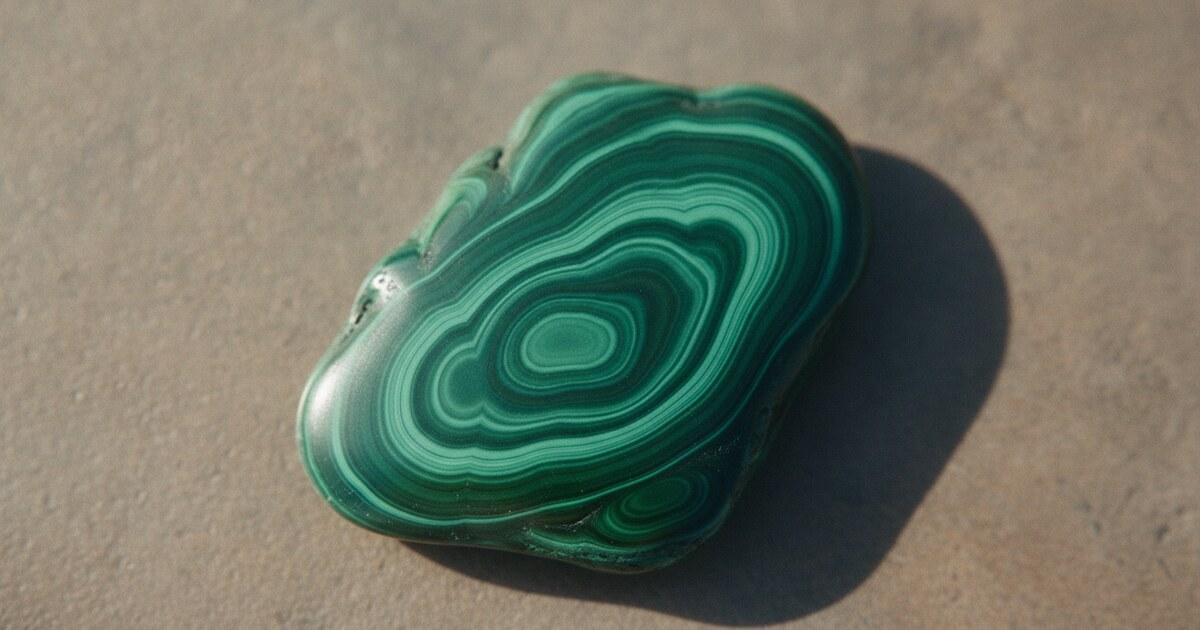
Malachite catches most people off guard. The stone looks almost too vivid to be real, with its layered greens spiraling outward in tight concentric rings. If you've picked up a piece at an estate sale or inherited malachite jewelry, you're probably wondering what it is exactly, whether it's valuable, and how to tell if yours is genuine.
Malachite is a copper carbonate hydroxide gemstone with a distinctive banded green pattern. It forms above copper ore deposits and rates 3.5 to 4.0 on the Mohs scale. Genuine malachite has irregular organic banding, varies from lime to forest green, and feels heavier than its size. Decorative pieces sell for $20 to $300; fine jewelry settings reach $200 to $1,500.
Jewelry Identifier can photograph any malachite piece and confirm whether the pattern and density match genuine malachite. The AI reads stamps and hallmarks too. Try it free: your first appraisal is free at jewelryappraisals.app.
What Is Malachite?
Malachite is a copper carbonate hydroxide (Cu₂(CO₃)(OH)₂) that forms where groundwater carrying dissolved copper reacts with limestone or carbonate minerals. It grows in the oxidation zones above copper ore deposits, which is why it's found alongside azurite, chrysocolla, and cuprite. Mineral collectors prize specimens showing two or three of these minerals together in the same piece.
The Democratic Republic of Congo (Katanga province) accounts for roughly 60 to 70% of commercial malachite supply today. Russia's Ural Mountains produce pieces with exceptional deep saturation: Russian malachite paneled the Malachite Room in St. Petersburg's Winter Palace, completed in 1843, using an estimated 125 tons of the stone. Significant deposits also exist in Namibia, Zambia, Australia, and Arizona's Morenci and Globe-Miami copper mining districts. Smaller sources include Israel, Mexico, and Cornwall in the UK.
Malachite rates 3.5 to 4.0 on the Mohs hardness scale, putting it roughly in the range of a copper coin. Its specific gravity sits between 3.6 and 4.0, giving well-cut pieces a satisfying density. The color ranges from bright lime green to deep forest green, always with the characteristic banded or swirled patterns created by concentric growth layers. No two pieces carry the same pattern. Lapis lazuli shares this appeal for collectors drawn to ancient stones, though the two form under completely different geological conditions.
Malachite Varieties and Patterns
Malachite grows in several distinct forms, each with a different look and market value.
Banded malachite shows parallel or concentric stripes in varying shades of green. This is the most common form used in jewelry and decorative carving. The best examples show strong contrast between the lightest lime-green bands and the darkest near-black green layers.
Botryoidal malachite grows in rounded, grape-like clusters on rock surfaces. When you slice through one of these formations, the cross-section reveals the concentric banding within.
Malachite stalactites form inside cave-like pockets within copper mines. They build up ring by ring over thousands of years, similar to how tree rings accumulate. Cutting through a stalactite at right angles to its growth axis produces what jewelers call a "peacock eye": perfect concentric circles with a darker center, surrounded by alternating rings of lighter and deeper green. These cross-sections are among the most striking malachite pieces available and command a price premium over standard banded slabs.
Velvet malachite refers to surfaces covered in densely packed tiny acicular crystals. The texture looks almost fuzzy under close examination and is primarily a collector's specimen rather than a jewelry stone.
Malachite History and Meaning
Humans have mined malachite for at least 6,000 years. Egyptian copper mines at Sinai show extraction dating to around 4,000 BCE. Ancient Egyptians ground the stone into bright green powder for use as eye pigment, a practice documented from Predynastic times through the Ptolemaic era. Carnelian was another stone that figured prominently in Egyptian amulets of the same period, frequently paired with malachite in burial assemblages.
During the Renaissance, malachite powder produced a pigment used in paintings before synthetic alternatives arrived. It fell out of favor by the 17th century because it's unstable in oil paint and gradually turns brown.
The name likely derives from the Greek malakhe (mallow plant), referencing the stone's color. Across traditions, malachite has been associated with protection, transformation, and abundance. Many practitioners today connect it to the heart chakra, treating it as a stone of emotional healing and positive change. Its connection to Venus and love appears in multiple cultural traditions dating back to antiquity.
How to Tell Real Malachite from Fake
Synthetic and imitation malachite exists in several forms: pressed malachite (small chips and dust bound in resin), dyed howlite, and straight plastic imitations. Four tests work at home without special equipment.
1. Examine the banding. Natural malachite has organic, irregular bands. The spacing and width vary across the piece. Fakes, particularly plastic or dyed stone, often show bands that are too uniform, too symmetrical, or repeated in an obvious tiled pattern.
2. Touch test. Real malachite stays cold, like any mineral. Hold it for 15 seconds: if it quickly warms to body temperature, it's likely plastic.
3. Weigh it in your hand. Malachite's specific gravity (3.6 to 4.0) makes genuine pieces noticeably dense for their size. Plastic fakes feel light. A piece the size of a large marble should feel heavier than expected.
4. Loupe inspection. Natural malachite's banding continues into the stone, not just on the surface. Pressed malachite shows seams, bubbles, or abrupt pattern breaks under 10x magnification. Dyed howlite sometimes reveals the white base material at chips or scratches.
For a photo-based ID, Jewelry Identifier can analyze the pattern depth, color distribution, and setting characteristics to flag likely imitations. Your first appraisal is free.
One additional tell: genuine malachite includes multiple shades of green in the same piece. The lightest bands approach yellow-green; the darkest come close to near-black. A piece with a single flat shade of "malachite green" across its entire surface deserves a closer look.
Malachite Value and Pricing
Malachite is relatively abundant compared to most gemstones, which keeps prices accessible at the entry level. Quality, form, and provenance drive value more than rarity.
Tumbled stones: $2 to $15 per piece.
Polished cabochons for settings: $15 to $80, depending on size and pattern clarity.
Decorative slabs and carved objects: $20 to $300 for most commercial-grade work.
Peacock-eye stalactite slices: $40 to $500+, depending on size and pattern quality.
Malachite in fine gold jewelry settings: $200 to $1,500+.
Antique Russian malachite objects: Important pieces have sold at auction for thousands of dollars, particularly large veneered objects with documented provenance.
Three quality factors matter most. First, saturation: deep, vivid greens outperform pale material. Second, pattern clarity: crisp, well-defined bands with high contrast between light and dark rings. Third, surface condition: pitting, chips, or chalky matte areas from soft-mineral wear lower value significantly.
Malachite Care: Why Water Is the Main Risk
Malachite's low hardness makes it scratch easily, but the more immediate threat for most owners is water.
Malachite's copper content makes it reactive to moisture, especially acidic or chlorinated water. Regular exposure dulls and etches the polished surface over time, sometimes producing a whitish bloom. Malachite jewelry shouldn't go into the shower, the pool, or even sit under heavy perfume or hand lotion contact.
The same chemistry means acidic substances (citrus, vinegar, most household cleaners) damage it fast. Ultrasonic cleaners, steam cleaners, and abrasive polishes are all off the table.
Safe care method:
- Wipe with a dry microfiber cloth
- For surface grime, use a barely damp cloth and dry immediately
- Store separately from harder stones, which will scratch it
- Avoid prolonged direct sunlight, which fades the green over time
Peridot is another example of a colored gemstone that needs careful storage away from harder materials, though at Mohs 6.5 to 7 it handles daily wear significantly better than malachite. For rings and bracelets especially, the softer the stone, the more protection the setting needs to provide: bezel settings protect malachite's vulnerable edges in a way that prong settings can't.
Earrings and pendants tolerate daily wear better than rings and bracelets, since they have less surface contact and less water exposure.
How Jewelry Identifier Helps with Malachite
If you have a piece you think might be malachite but aren't certain, Jewelry Identifier takes the guesswork out of it. Photograph the stone against a plain background and the AI analyzes the visual pattern, color layers, and setting to identify the material and read any metal hallmarks. The app works on iOS and Android, with offline access available for estate sales or pawn shops.
The web appraisal tool at jewelryappraisals.app/sign-up goes further. Upload a photo and get a detailed report including comparable sales data from real listings. Malachite value varies considerably by form and quality; seeing what similar pieces actually sold for gives you a solid baseline before buying or selling.
Your first appraisal is free.
Frequently Asked Questions
What is malachite spiritually used for?
Malachite has been associated with protection, transformation, and abundance across multiple cultures. Ancient Egyptians used it as a protective amulet, particularly for infants and travelers. Many crystal practitioners today work with it as a heart chakra stone connected to emotional healing and positive change. Its association with Venus and love appears in traditions dating back to antiquity.
What are malachite stalactites?
Malachite stalactites form slowly inside cave-like pockets within copper mines, building up concentric layers over thousands of years. When cut at right angles to the growth axis and polished, the cross-section reveals perfect concentric rings known as "peacock eye" malachite. These are among the most distinctive and sought-after forms of the stone.
Why can't malachite get wet?
Malachite contains copper, which makes it reactive to water, particularly acidic or chlorinated water. Regular moisture exposure dulls and etches the polished surface over time. The 3.5 to 4.0 Mohs rating also means even gentle cleaning should be brief, with the stone dried immediately afterward. Shower, pool, and sweat contact all cause cumulative surface damage.
How much is malachite worth?
Tumbled malachite costs $2 to $15 per piece. Cabochons for jewelry settings run $15 to $80. Decorative slabs and carved objects range from $20 to $300. Peacock-eye stalactite slices start around $40 and can reach $500 for quality examples. Malachite set in fine gold typically runs $200 to $1,500+.
What colors go well with malachite?
Yellow gold and rose gold both complement malachite's green, adding warmth that suits the stone's natural tones. Black, white, and cream provide clean contrast. Earthy tones (brown, terracotta, amber) echo the stone's geological origins. For a bolder look, malachite's green contrasts dramatically with deep blue: the same pairing found in natural azurite-malachite specimens, where both minerals grow together.
If you have malachite jewelry to identify or appraise, try Jewelry Identifier free. Take a photo, get an AI read on the stone, hallmarks, and comparable sale values. Your first appraisal is free.