 Jewelry Identifier
Cubic Zirconia vs Diamond: How to Tell the Difference
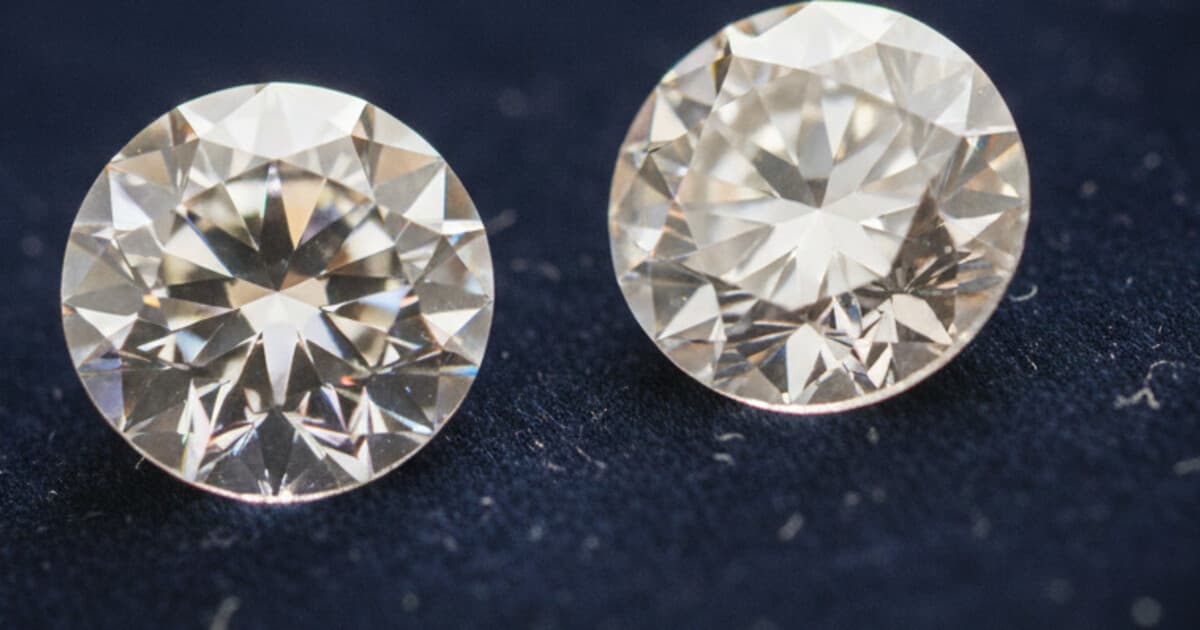
Cubic zirconia has fooled buyers, jewelers, and estate sale shoppers for decades. Both stones are clear, sparkle brilliantly, and can be cut to identical proportions. If you're holding a piece and can't tell what the center stone is, this guide walks through exactly how to figure it out. You need nothing more than your breath, a loupe, and a newspaper.
Knowing the difference between cubic zirconia and diamond matters whether you're buying, selling, insuring, or just curious about a piece you inherited. The tests below work on loose stones and most mounted pieces.
Cubic zirconia is lab-created; diamond forms naturally under extreme geological pressure. Diamonds score 10 on the Mohs hardness scale, CZ scores 8-8.5. CZ is about 1.7x denser than diamond of the same size, produces more rainbow-heavy sparkle, and stays foggy 3-4 seconds when breathed on. Those differences drive every reliable at-home test.
Key Physical Differences Between CZ and Diamond
The two stones differ in 4 measurable ways.
Hardness. Diamond is the hardest natural material on earth, rating 10 on the Mohs scale. CZ sits at 8-8.5. After years of wear, CZ scratches and chips at the facet edges where diamonds stay crisp. On a used piece, magnify the edges. Worn chips pointing to CZ are often the fastest indicator.
Weight. CZ is roughly 1.7x denser than diamond. A 1-carat diamond measures about 6.5mm across. A piece of CZ the same physical size weighs closer to 1.7 carats. If you have a loose stone and a jeweler's scale, this gap is easy to measure.
Optical fire. Diamonds have a refractive index of 2.42 and produce a slightly warm, muted fire. CZ has a higher dispersion rating, which generates more colorful rainbow flashes. That oversaturated rainbow sparkle is one of the easiest visual tells under bright light.
Thermal conductivity. Diamonds conduct heat exceptionally well. CZ does not. This is what makes the fog test work.
5 At-Home Tests That Actually Work
1. The fog test. Breathe on the stone like you're fogging a bathroom mirror. A diamond clears in 1-2 seconds because it pulls heat away quickly. CZ stays foggy for 3-4 seconds. Simple, fast, and surprisingly accurate on loose stones or rings you can hold close.
2. The loupe inspection. Diamonds have inclusions: natural imperfections formed during crystallization: tiny feathers, pinpoints, or clouds inside the stone. CZ grown in a lab is almost always flawless. Under 10x magnification, a stone with zero internal characteristics is probably CZ. The exception: very high-clarity diamonds (FL or IF grade) are also clean, but those are rare and expensive. If the stone is flawless and the setting is silver, it's almost certainly CZ.
3. The newspaper test. Place the stone flat-side down over printed text. Look through it. A genuine diamond's internal reflections make the text completely unreadable. CZ sometimes allows you to read the letters faintly through the stone. This test works better on loose stones than mounted ones.
4. The weight test. A loose CZ measuring 6.5mm across weighs about 1.7 carats. A diamond that size weighs 1 carat. That's a 70% weight difference for the same visual dimensions. On a calibrated scale, the heavier stone is CZ.
5. The edge inspection. Under a loupe, diamond facet edges are sharp and crisp even after decades of wear. CZ edges show rounding or micro-chipping with use. On a vintage or estate piece, checking the facet edge condition is often enough on its own.
What separates CZ from diamond isn't one obvious flaw you can spot across the room. It's a cluster of physical properties rooted in how each stone forms. Diamonds crystallize under 725,000 pounds per square inch of pressure over millions of years, building an atomic lattice that makes them thermally conductive, scratch-resistant, and optically distinct. Cubic zirconia is manufactured in a laboratory in days using a process called skull melting, producing a dense, optically clear stone with no natural inclusions and different thermal behavior. Both stones can be colorless, cut to the same proportions, and set in identical mountings. But diamonds clear fog in under 2 seconds, show natural inclusions under magnification, and hold their facet edges sharp through decades of wear. CZ fogs longer, tends to appear flawless internally, and chips at the edges. Running 3-4 tests together gives you a confident answer in under 5 minutes.
What At-Home Tests Can't Tell You
The tests above are reliable for CZ vs diamond. They're less reliable for other look-alikes.
Moissanite is the trickiest. It has a refractive index close to diamond and similar thermal properties, which means the fog test and newspaper test can be inconclusive. Standard thermal diamond testers sometimes misidentify moissanite as diamond. If your stone passes every test but still doesn't look quite right, moissanite is worth considering.
White sapphire and white topaz are softer and show scratching more readily, so the edge inspection usually reveals them.
At-home tests also can't tell you value. A natural diamond with visible inclusions and poor cut can be worth less than a fine CZ of the same visual size. Once you know what you have, the next step is figuring out what it's worth. See our diamond ring appraisal guide for what drives diamond pricing.
For high-value pieces, a professional appraisal with a calibrated thermal probe or spectroscopy is definitive. These tools take 10 seconds and eliminate all ambiguity. Our guide on how to spot fake diamonds covers what professionals look for beyond the at-home toolkit.
Common Settings That Signal CZ
The mount tells you a lot before you even look at the stone.
Sterling silver (.925) is soft and relatively affordable. Jewelers rarely set natural diamonds in silver. The economics don't make sense. A ring stamped 925 with a clear center stone is almost certainly CZ or another simulant.
Platinum (stamped PT950 or PLAT) and 18k gold are the metals you'd expect with a genuine diamond. That's not proof either way, but it shifts the probability considerably.
Rings with no stamps at all are harder to read. Estate pieces sometimes lost their marks over time, but unmarked settings combined with a flawless stone and a rainbow-heavy fire are a cluster of CZ indicators.
For a deeper look at reading metal stamps and maker's marks, see our guide on real vs fake jewelry.
How Jewelry Identifier Can Help
Telling CZ from diamond in a photo is genuinely hard, but the Jewelry Identifier app uses AI trained on thousands of jewelry images to analyze stones alongside their settings and hallmarks.
It reads the stamps on the metal. A ring marked "CZ" or "925" narrows the field immediately. A setting stamped "18K" with an apparent diamond still needs testing, but the app flags the context and gives you an estimated appraisal based on what it finds.
The web tool at jewelryappraisals.app goes further: full material breakdown, comparable sales data, and PDF export. Your first appraisal is free. The mobile app (iOS and Android) gives you 2 free daily identifications and works offline, so it's useful at estate sales and pawn shops where you need an answer on the spot.
Frequently Asked Questions
Can a jeweler always tell cubic zirconia from diamond? Yes. Any trained jeweler can distinguish them in seconds using a thermal diamond tester. The device measures heat conductivity and reads CZ and diamond as unmistakably different. For loose stones, they may also weigh the stone against a known diamond of the same dimensions.
Does cubic zirconia pass a diamond tester? Standard thermal diamond testers correctly flag CZ as not diamond. Moissanite, however, sometimes passes thermal testers because it conducts heat similarly to diamond. That's why professional appraisers often use dual testers that check both thermal and electrical conductivity.
Is cubic zirconia worth anything? CZ has minimal resale value. A loose CZ stone typically sells for under $30 regardless of size. On a used piece, the value sits almost entirely in the metal. A CZ engagement ring is worth its gold or silver weight plus the craftsmanship, not the stone.
Why do some CZ rings look more convincing than others? Cut quality varies significantly between manufacturers. Higher-grade CZ is cut to tighter tolerances, sometimes with anti-dispersion coatings to reduce the rainbow fire that gives lower-quality CZ away. Some brands (like Swarovski Zirconia) are cut on the same equipment used for diamonds, making visual identification harder.
Do I need an appraisal before insuring jewelry with a large stone? Yes. Insurers require a certified appraisal before covering fine jewelry. An appraiser will identify the stone type immediately, and a CZ won't be covered at diamond replacement values. If you're unsure what's in a piece, get the identification sorted before buying a policy. Our guide on jewelry appraisal for insurance walks through what that process involves and what it costs.
The Short Version
The fog test and loupe inspection catch most CZ stones quickly. Flawless clarity under magnification, rainbow-heavy fire in sunlight, a foggy response longer than 2 seconds, and a silver or unmarked setting are all CZ indicators. Combine 3-4 of those and you'll have a confident answer without professional tools.
If you've got a piece you can't read on your own, get your free jewelry appraisal at Jewelry Identifier and get an instant AI read on what you're holding.